Employers' Perceptions of the Desirable Characteristics of Nursing Graduates: A Qualitative Study
Keywords:
Desirable Characteristics, Nursing Graduates, Employers, Professional Nursing Competency, Qualitative ResearchAbstract
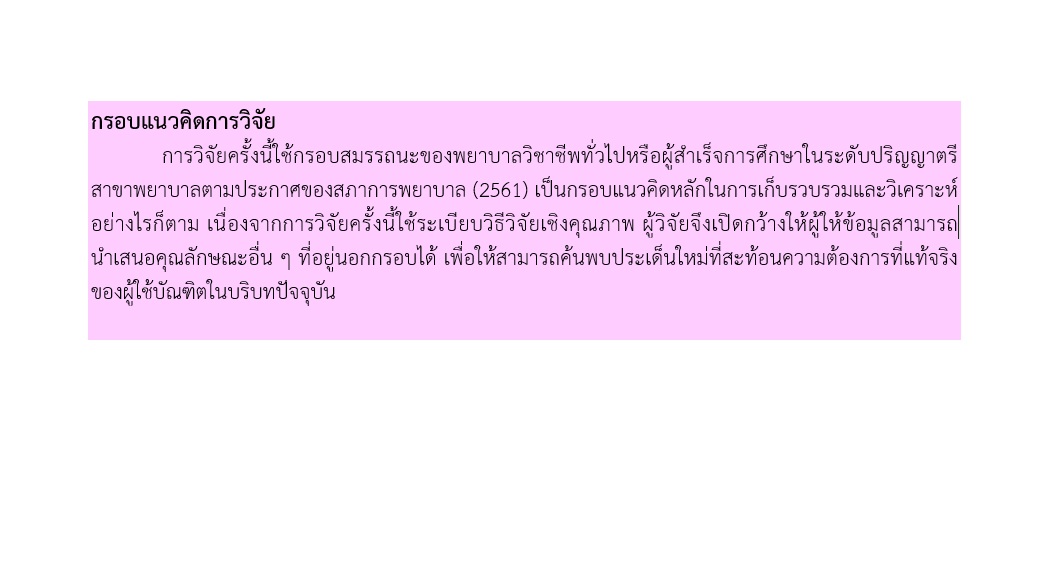
This qualitative study aimed to explore and describe the desirable characteristics of nursing graduates as perceived by employers. Data were collected through semi-structured in-depth interviews with 10 key informants, comprising head nurses, deputy head nurses, and senior registered nurses with more than five years of work experience from diverse clinical settings. Participants were selected using purposive sampling. The eight-domain competency framework of the Thailand Nursing and Midwifery Council (2018) served as the primary guide for developing interview questions while remaining open to the discovery of themes beyond the established framework. The interview guide was validated for content validity by three expert reviewers (IOC ≥ 0.67) and pilot-tested with three registered nurses. Data were analyzed using thematic analysis, and trustworthiness was ensured through triangulation, member checking, and peer debriefing.
The findings revealed 10 major themes of desirable nursing graduates' characteristics. Eight themes were consistent with the competency framework confirming that the established framework remains relevant and reflects the actual needs of employers. Additionally, two emergent themes were identified beyond the original framework: mental resilience, reflecting employers' concerns about the decreasing stress tolerance among new-generation graduates; and career commitment, reflecting the workforce retention crisis that employers are currently facing. These findings are consistent with existing research demonstrating that resilience and professional identity are negatively associated with turnover intention. The 10 themes are interconnected as an integrated system, in which ethics serves as the foundation, clinical practice skills form the core, professional attributes act as the binding element, and mental resilience together with career commitment constitute the conditions for sustainability.
The findings can be used as a basis for defining Expected Learning Outcomes (ELOs) for the Bachelor of Nursing Science curriculum and as foundational data for developing quantitative research instruments in the subsequent phase.
References
พระราชบัญญัติคุ้มครองข้อมูลส่วนบุคคล พ.ศ. 2562. (2562, 27 พฤษภาคม). ราชกิจจานุเบกษา, 136(69 ก), 52–95. https://ratchakitcha.soc.go.th/documents/17082307.pdf
สภาการพยาบาล. (2561). ประกาศสภาการพยาบาล เรื่อง สมรรถนะหลักของผู้สำเร็จการศึกษาหลักสูตรพยาบาลศาสตรบัณฑิต. https://www.tnmc.or.th/images/userfiles/files/004.pdf
American Association of Colleges of Nursing. (2021). The Essentials: Core competencies for professional nursing education. AACN.
ASEAN University Network. (2020). The guide to AUN-QA assessment at programme level version 4.0. ASEAN University Network.
Benner, P. (1984). From novice to expert: Excellence and power in clinical nursing practice. Addison-Wesley.
Booth, R. G., Strudwick, G., McBride, S., O’Connor, S., & Solano López, A. L. (2021). How the nursing profession should adapt for a digital future. The BMJ, 373, n1190. https://doi.org/10.1136/bmj.n1190
Červený, M., Kratochvílová, I., Hellerová, V., & Tóthová, V. (2022). Methods of increasing cultural competence in nurses working in clinical practice: A scoping review of literature 2011–2021. Frontiers in Psychology, 13, Article 936181.
Dwyer, P. A., Hunter Revell, S. M., Sethares, K. A., & Ayotte, B. J. (2019). The influence of psychological capital, authentic leadership in preceptors, and structural empowerment on new graduate nurse burnout and turnover intent. Applied Nursing Research, 48, 37–44. https://doi.org/10.1016/j.apnr.2019.04.005
International Council of Nurses. (2022). The global nursing shortage and nurse retention (ICN Policy Brief). https://www.icn.ch/
Kavanagh, J. M., & Sharpnack, P. A. (2021). Crisis in competency: A defining moment in nursing education. Online Journal of Issues in Nursing, 26(1), Manuscript 2.
Lee, W., & Jang, I. (2023). Effect of nurses' professionalism, work environment, and communication with health professionals on patient safety culture. Journal of Nursing Management, 2023, Article 1591128.
Li, H., Guo, J., Ren, Z., Bai, D., Yang, J., Wang, W., Fu, H., Yang, Q., Hou, C., & Gao, J. (2024). Moral courage level of nurses: A systematic review and meta-analysis. BMC Nursing, 23, Article 549.
Melnyk, B. M., & Fineout-Overholt, E. (2019). Evidence-based practice in nursing & healthcare: A guide to best practice (4th ed.). Wolters Kluwer.
Pajakoski, E., Rannikko, S., Leino-Kilpi, H., & Numminen, O. (2021). Moral courage in nursing – An integrative literature review. Nursing & Health Sciences, 23(3), 570–585.
Prinsloo, C. (2024). Nurses' self-leadership in the face of challenging situations, such as patient deterioration. SAGE Open Nursing, 10, 1–11.
Randall, D. C., De Gagne, J. C., Lee, E., Slack, J., Lee, Y., & Ledbetter, L. (2023). The experience of resilience in newly graduated nurses: A qualitative metasynthesis. Nurse Education in Practice, 71, 103713. https://doi.org/10.1016/j.nepr.2023.103681
Singh, B. A., et al. (2024). Barriers and solutions to the gap between theory and practice in nursing services: A systematic review of qualitative evidence. Nursing Forum, 2024, Article 7522900
Stevanin, S., Palese, A., Bressan, V., Vehviläinen-Julkunen, K., & Kvist, T. (2018). Workplace-related generational characteristics of nurses: A mixed-method systematic review. Journal of Advanced Nursing, 74(6), 1245–1263. https://doi.org/10.1111/jan.13538
Watson, J. (2008). Nursing: The philosophy and science of caring (Rev. ed.). University Press of Colorado.
World Health Organization. (2020). State of the world's nursing 2020: Investing in education, jobs and leadership. https://www.who.int/publications/i/item/9789240003279
World Health Organization. (2021). Global patient safety action plan 2021–2030: Towards eliminating avoidable harm in health care. https://www.who.int/teams/integrated-health-services/patient-safety/policy/global-patient-safety-action-plan
World Health Organization. (2024). Operational framework for monitoring social determinants of health equity. WHO.
Yu, M., & Lee, H. (2018). Impact of resilience and job involvement on turnover intention of new graduate nurses using structural equation modeling. Japan Journal of Nursing Science, 15(4), 351–362. https://doi.org/10.1111/jjns.12210
Downloads
Published
How to Cite
Issue
Section
License
Copyright (c) 2026 Boromarajonani College of Nursing, Nakhon Si Thammarat

This work is licensed under a Creative Commons Attribution-NonCommercial-NoDerivatives 4.0 International License.
บทความที่ได้รับการตีพิมพ์เป็นลิขสิทธิ์ของ วิทยาลัยพยาบาลบรมราชชนนี นครศรีธรรมราช
ข้อความที่ปรากฏในบทความแต่ละเรื่องในวารสารวิชาการเล่มนี้เป็นความคิดเห็นส่วนตัวของผู้เขียนแต่ละท่านไม่เกี่ยวข้องกับวิทยาลัยพยาบาลบรมราชชนนี นครศรีธรรมราช และบุคคลากรท่านอื่น ๆ ในวิทยาลัยฯ แต่อย่างใด ความรับผิดชอบองค์ประกอบทั้งหมดของบทความแต่ละเรื่องเป็นของผู้เขียนแต่ละท่าน หากมีความผิดพลาดใดๆ ผู้เขียนแต่ละท่านจะรับผิดชอบบทความของตนเองแต่ผู้เดียว