ภาวะพิษจากก๊าซคาร์บอนมอนอกไซด์
คำสำคัญ:
คาร์บอนมอนอกไซด์, ภาวะขาดออกซิเจน, ออกซิเจนบทคัดย่อ
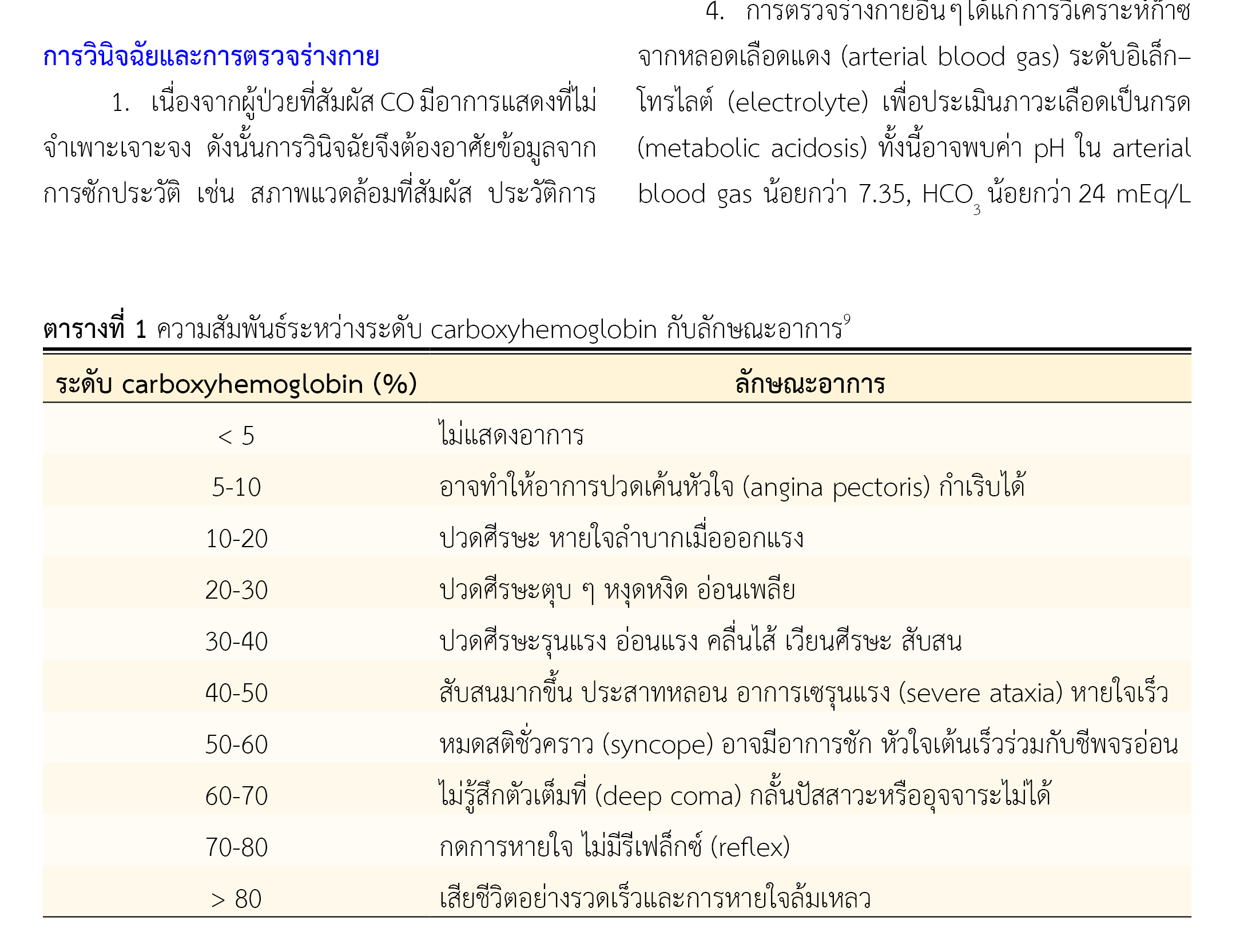
คาร์บอนมอนอกไซด์ เป็นก๊าซที่เกิดจากการเผาไหม้อย่างไม่สมบูรณ์ของเชื้อเพลิงที่มีคาร์บอนเป็นองค์ประกอบ พบได้ในควันจากไฟไหม้ อุตสาหกรรมต่าง ๆ ที่มีการใช้เครื่องจักรหรือเครื่องยนต์ รวมถึงท่อไอเสียรถยนต์ ก๊าซนี้ไม่มีสี ไม่มีกลิ่น และไม่ระคายเคือง จึงทำให้ผู้ที่ได้รับคาร์บอนมอนอกไซด์เข้าไปจะไม่ทราบว่าตนเองกำลังสัมผัสก๊าซอยู่ กลไกการเกิดพิษของคาร์บอนมอนอกไซด์เกิดจากการที่คาร์บอนมอนอกไซด์มีความสามารถในการจับกับฮีโมโกลบินมากกว่าออกซิเจนประมาณ 200-250 เท่า ซึ่งเมื่อจับแล้วจะกลายเป็นสารประกอบคาร์บอกซีฮีโมโกลบิน ทำให้มีฮีโมโกลบินที่จับกับออกซิเจนในเลือดน้อยลง ส่งผลให้เม็ดเลือดแดงขนส่งออกซิเจนไปยังเนื้อเยื่อส่วนปลายได้ลดลง เนื้อเยื่อในร่างกายจึงเกิดภาวะขาดออกซิเจน อาการพิษจากก๊าซคาร์บอนมอนอกไซด์ที่พบได้บ่อย คือ ปวดศีรษะ และเวียนศีรษะ อาการอี่น ๆ ที่พบได้ ได้แก่ คลื่นไส้ อ่อนเพลีย สับสน และอาการคล้ายไข้หวัดใหญ่ การวินิจฉัยภาวะพิษจากคาร์บอนมอนอกไซด์ใช้อาการร่วมกับการซักประวัติการสัมผัส แนวทางในการรักษา คือ ให้นำผู้ป่วยออกมาจากจุดที่มีการสัมผัส และให้อยู่ในสถานที่ที่มีอากาศถ่ายเท ถอดเสื้อผ้าผู้ป่วยที่สัมผัสก๊าซคาร์บอนมอนอกไซด์ดังกล่าว เปลี่ยนเป็นเสื้อผ้าที่สะอาด ร่วมกับการให้ออกซิเจน 100% โดยเร็ว และให้การรักษาแบบประคับประคองอย่างใกล้ชิด ในผู้ป่วยบางรายอาจพิจารณาการให้ออกซิเจนความดันบรรยากาศสูงตามความเหมาะสม
เอกสารอ้างอิง
สัมมน โฉมฉาย. Toxic gases: Asphyxiants. Thai J Toxicology. 2008;23(2):31-4.
ลักษณา เหล่าเกียรติ. การบาดเจ็บ ความผิดปกติ และโรคจากการทำงาน: การป้องกัน. พิมพ์ครั้งที่ 1. กรุงเทพฯ: โรงพิมพ์มหาวิทยาลัยธรรมศาสตร์; 2560. หน้า 51-88.
Chiew AL, Buckley NA. Carbon monoxide poisoning in the 21st century. Critical Care. 2014;18(2):221.
อนามัย (ธีรวิโรจน์) เทศกะทึก. พิษสารเคมีจากการทำงาน รู้ทันป้องกันได้. พิมพ์ครั้งที่ 1. กรุงเทพฯ: สำนักพิมพ์จุฬาลงกรณ์มหาวิทยาลัย, 2554. หน้า 367-74.
ณัฐ ตันศรีสวัสดิ์, ศิรินันท์ เอี่ยมภักดิ์. นิติพิษวิทยา. พิมพ์ครั้งที่ 1. กรุงเทพฯ: สำนักพิมพ์จุฬาลงกรณ์มหาวิทยาลัย; 2550. หน้า 161-5.
ศูนย์พิษวิทยารามาธิบดี คณะแพทยศาสตร์โรงพยาบาลรามาธิบดี มหาวิทยาลัยมหิดล. Carbon monoxide poisoning [อินเทอร์เน็ต]. กรุงเทพฯ: [สืบค้นเมื่อ 25 ธันวาคม 2563]. สืบค้นจาก: https://med.mahidol.ac.th/poisoncenter/th/bulletin/bul99/v7n3/Tox_co
Olson KR. Carbon monoxide. In: Olson KR, editor. Poisoning & drug overdose. 7th ed. San Francisco: McGraw-Hill; 2018. p. 182-4.
MICROMEDEX® [Database on the internet]. Colorado: Thomson Reuters (Healthcare); c1974-2020. POISINDEX® System, Carbon Monoxide [cited 2020 Dec 25]. Available from: https://www.micromedexsolutions.com Subscription required to view.
Knobeloch, L, Jackson R. Recognition of chronic carbon monoxide poisoning. Wis Med J. 1999;98(6):26-9.
Tomaszewski C. Carbon monoxide. In: Hoffman RS, Howland MA, Lewin NA, Nelson LS, Goldfrank LR, Flomenbaum N, editors. Goldfrank’s toxicologic emergencies. 11th ed. New York: McGraw-Hill Education; 2019. p. 1663-75.
Olson KR. Oxygen and hyperbaric oxygen. In: Olson KR, editor. Poisoning & drug overdose. 7th ed. San Francisco: McGraw-Hill; 2018. p. 599-601.
สุวรรณา เรืองกาญจนเศรษฐ์, วินัย วนานุกูล. ภาวะพิษเฉียบพลันจากไซยาไนด์. ใน: จารุวรรณ ศรีอาภา, บรรณาธิการ. ยาต้านพิษ 1. พิมพ์ครั้งที่ 1. กรุงเทพฯ: สมาคมพิษวิทยาคลินิก; 2554. หน้า 33-7.
ดาวน์โหลด
เผยแพร่แล้ว
รูปแบบการอ้างอิง
ฉบับ
ประเภทบทความ
สัญญาอนุญาต
บทความในวารสารเภสัชกรรมโรงพยาบาลเผยแพร่ภายใต้เงื่อนไขของสัญญาอนุญาตครีเอทีฟคอมมอนส์ในรูปแบบที่ต้องอ้างอิงแหล่งที่มา - ห้ามใช้เพื่อการค้า - ห้ามแก้ไขดัดแปลง เวอร์ชั่น 4.0 (CC BY-NC-ND 4.0) สามารถแจกจ่ายและนำบทความไปใช้ประโยชน์เพื่อการศึกษาได้แต่ต้องระบุการอ้างอิงถึงบทความจากเว็บไซต์วารสารเภสัชกรรมโรงพยาบาล ไม่สามารถนำบทความไปใช้เพื่อการพาณิชย์ใด ๆ เว้นแต่ได้รับอนุญาตจากบรรณาธิการวารสารเภสัชกรรมโรงพยาบาล และกรณีมีการนำบทความไปเรียบเรียงใหม่ เปลี่ยนแปลงเนื้อหา หรือเสริมเติมแต่งเนื้อหาของบทความ ท่านไม่สามารถนำบทความที่ปรับแต่งไปเผยแพร่ได้ในทุกกรณี
ข้อความที่ปรากฏในบทความในวารสารเป็นความคิดเห็นส่วนตัวของผู้แต่งแต่ละท่านไม่เกี่ยวข้องกับสมาคมเภสัชกรรมโรงพยาบาล (ประเทศไทย) และบุคลากรในสมาคมฯ แต่อย่างใด ความรับผิดชอบองค์ประกอบทั้งหมดของบทความแต่ละเรื่องเป็นของผู้แต่งแต่ละท่าน หากมีความผิดพลาดใด ๆ ผู้แต่งแต่ละท่านจะรับผิดชอบบทความของตนเอง ตลอดจนความรับผิดชอบด้านเนื้อหาและการตรวจร่างบทความเป็นของผู้แต่ง ไม่เกี่ยวข้องกับกองบรรณาธิการ


.png)

