Carbon monoxide Poisoning
Keywords:
carbon monoxide, asphyxiants, oxygenAbstract
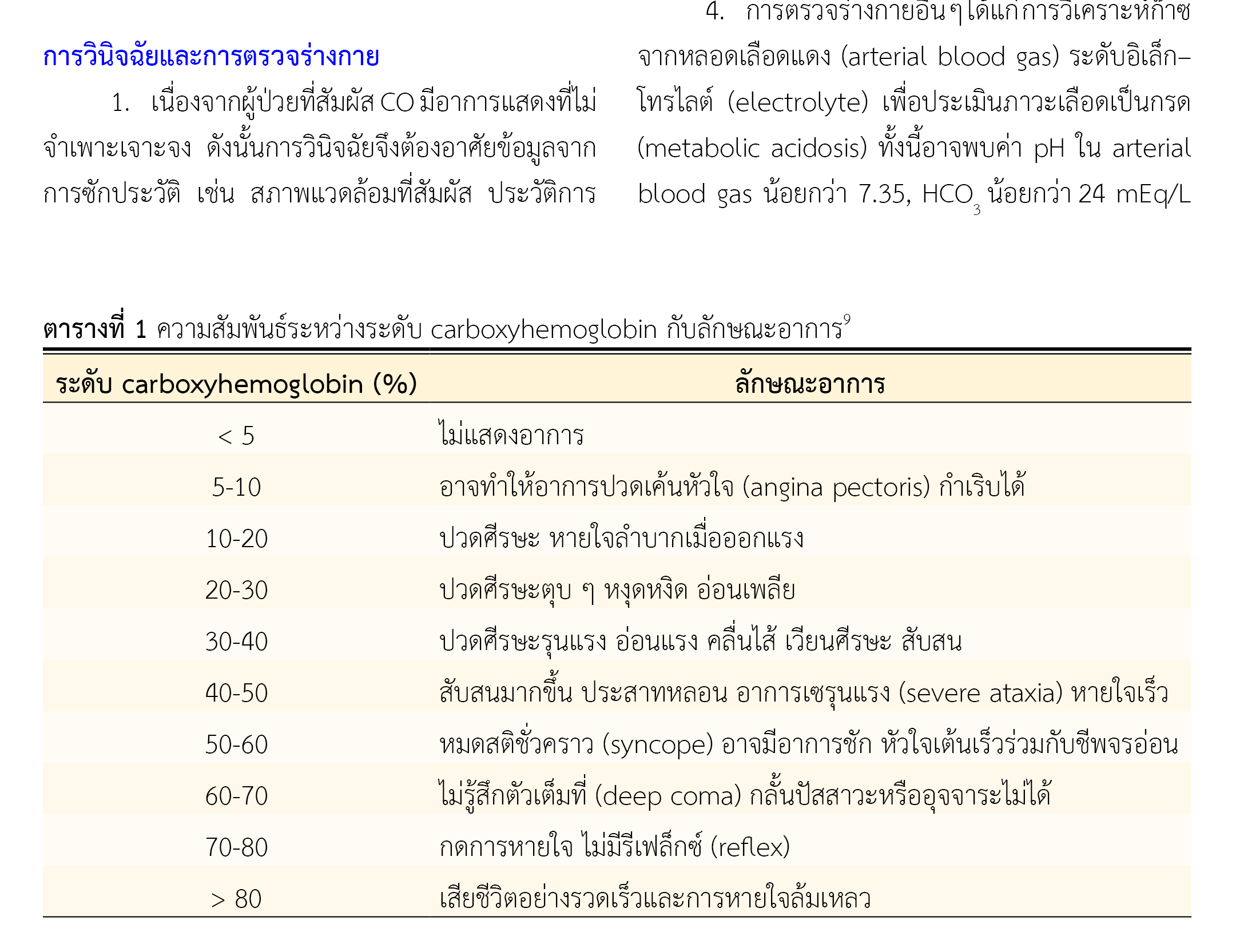
Carbon monoxide is originated from incomplete combustion of carbon-containing fuel. It is found in smoke from fires, industry with running machine or engine, and automobile exhaust fumes. This gas is colorless, odorless, and non-irritating. Therefore, patients who exposed to carbon monoxide were unable to detect this poisoning exposure by themselves. The mechanism of carbon monoxide toxicity is the binding of carbon monoxide to hemoglobin at higher affinity (approximately 200-250 times) than oxygen, resulting in carboxyhemoglobin and less hemoglobin binding to oxygen. The oxygen carrying capacity of red blood cells is diminished and consequently causes a decrease in oxygen delivery to peripheral tissue that leads to tissue hypoxia. The common symptoms of toxicity are headache and dizziness. Other symptoms are nausea, fatigue, confusion and flu-like symptoms. The diagnosis of carbon monoxide poisoning is based on symptoms and history of exposure. The general management is to bring patients from environment of exposure to fresh air, remove carbon monoxide-contaminated clothes and change to new one, administer 100% oxygen, and closely supportive care. In some patients, hyperbaric oxygen therapy may be useful.
References
สัมมน โฉมฉาย. Toxic gases: Asphyxiants. Thai J Toxicology. 2008;23(2):31-4.
ลักษณา เหล่าเกียรติ. การบาดเจ็บ ความผิดปกติ และโรคจากการทำงาน: การป้องกัน. พิมพ์ครั้งที่ 1. กรุงเทพฯ: โรงพิมพ์มหาวิทยาลัยธรรมศาสตร์; 2560. หน้า 51-88.
Chiew AL, Buckley NA. Carbon monoxide poisoning in the 21st century. Critical Care. 2014;18(2):221.
อนามัย (ธีรวิโรจน์) เทศกะทึก. พิษสารเคมีจากการทำงาน รู้ทันป้องกันได้. พิมพ์ครั้งที่ 1. กรุงเทพฯ: สำนักพิมพ์จุฬาลงกรณ์มหาวิทยาลัย, 2554. หน้า 367-74.
ณัฐ ตันศรีสวัสดิ์, ศิรินันท์ เอี่ยมภักดิ์. นิติพิษวิทยา. พิมพ์ครั้งที่ 1. กรุงเทพฯ: สำนักพิมพ์จุฬาลงกรณ์มหาวิทยาลัย; 2550. หน้า 161-5.
ศูนย์พิษวิทยารามาธิบดี คณะแพทยศาสตร์โรงพยาบาลรามาธิบดี มหาวิทยาลัยมหิดล. Carbon monoxide poisoning [อินเทอร์เน็ต]. กรุงเทพฯ: [สืบค้นเมื่อ 25 ธันวาคม 2563]. สืบค้นจาก: https://med.mahidol.ac.th/poisoncenter/th/bulletin/bul99/v7n3/Tox_co
Olson KR. Carbon monoxide. In: Olson KR, editor. Poisoning & drug overdose. 7th ed. San Francisco: McGraw-Hill; 2018. p. 182-4.
MICROMEDEX® [Database on the internet]. Colorado: Thomson Reuters (Healthcare); c1974-2020. POISINDEX® System, Carbon Monoxide [cited 2020 Dec 25]. Available from: https://www.micromedexsolutions.com Subscription required to view.
Knobeloch, L, Jackson R. Recognition of chronic carbon monoxide poisoning. Wis Med J. 1999;98(6):26-9.
Tomaszewski C. Carbon monoxide. In: Hoffman RS, Howland MA, Lewin NA, Nelson LS, Goldfrank LR, Flomenbaum N, editors. Goldfrank’s toxicologic emergencies. 11th ed. New York: McGraw-Hill Education; 2019. p. 1663-75.
Olson KR. Oxygen and hyperbaric oxygen. In: Olson KR, editor. Poisoning & drug overdose. 7th ed. San Francisco: McGraw-Hill; 2018. p. 599-601.
สุวรรณา เรืองกาญจนเศรษฐ์, วินัย วนานุกูล. ภาวะพิษเฉียบพลันจากไซยาไนด์. ใน: จารุวรรณ ศรีอาภา, บรรณาธิการ. ยาต้านพิษ 1. พิมพ์ครั้งที่ 1. กรุงเทพฯ: สมาคมพิษวิทยาคลินิก; 2554. หน้า 33-7.
Downloads
Published
How to Cite
Issue
Section
License
บทความในวารสารเภสัชกรรมโรงพยาบาลเผยแพร่ภายใต้เงื่อนไขของสัญญาอนุญาตครีเอทีฟคอมมอนส์ในรูปแบบที่ต้องอ้างอิงแหล่งที่มา - ห้ามใช้เพื่อการค้า - ห้ามแก้ไขดัดแปลง เวอร์ชั่น 4.0 (CC BY-NC-ND 4.0) สามารถแจกจ่ายและนำบทความไปใช้ประโยชน์เพื่อการศึกษาได้แต่ต้องระบุการอ้างอิงถึงบทความจากเว็บไซต์วารสารเภสัชกรรมโรงพยาบาล ไม่สามารถนำบทความไปใช้เพื่อการพาณิชย์ใด ๆ เว้นแต่ได้รับอนุญาตจากบรรณาธิการวารสารเภสัชกรรมโรงพยาบาล และกรณีมีการนำบทความไปเรียบเรียงใหม่ เปลี่ยนแปลงเนื้อหา หรือเสริมเติมแต่งเนื้อหาของบทความ ท่านไม่สามารถนำบทความที่ปรับแต่งไปเผยแพร่ได้ในทุกกรณี
ข้อความที่ปรากฏในบทความในวารสารเป็นความคิดเห็นส่วนตัวของผู้แต่งแต่ละท่านไม่เกี่ยวข้องกับสมาคมเภสัชกรรมโรงพยาบาล (ประเทศไทย) และบุคลากรในสมาคมฯ แต่อย่างใด ความรับผิดชอบองค์ประกอบทั้งหมดของบทความแต่ละเรื่องเป็นของผู้แต่งแต่ละท่าน หากมีความผิดพลาดใด ๆ ผู้แต่งแต่ละท่านจะรับผิดชอบบทความของตนเอง ตลอดจนความรับผิดชอบด้านเนื้อหาและการตรวจร่างบทความเป็นของผู้แต่ง ไม่เกี่ยวข้องกับกองบรรณาธิการ