ผลลัพธ์ของการใช้โปรแกรมคอมพิวเตอร์ในการประสานรายการยากลับบ้านที่ดำเนินการโดยเภสัชกร
คำสำคัญ:
การประสานรายการยา, โปรแกรมคอมพิวเตอร์ด้านการเปรียบเทียบประสานรายการยา, ความคลาดเคลื่อนทางยา, ความคลาดเคลื่อนทางยาจากการสั่งใช้ยาบทคัดย่อ
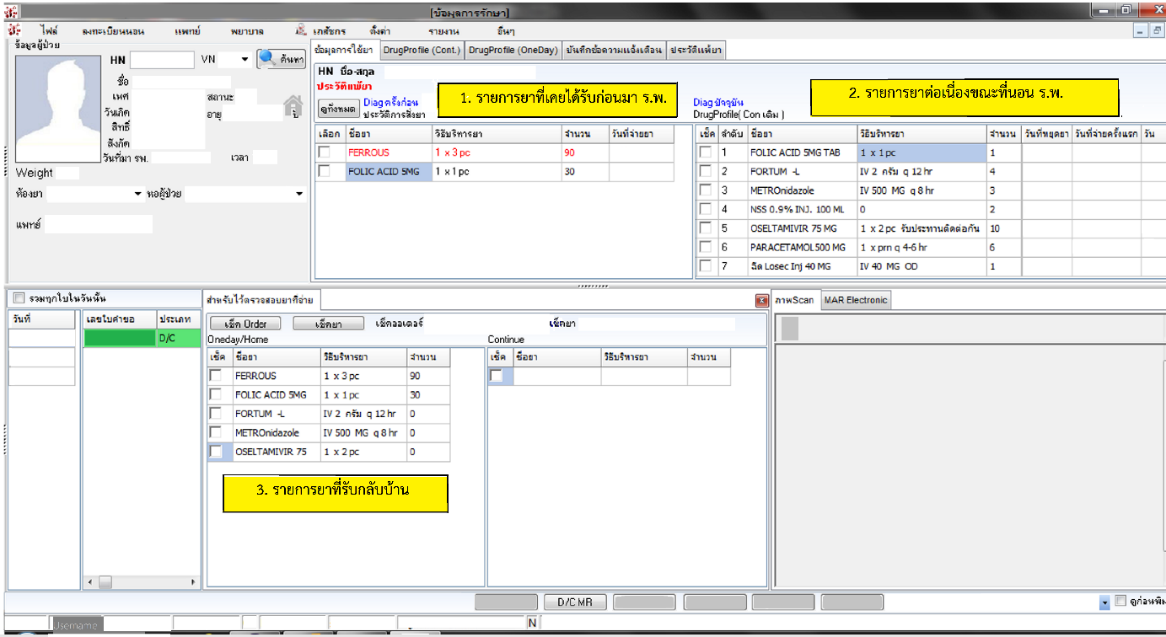
ความเป็นมา: ความคลาดเคลื่อนทางยาจากการสั่งใช้ยาส่วนใหญ่พบในขั้นตอนสั่งจ่ายยากลับบ้าน การใช้โปรแกรมคอมพิวเตอร์เป็นเครื่องมือช่วยเภสัชกรประสานรายการยาก่อนจำหน่ายผู้ป่วยกลับบ้าน โดยโปรแกรมฯ สามารถพิมพ์ใบสั่งยากลับบ้านที่มีรายการยาต่อเนื่องที่ผู้ป่วยได้รับได้
วัตถุประสงค์: เพื่อศึกษาผลลัพธ์ของการประสานรายการยากลับบ้านด้วยการใช้โปรแกรมฯ และเปรียบเทียบความคลาดเคลื่อนทางยาจากการสั่งใช้ยากลับบ้านที่พิมพ์จากโปรแกรมฯ กับการเขียนด้วยลายมือ
วิธีวิจัย: การวิจัยกึ่งทดลอง เก็บข้อมูลแบบไปข้างหน้าจากใบสั่งยากลับบ้านสำหรับผู้ป่วยในหอผู้ป่วยอายุรกรรม เป็นเวลา 3 เดือน ในเวลาราชการ วิเคราะห์ผลโดยสถิติเชิงพรรณนาและสถิติเชิงอนุมาน (Chi-square test, Fisher’s exact test, และ t-test)
ผลการวิจัย: ใบสั่งยากลับบ้านทั้งหมด 2,428/14,338 (ใบ/รายการ) ประกอบด้วยใบสั่งยาเขียนด้วยลายมือ 2,367/13,890 (ใบ/รายการ) และใบสั่งยาพิมพ์จากโปรแกรมฯ 61/448 (ใบ/รายการ) พบความคลาดเคลื่อนทางยาทั้งหมด 139/150 (ใบ/รายการ) (ร้อยละ 5.7/1.0) เกิดจากการเขียนด้วยลายมือทั้งหมด ไม่พบความคลาดเคลื่อนในใบสั่งยาที่พิมพ์จากโปรแกรมฯ ซึ่งแตกต่างกันอย่างมีนัยสำคัญทางสถิติ (p-value < 0.05) ความคลาดเคลื่อนที่พบและแก้ไข ได้แก่ ขนาดได้รับมากเกินไป ขนาดได้รับน้อยเกินไป ผิดวิธีบริหารยา ผิดปริมาณ และได้รับยาไม่จำเป็น ร้อยละ 32.0, 19.3, 18.7, 10.7 และ 9.4 ตามลำดับ
สรุปผล: การประสานรายการยากลับบ้านด้วยการใช้โปรแกรมฯ สามารถป้องกันความคลาดเคลื่อนทางยาได้ และใบสั่งยากลับบ้านที่พิมพ์จากโปรแกรมฯ ที่มีรายการยาต่อเนื่องที่ผู้ป่วยได้รับ มีความคลาดเคลื่อนทางยาน้อยกว่าการเขียนด้วยลายมือ
เอกสารอ้างอิง
World Health Organization. Patient safety: Making health care safer [Internet]. Geneva: World Health Organization; 2017. [cited 2020 Jan 12]. Available from: https://apps.who.int/iris/bitstream/handle/10665/255507/WHO-HIS-SDS-2017.11-eng.pdf?sequence=1&isAllowed=y
World Health Organization. Medication errors: Technical series on safer primary care [Internet]. Geneva: World Health Organization; 2016. [cited 2020 Jan 12]. Available from: https://apps.who.int/iris/bitstream/handle/10665/252274/9789241511643-eng.pdf;sequence=1
ธิดา นิงสานนท์. Medication reconciliation. ใน: ปรีชา มนทกานติกุล, สุวัฒนา จุฬาวัฒนทล, บรรณาธิการ. Medication reconciliation. กรุงเทพฯ: สมาคมเภสัชกรรมโรงพยาบาล (ประเทศไทย); 2551:1-25.
คฑามาศ แซ่ผ้าง. Medication reconciliation กับมาตรฐานโรงพยาบาลและการบริการสุขภาพ. วารสารไทยไภษัชยนิพนธ์ [อินเทอร์เน็ต]. 2553 [สืบค้นเมื่อ 4 มกราคม 2563];5(1):99-107. สืบค้นจาก: https://li01.tci-thaijo.org/index.php/TBPS/article/view/33020/28077
Nickerson A, MacKinnon NJ, Roberts N, Saulnier L. Drug-therapy problems, inconsistencies and omissions identified during a medication reconciliation and seamless care service. Healthc Q [Internet]. 2005 [cited 2020 Jan 4];8:65-72. Available from: https://www.longwoods.com/content/17667/healthcare-quarterly/drug-therapy-problems-inconsistencies-and-omissions-identified-during-a-medication-reconciliation-a
Mekonnen AB, McLachlan AJ, Brien JA. Pharmacy-led medication reconciliation programmes at hospital transitions: A systematic review and meta-analysis. J Clin Pharm Ther [Internet]. 2016 [cited 2020 Jan 11];41(2):128-44. Available from: https://pubmed.ncbi.nlm.nih.gov/26913812/
Najafzadeh M, Schnippe JL, Shrank WH, Kymes S, Brennan TA, Choudhry NK. Economic value of pharmacist-led medication reconciliation for reducing medication errors after hospital discharge. Am J Manag Care [Internet]. 2016 [cited 2020 Jan 12];22(10):654-61. Available from: https://www.ajmc.com/view/economic-value-of-pharmacist-led-medication-reconciliation-for-reducing-medication-errors-after-hospital-discharge
จันทนี ฉัตรวิริยาวงศ์, สุรพงษ์ ตุลาพันธุ์. ผลของกระบวนการประสานรายการยาในหอผู้ป่วยอายุรกรรม โรงพยาบาลสวรรค์ประชารักษ์. วารสารสวรรค์ประชารักษ์เวชสาร [อินเทอร์เน็ต]. 2561 [สืบค้นเมื่อ 12 มกราคม 2563];15(3):95-102. สืบค้นจาก: https://thaidj.org/index.php/SMJ/article/view/6071
นวรัตน์ ศรีโอฬาร์. การป้องกันความคลาดเคลื่อนจากการสั่งใช้ยาโดยใช้กระบวนการ medication reconciliation. วารสารโรงพยาบาลระยอง [อินเทอร์เน็ต]. 2561 [สืบค้นเมื่อ 12 มกราคม 2563];15(30):1-11. สืบค้นจาก: https://rayonghospital.go.th/images/webpage/f05a7e5aeba3b2.pdf
อภิลักษณ์ นวลศรี. ความคลาดเคลื่อนจากการสั่งใช้ยากับการใช้ระบบสั่งยาทางคอมพิวเตอร์จากหอผู้ป่วย. สงขลานครินทร์เวชสาร [อินเทอร์เน็ต]. 2549 [สืบค้นเมื่อ 12 มกราคม 2563];24:1-8. สืบค้นจาก: http://medinfo.psu.ac.th/smj2/smj24_1/pdf24-1/01apirak.pdf
Shulman R, Singer M, Goldstone J, Bellingan G. Medication errors: A prospective cohort study of handwritten and computerized physician order entry in the intensive care unit. Crit Care [Internet]. 2005 [cited 2020 Jan 12];9(5):R516-21. Available from: https://pubmed.ncbi.nlm.nih.gov/16277713/
Hung PL, Chen JY, Chen MT, Li PL, Li WC, Wang ZC, et al. The impact of a medication reconciliation programme at geriatric hospital admission: A pre-/postintervention study. Br J Clin Pharmacol [Internet]. 2019 [cited 2021 Oct 1]; 85(11):2614-22. Avai–lable from: https://bpspubs.onlinelibrary.wiley.com/ doi/10.1111/bcp.14095
Hung PL, Lin PC, Chen JY, Chen MT, Chou MY, Huang WC, et al. Developing an integrated electronic medication reconciliation platform and evaluating its effects on preventing potential duplicated medications and reducing 30-day medication-related hospital revisits for inpatients. J Med Sys [Internet]. 2021 [cited 2021 Oct 1];1;45(4):47. Available from: https://link.springer.com/article/10.1007%2Fs10916-021-01717-8
Marien S, Legrand D, Ramdoyal R, Nsenga J, Ospina G, Ramon V, et al. A web application to involve patients in the medication reconciliation process: A user-centered usability and usefulness study. J Am Med Inform Assoc [Internet]. 2018 [cited 2021 Oct 1];1;25(11):1488-500. Available from: https://academic.oup.com/jamia/article/25/11/1488/5075876
ดาวน์โหลด
เผยแพร่แล้ว
รูปแบบการอ้างอิง
ฉบับ
ประเภทบทความ
สัญญาอนุญาต
บทความในวารสารเภสัชกรรมโรงพยาบาลเผยแพร่ภายใต้เงื่อนไขของสัญญาอนุญาตครีเอทีฟคอมมอนส์ในรูปแบบที่ต้องอ้างอิงแหล่งที่มา - ห้ามใช้เพื่อการค้า - ห้ามแก้ไขดัดแปลง เวอร์ชั่น 4.0 (CC BY-NC-ND 4.0) สามารถแจกจ่ายและนำบทความไปใช้ประโยชน์เพื่อการศึกษาได้แต่ต้องระบุการอ้างอิงถึงบทความจากเว็บไซต์วารสารเภสัชกรรมโรงพยาบาล ไม่สามารถนำบทความไปใช้เพื่อการพาณิชย์ใด ๆ เว้นแต่ได้รับอนุญาตจากบรรณาธิการวารสารเภสัชกรรมโรงพยาบาล และกรณีมีการนำบทความไปเรียบเรียงใหม่ เปลี่ยนแปลงเนื้อหา หรือเสริมเติมแต่งเนื้อหาของบทความ ท่านไม่สามารถนำบทความที่ปรับแต่งไปเผยแพร่ได้ในทุกกรณี
ข้อความที่ปรากฏในบทความในวารสารเป็นความคิดเห็นส่วนตัวของผู้แต่งแต่ละท่านไม่เกี่ยวข้องกับสมาคมเภสัชกรรมโรงพยาบาล (ประเทศไทย) และบุคลากรในสมาคมฯ แต่อย่างใด ความรับผิดชอบองค์ประกอบทั้งหมดของบทความแต่ละเรื่องเป็นของผู้แต่งแต่ละท่าน หากมีความผิดพลาดใด ๆ ผู้แต่งแต่ละท่านจะรับผิดชอบบทความของตนเอง ตลอดจนความรับผิดชอบด้านเนื้อหาและการตรวจร่างบทความเป็นของผู้แต่ง ไม่เกี่ยวข้องกับกองบรรณาธิการ


.png)

