
Toxicology of Datura spp.
Keywords:
Datura, Datura metel, Datura metel L. var. fastuosa, toxic, treatmentAbstract
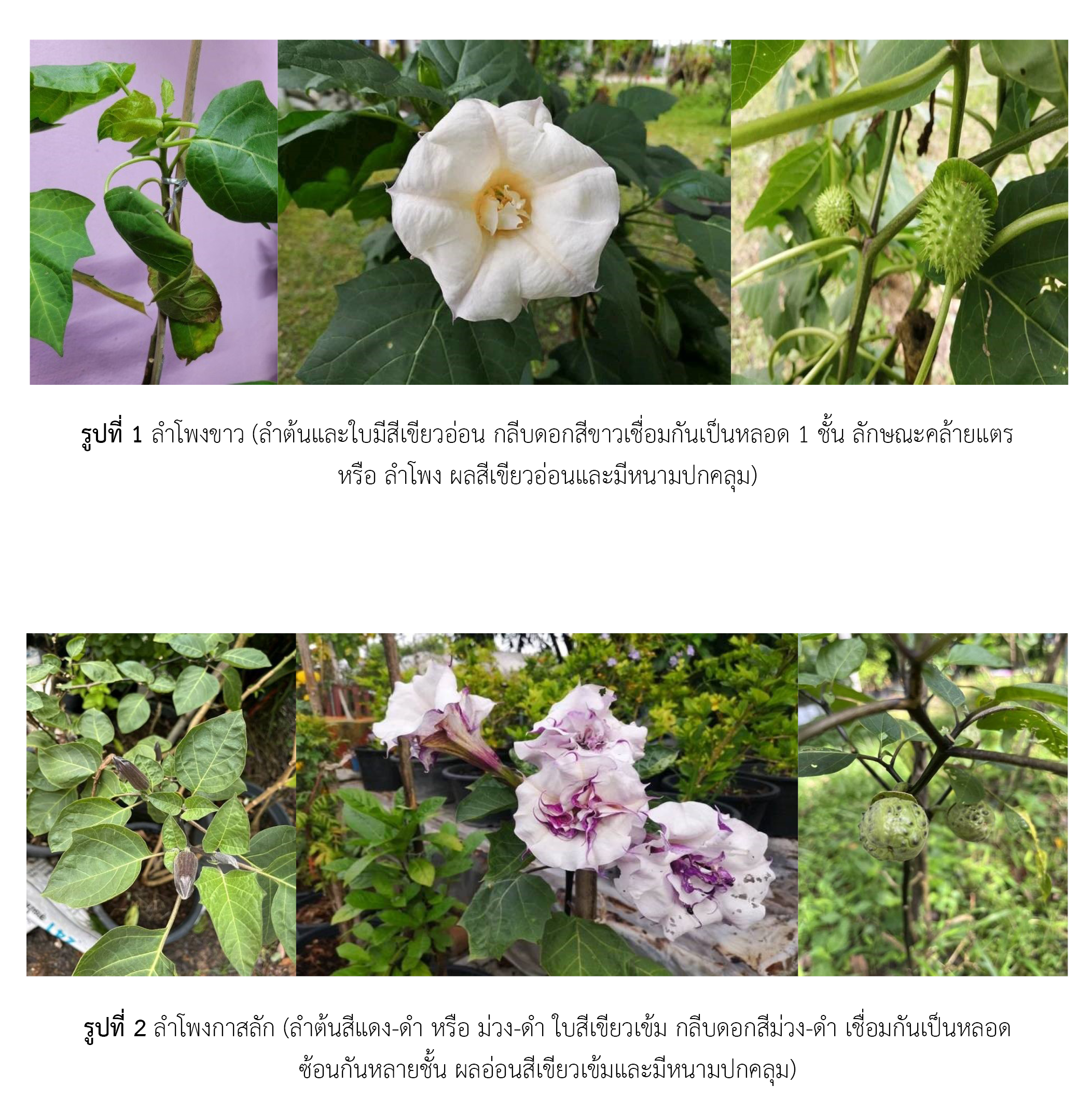
Datura spp. is a herbaceous plant that resembles a pea eggplant. It is found in many tropical and sub-tropical continents around the world. The species found in Thailand is Datura metel L. There are two main types, Datura metel L. var. metel and Datura metel L. var. fastuosa (Bernh.) Danert. Datura spp. contains hyoscine (main component), atropine and hyoscyamine. The highest level of alkaloid is found in seeds. These substances act as anticholinergic agents. Datura spp. can be used for treating wounds and abscesses, reducing pain and inflammation, and relieving asthma symptoms. However, it may cause poisoning and abnormal symptoms such as fever, dry skin, headache, agitation, hallucination, seizure, tachycardia, confusion, numbness, excitement, blurred vision, dilated pupils, muscle incoordination, difficulty breathing, urinary retention, constipation, and delirium. The severity of symptom can be life-threatening. The specific antidote is physostigmine. As physostigmine injection is not available in Thailand, symptomatic treatment is recommended and patients should be observed for at least 2-36 hours.
References
Integrated taxonomic information system (ITIS). Report Datura metel L. Taxonomic serial no: 821259. [Internet]. [cited 2022 August 22]. Available from: https://www.itis.gov/servlet/SingleRpt/SingleRpt?search_topic=TSN&search_value=821259#null
Passos ID, Mironidou-Tzouveleki M. Chapter 71. Hallucinogenic plants in the Mediterranean countries. In: Preedy VR, editor. Neuropathology of drug addictions and substance misuse Volume 2 [Internet]. n.p.: Academic Press – Elsevier; 2016 [cited 2022 August 22]. p. 761-72. Available from: https://doi.org/10.1016/B978-0-12-800212-4.00071-6
Koulapur V V, Jirli P S, Honnungar R S, Pujar S S, Patil S. Poisoning due to Datura-A rare case report. Indian J Forensic Community Med [Internet]. 2015 [cited 2022 August 22];2(1):64-6. Available from: https://www.ijfcm.org/article-details/350
Pillay VV, Sasidharan A. Oleander and Datura poisoning: an update. Indian J Crit Care Med. 2019;23(Suppl 4):S250-5. doi: 10.5005/jp-journals-10071-23302.
พิชานันท์ ลีแก้ว. ลำโพง:ไม้ประดับมีพิษ [อินเตอร์เน็ต].กรุงเทพมหานคร: สำนักงานข้อมูลสมุนไพร คณะเภสัชศาสตร์ มหาวิทยาลัยมหิดล; 2558 [สืบค้นเมื่อ 22 สิงหาคม 2565]. สืบค้นจาก: https://pharmacy.mahidol.ac.th/th/knowledge/article/297/ดอกลำโพง-ไม้ประดับมีพิษ/service-knowledge-article.php
Datiles M J, Acevedo-Rodríguez P. Datura metel (Hindu datura). In: Invasive species CABI compendium [Internet]. Wallingford: CABI digital library, CABI International; 2014 Aug 27 [cited 2022 Aug 22]. Available from: https://www.cabi.org/isc/datasheet/18005 doi: 10.1079/cabicompendium.18005.
เมดไทย. ลําโพง สรรพคุณและประโยชน์ของต้นลำโพงขาว 35 ข้อ ! [อินเตอร์เน็ต]. ม.ป.ท.: Medthai; ปรับปรุงเมื่อ 30 พฤษภาคม 2020 [สืบค้นเมื่อ 22 สิงหาคม 2565]. สืบค้นจาก: https://medthai.com/ลำโพงขาว/
ฐานข้อมูลสมุนไพร คณะเภสัชศาสตร์ มหาวิทยาลัยอุบลราชธานี. ลำโพง [อินเตอร์เน็ต]. อุบลราชธานี: คณะเภสัชศาสตร์ มหาวิทยาลัยอุบลราชธานี; 2553 [สืบค้นเมื่อ 22 สิงหาคม 2565]. สืบค้นจาก: http://www.phargarden.com/main.php?action=viewpage&pid=105
Sharma M, Dhaliwal I, Rana K, Delta AK, Kaushik P. Phytochemistry, pharmacology, and toxicology of Datura species-a review. Antioxidants (Basel). 2021;10(8):1291. doi: 10.3390/antiox10081291.
Sriapha C, Tongpoo A, Wongvisavakorn S, Rittilert P, Trakulsrichai S, Srisuma S, et al. Plant poisoning in Thailand: a 10-year analysis from Ramathibodi poison center. Southeast Asian J Trop Med Public Health. 2015;46(6):1063-76. PMID: 26867365.
Naudé T W. Chapter 70 – Datura spp. and other related plants. In: Gupta R C, editor. Veterinary toxicology. London: Academic Press; 2007. p. 892-906.
Mutebi RR, Ario AR, Nabatanzi M, Kyamwine IB, Wibabara Y, Muwereza P, et al. Large outbreak of Jimsonweed (Datura stramonium) poisoning due to consumption of contaminated humanitarian relief food: Uganda, March-April 2019. BMC Public Health. 2022;22(1):623. doi: 10.1186/s12889-022-12854-1.
เมษญา ชาติกุล, จุฬธิดา โฉมฉาย. พืชกลุ่มแอลคาลอยด์อโทรปีนและกลุ่มเห็ดโอสถลวงจิต. ใน: สัมมน โฉมฉาย, จุฬธิดา โฉมฉาย, บรรณาธิการ. ภาวะพิษจากสารเสพเพื่อผ่อนคลายในวัยรุ่น. กรุงเทพมหานคร: โรงพิมพ์เดือนตุลา; 2560. หน้า 163-72.
Garcia E. Anticholinergics. In: Olson KR, Smollin CG, editors. Poisoning & drug overdose. 8th ed. San-Francisco: McGraw-Hill; 2022. p. 98-9.
Massachusetts and Rhode Island poison control system. Clinical toxicology review: Datura plant poisoning [Internet]. Boston: Regional Center for Poison Control and Prevention Serving Massachusetts & Rhode Island; 2001 [cited 2022 August 22]. Available from: http://www.maripoisoncenter.com/assets/images/pdfs/ctrs/CTR%20Datura%20Plant%20Poisoning.pdf
Downloads
Published
How to Cite
Issue
Section
License
Copyright (c) 2023 Association of Hospital Pharmacy (Thailand)

This work is licensed under a Creative Commons Attribution-NonCommercial-NoDerivatives 4.0 International License.
บทความในวารสารเภสัชกรรมโรงพยาบาลเผยแพร่ภายใต้เงื่อนไขของสัญญาอนุญาตครีเอทีฟคอมมอนส์ในรูปแบบที่ต้องอ้างอิงแหล่งที่มา - ห้ามใช้เพื่อการค้า - ห้ามแก้ไขดัดแปลง เวอร์ชั่น 4.0 (CC BY-NC-ND 4.0) สามารถแจกจ่ายและนำบทความไปใช้ประโยชน์เพื่อการศึกษาได้แต่ต้องระบุการอ้างอิงถึงบทความจากเว็บไซต์วารสารเภสัชกรรมโรงพยาบาล ไม่สามารถนำบทความไปใช้เพื่อการพาณิชย์ใด ๆ เว้นแต่ได้รับอนุญาตจากบรรณาธิการวารสารเภสัชกรรมโรงพยาบาล และกรณีมีการนำบทความไปเรียบเรียงใหม่ เปลี่ยนแปลงเนื้อหา หรือเสริมเติมแต่งเนื้อหาของบทความ ท่านไม่สามารถนำบทความที่ปรับแต่งไปเผยแพร่ได้ในทุกกรณี
ข้อความที่ปรากฏในบทความในวารสารเป็นความคิดเห็นส่วนตัวของผู้แต่งแต่ละท่านไม่เกี่ยวข้องกับสมาคมเภสัชกรรมโรงพยาบาล (ประเทศไทย) และบุคลากรในสมาคมฯ แต่อย่างใด ความรับผิดชอบองค์ประกอบทั้งหมดของบทความแต่ละเรื่องเป็นของผู้แต่งแต่ละท่าน หากมีความผิดพลาดใด ๆ ผู้แต่งแต่ละท่านจะรับผิดชอบบทความของตนเอง ตลอดจนความรับผิดชอบด้านเนื้อหาและการตรวจร่างบทความเป็นของผู้แต่ง ไม่เกี่ยวข้องกับกองบรรณาธิการ


.png)

