Perfluorohexyloctane: A New Approach for Dry Eye Disease
Keywords:
perfluorohexyloctane, dry eye diseaseAbstract
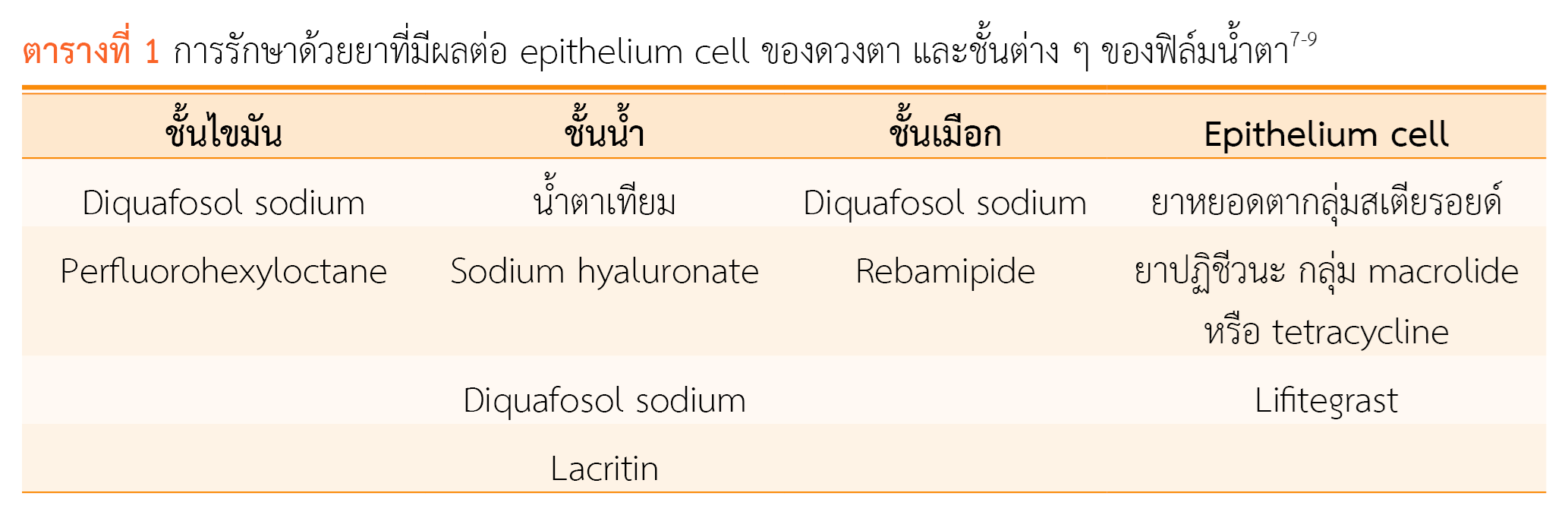
Dry eye disease affects quality of life over millions of people worldwide. The goals of treating are to alleviate dry eye symptoms, improve patients’quality of life, decrease inflammation, and prevent ocular damage. A treatment strategy has been developed according to the 2017 International Dry eye Workshop II (DEWS II). It emphasized at the necessity of tear film homeostasis, tear film layer stabilization and the decrease of ocular inflammation. Two major classes of dry eye are the aqueous tear-deficient dry eye and the evaporative dry eye (EDE). Perfluorohexyloctane ophthalmic solution is the first and only USFDA approved drug for the indication to treat EDE that directly targets tear evaporation. Perfluorohexyloctane demonstrates strong spreading properties due to low surface tension, facilitating small drop sizes interact with the lipophilic part of the tear film to form a layer at the film-air interface and prevent evaporation. Systemic reviews show that perfluorohexyloctane eye drops significantly and rapidly alleviate symptoms of dry eye disease with efficacy as well as satisfactory tolerability and safety.
References
Stapleton F, Alves M, Bunya VY, Jalbert I, Lekhanont K, Malet F, et al. TFOS DEWS II epidemiology report. Ocul Surf. 2017;15(3):334-65. doi: 10.1016/j.jtos.2017.05.003.
Craig JP, J. Nelson D, Azar DT, Belmonte C, Bron AJ, Chauhan SK, et al. TFOS DEWS II report executive summary. Ocul Surf. 2017;15(4):802-12. doi: 10.1016/j.jtos.2017.08.003.
Akpek EK, Amescua G, Farid M, Garcia-Ferrer FJ, Lin A, Rhee MK, et al. Dry eye syndrome preferred practice pattern [Internet]. San Francisco: American Academy of Ophthalmology; 2018 [cited 2023 Aug 1]. doi: 10.1016/j.ophtha.2018.10.023. Available from: https://www.aao.org/education/preferred-practice-pattern/dry-eye-syndrome-ppp-2018
Chang AY, Purt B. Biochemistry, tear film In: StatPearls [Internet]. Treasure Island (FL): StatPearls Publishing LLC.; 2023 [cited 2023 Oct 30]. PMID: 34283502. Available from: https://www.ncbi.nlm.nih.gov/books/NBK572136/
Lemp MA, Baudouin C, Baum J, Dogru M, Foulks GN. Kinoshita S, et al. The definition and classification of dry eye disease: report of the Definition and Classification Subcommittee of the International Dry Eye WorkShop (2007). Ocul Surf. 2007;5(2):75-92. doi: 10.1016/S1542-0124(12)70081-2.
IY Hasan ZA. Dry eye syndrome risk factors: a systemic review. Saudi J Ophthalmol. 2021;35(2): 131–9. doi: 10.4103/1319-4534.337849.
Şimşek C, Doğru M, Kojima T, Tsubota K. Current management and treatment of dry eye disease. Turk J Ophthalmol. 2018;48(6):309-13. doi: 10.4274/tjo.69320.
Nadelmann JB, Bunya VY, Macchi I, Massaro-Giordano M. Chapter 11 - Treatment of dry eye disease in the United States [Internet]. In: Dry eye disease. Galor A, editor. n.p.: ScienceDirect, Elsevier Inc.; 2023 [cited 2023 Aug 1]. p. 153-79. doi: 10.1016/B978-0-323-82753-9.00007-2. Available from: https://www.sciencedirect.com/science/article/abs/pii/B9780323827539000072
Aragona P, Giannaccare G, Mencucci R, Rubino P, Cantera E, Rolando M. Modern approach to the treatment of dry eye, a complex multifactorial disease: a P.I.C.A.S.S.O. board review. Br J Ophthalmol. 2021;105(4):446-53. doi: 10.1136/bjophthalmol-2019-315747.
Huons Co.,Ltd. Diquas-S® [Package insert]. Bangkok (Thailand): Santen (Thailand) Co.,Ltd; 2019.
Hutton D. Bausch & Lomb, Novaliq announce FDA approval of perfluorohexyloctane ophthalmic solution for treatment of dry eye disease [Internet]. Cranbury, NJ: Opthalmology Times; 2023 [cited 2023 Aug 1]. Available from: https://www.ophthalmologytimes.com/view/bausch-lomb-novaliq-announce-fda-approval-of-perfluorohexyloctane-ophthalmic-solution-for-treatment-of-dry-eye-disease
Bausch & Lomb Americas Inc. MIEBO™ (perfluorohexyloctane ophthalmic solution), for topical ophthalmic use [Internet]. Bridgewater, NJ: Bausch & Lomb Americas Inc.; 2023 [cited 2023 Jul 1]. Available from: https://www.bausch.com/globalassets/pdf/packageinserts/pharma/miebo-package-insert.pdf
Tauber J, Berdy GJ, Wirta DL, Krösser S, Vittitow JL. NOV03 for dry eye disease associated with meibomian gland dysfunction: results of the randomized phase 3 GOBI Study. Ophthalmology. 2023;130(5):516-24. doi: 10.1016/j.ophtha.2022.12.021.
Sheppard JD, Kurata F, Epitropoulos AT, Krösser S, Vittitow JL. NOV03 for signs and symptoms of dry eye disease associated with meibomian gland dysfunction: the randomized phase 3 MOJAVE Study. Am J Ophthalmol. 2023;252:265-74. doi: 10.1016/j.ajo.2023.03.008.
Steven P, Scherer D, Krösser S, Beckert M, Cursiefen C, Kaercher T. Semifluorinated alkane eye drops for treatment of dry eye disease--a prospective, multicenter noninterventional study. J Ocul Pharmacol Ther. 2015;31(8):498-503. doi: 10.1089/jop.2015.0048.
Tian L, Gao Z, Zhu L, Shi X, Zhao S, Gu H, et al. Perfluorohexyloctane eye drops for dry eye disease associated with meibomian gland dysfunction in Chinese patients : a randomized clinical trial. JAMA Ophthalmology. 2023;141(4):385-92. doi: 10.1001/jamaophthalmol.2023.0270.
Garhofer G, Schmidl D, Werkmeister RM, Adzhemian N, Serge K, Kroesser S, et al. Influence of perfluorohexyloctane containing eye drops on tear film thickness in patients with mild to moderate dry eye disease. Invest Ophthalmol Vis Sci [Internet]. 2018 [cited 2023 Aug 1];59(9):941. Available from: https://iovs.arvojournals.org/article.aspx?articleid=2689663
Downloads
Published
How to Cite
Issue
Section
License
Copyright (c) 2023 Association of Hospital Pharmacy (Thailand)

This work is licensed under a Creative Commons Attribution-NonCommercial-NoDerivatives 4.0 International License.
บทความในวารสารเภสัชกรรมโรงพยาบาลเผยแพร่ภายใต้เงื่อนไขของสัญญาอนุญาตครีเอทีฟคอมมอนส์ในรูปแบบที่ต้องอ้างอิงแหล่งที่มา - ห้ามใช้เพื่อการค้า - ห้ามแก้ไขดัดแปลง เวอร์ชั่น 4.0 (CC BY-NC-ND 4.0) สามารถแจกจ่ายและนำบทความไปใช้ประโยชน์เพื่อการศึกษาได้แต่ต้องระบุการอ้างอิงถึงบทความจากเว็บไซต์วารสารเภสัชกรรมโรงพยาบาล ไม่สามารถนำบทความไปใช้เพื่อการพาณิชย์ใด ๆ เว้นแต่ได้รับอนุญาตจากบรรณาธิการวารสารเภสัชกรรมโรงพยาบาล และกรณีมีการนำบทความไปเรียบเรียงใหม่ เปลี่ยนแปลงเนื้อหา หรือเสริมเติมแต่งเนื้อหาของบทความ ท่านไม่สามารถนำบทความที่ปรับแต่งไปเผยแพร่ได้ในทุกกรณี
ข้อความที่ปรากฏในบทความในวารสารเป็นความคิดเห็นส่วนตัวของผู้แต่งแต่ละท่านไม่เกี่ยวข้องกับสมาคมเภสัชกรรมโรงพยาบาล (ประเทศไทย) และบุคลากรในสมาคมฯ แต่อย่างใด ความรับผิดชอบองค์ประกอบทั้งหมดของบทความแต่ละเรื่องเป็นของผู้แต่งแต่ละท่าน หากมีความผิดพลาดใด ๆ ผู้แต่งแต่ละท่านจะรับผิดชอบบทความของตนเอง ตลอดจนความรับผิดชอบด้านเนื้อหาและการตรวจร่างบทความเป็นของผู้แต่ง ไม่เกี่ยวข้องกับกองบรรณาธิการ

.png)

