Effect of Open Approach Combining with the SSCS Model on Learning Achievement, Problem-Solving Skills and Students’ Satisfactions
Keywords:
Open Approach, the SSCS learning model, learning achievement, scientific problem-solving skills, gain scoreAbstract
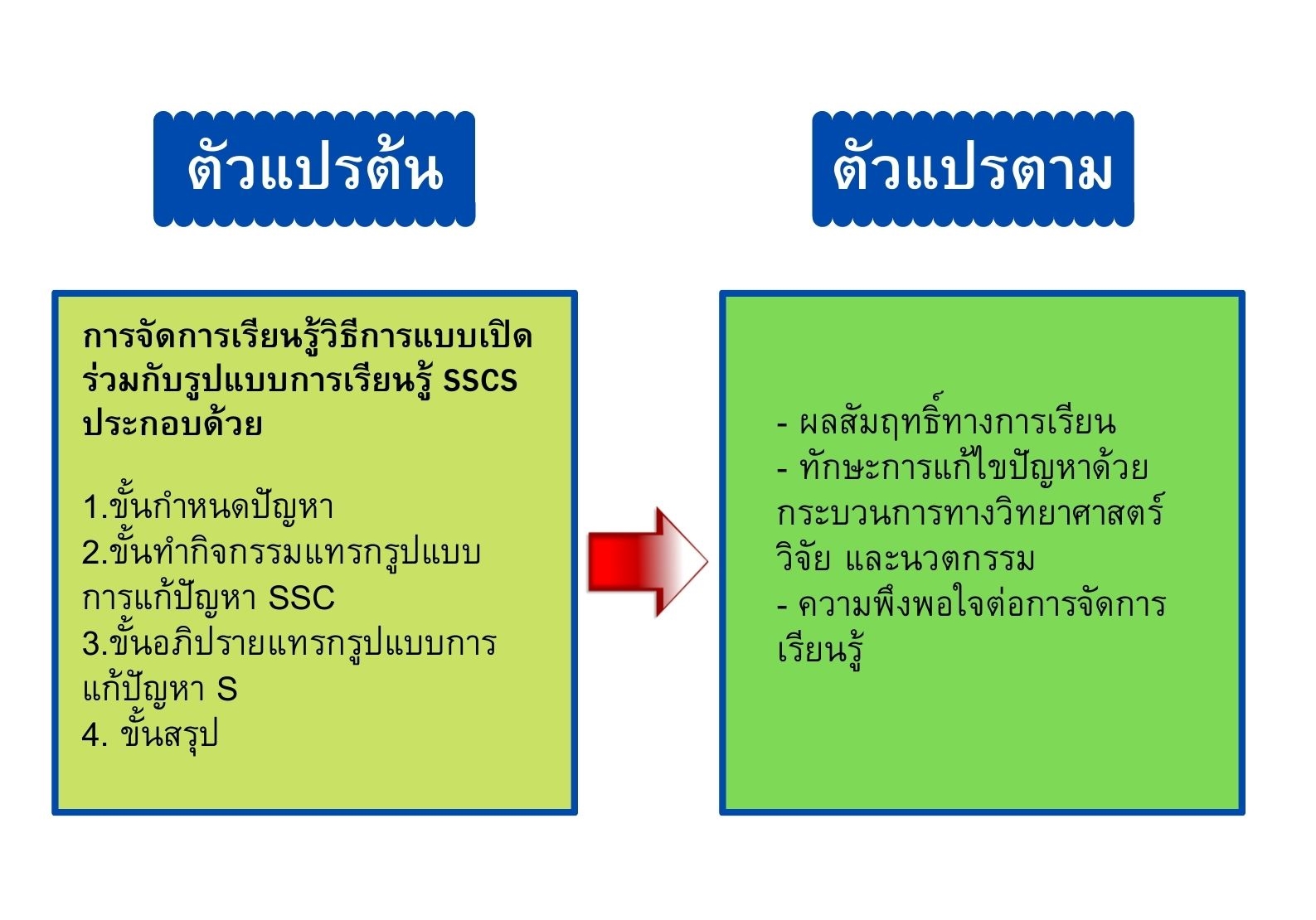
The purpose of this research was to study the effect of the Open Approach and SSCS learning model on students’ learning achievement, problem-solving skills, and satisfaction with learning management. The participants comprise of 58 first-year nursing students at Boromarajonani College of Nursing, Nakhon Lampang. These students were registered for the second semester of the 2020 academic year. They were selected by purposive sampling. The duration of learning management was 16 hours, and occurred between the March 2nd - 23rd, 2021. The research instruments consisted of lesson plans utilizing the Open Approach with the SSCS model, an achievement test on pathogenic viruses, a scientific problem-solving skills Assessment, and a satisfaction questionnaire regarding learning management. The one group Pretest-Posttest Design was applied in this study. The data was analyzed by using descriptive statistics (percentages, mean, standard deviation, gain scores), and the t-test for a one sample group.
The results showed that 1) the mean score for post-learning achievement was significantly higher than the mean score for pre-learning achievement at the 0.01 signfiicance level (x̄pre= 14.93, S.D.pre= 2.21 and x̄post = 21.81, S.D.post= 2.80) 2) On average, the students’ development improved 45.30 percent, which indicated progress at a moderate level. 3) The mean score for post evaluation of problem-solving skills was also significantly higher than the mean score for pre evaluation of problem-solving skills at the .00 0.01 level (x̄pre =10.83, S.D.pre=1.42 and x̄post =14.16, S.D.post=1.14) and 4) the mean scoe for students’ satisfaction was at a high level (mean= 4.36, SD = 0.59).
The Open Approach and SSSC model learning styles can be used in other subjects besides science or professional foundational subjects to develop learning outcomes such as knowledge and intellectual skills. These approaches can help students build relationships with each other and prepare first-year students for their nursing profession.
References
Abell, S. K., & Pizzini, E. L. (1992). The effect of a problem solving in-service program on
the classroom behaviors and attitudes of middle school science teachers. Journal of Research in Science Teaching, 29(7), 649–667.
Chin, C. (1997). Promoting higher cognitive learning in science through a problem-solving
approach. REACT, 1, 7-11.
Choengchao, C. (2013). Introduction to educational research. Pattani: Prince of Songkla
University. (In Thai)
Fongsri, P. (2006). Educational research “Concept Theory”. (2nd ed.). Bangkok: Tiemfa
Press. (In Thai)
Kaday, A. & Mopant, N. (2017). Effect of Open Approach with SSCS Problem Solving
Learning Model on science achievement, problem solving ability, and satisfaction with learning organizing of grade 10 students. AL-NUR Journal of Graduate School, 12, 23-36.
Kanchanawasee, S. (2009). Theory of traditional testing. (6th ed.). Bangkok: Chulalongkorn
University. (In Thai)
Nohda, N. (1986). A study of “Open – Approach” method in school mathematics
teaching focusing on mathematical problem solving activities. Tsukuba Journal
of Education Study in Mathematics. 5, 119-131.
Office of the Basic Education Commission. (2010). Assessment criteria of the Office of Academic Affairs and Educational Standards. Bangkok. Ministry of Education. (In Thai)
Panich, V. (2015). Creative learning for students in the 21st century. Walailak Journal of
Learning Innovations, 1(2), 3-14. (In Thai)
Pantaewan, P. (2016). Development of students in the 21st century with active
learning in nursing profession. Journal of The Royal Thai Army Nurses, 17(3), 17-25. (In Thai)
Laohaphaiboon, P. (2009). Science teaching approach. (8th ed.). Bangkok: Thai Watthana
Panich Press. (In Thai)
Praboromarajchanok Institute of Health Workforce Development. (2018). Learning assessment
measurement guide according to the bachelor's qualification standards nursing science. Nonthaburi: Ministry of Public Health. (In Thai)
Prommaruk, R. (2010). A study of some factors contributed to mathematical reasoning ability
and mathematical problem solving of Mathayomsuksa 4 students in schools under
Nakornpathom education area 1. A dissertation submitted in partial fulfillment of the requirements for the master degree (Research and Educational Statistics), Srinakharinwirot University. (In Thai)
Sadao, Y. (2011). Development of activities for Thai language teaching through the lesson
study process, bringing an open approach (open teaching style). Academic Journal, 15, 24-35.
Srisa-aad, B. (2008). Basic research in education. (5th ed.). Kalasin: Prasaan Press. (In Thai)
Downloads
Published
How to Cite
Issue
Section
License
Copyright (c) 2022 Thai Journal of Public Health and Health Sciences

This work is licensed under a Creative Commons Attribution-NonCommercial-NoDerivatives 4.0 International License.
บทความทุกบทความที่ได้รับการตีพิมพ์ถือเป็นลิขสิทธิ์ของ วารสารสาธารณสุข