Feasibility to Implementation of Strategic Health Impact Assessment Model: A Case Study of Community Based-Tourism of Andaman Tourism Development Areas
Keywords:
Feasibility, Model, Health Impact Assessment, Community Based-TourismAbstract
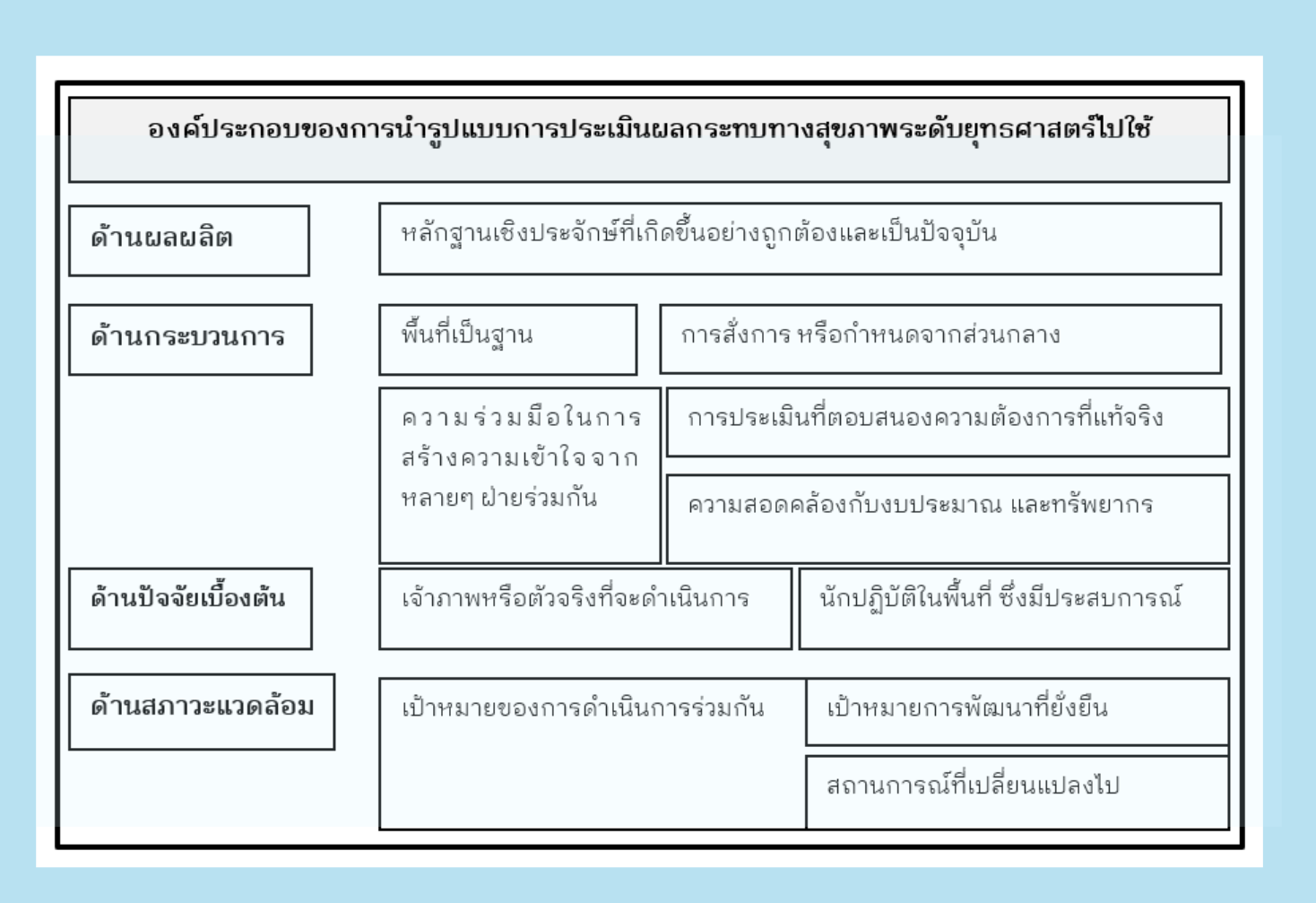
This study aimed to study the feasibility implementation of the Strategic Health Impact Assessment (SHIA) on Community-Based Tourism (CBT)for a case study of Andaman Tourism Development Areas. This qualitative research with multiple case studies consisting of two main steps: 1) conducted by group and online discussion with 10 stakeholders directly related to the operation of CBT, including people who are living in the community and CBT operators in Ban Sam Chong Nuea, Ban Hua Kuan, Ban Na Teen, Bo Hin Farm Stay and Ban Bo Jed Luk, and 2) conducted by using group and online meetings among 20 representatives of agencies, namely the Tourism Development Committee at Andaman Tourism Development Area. Data were verified by a triangulation method, analyzed using content analysis and narrative analysis. The results revealed that the feasibility of the application consisted of four elements as follows: 1) The context factor was that the application must respond to the agreed goals, including the Sustainable Development Goals, and changing situations such as epidemics, or global warming, etc. 2) The input factors consist of 1. the entitle responsibility who will perform and
2. operators in the area with experience; 3) The process of SHIA factor is required: 1. area based; 2. collaboration to create understanding from many parties together; 3. assessment design that meets real needs; 4. centrally ordered or determined; and 5. compliance with budget and resources available; and 4) Productivity factor must be consistent with the empirical evidence that occurs accurately and up to date.
References
Bennett, N. J., Kadfak, A., & Dearden, P. (2016). Community-based scenario planning: A process for vulnerability analysis and adaptation planning to social–ecological change in coastal communities. Environment, Development and Sustainability, 18(6), 1771–1799.
Bice, S., & Fischer, T. B. (2020). Impact assessment for the 21st century – what future? Impact Assessment and Project Appraisal, 38(2), 89–93.
Bowers, J. (2016). Developing sustainable tourism through ecomuseology: A case study in the Rupununi region of Guyana. Journal of Sustainable Tourism, 24(5), 758–782.
Dahlgren, G., & Whitehead, M. (2007). Policies and strategies to promote social equity in health. Institute for Futures Studies.
Eikemo, T. A., Bambra, C., Huijts, T., & Fitzgerald, R. (2017). The First Pan-European Sociological Health Inequalities Survey of the General Population: The European Social Survey Rotating Module on the Social Determinants of Health. European Sociological Review, 33(1), 137–153.
Harris-Roxas, B., Viliani, F., Bond, A., Cave, B., Divall, M., Furu, P., et al., (2012). Health impact assessment: The state of the art. Impact Assessment and Project Appraisal, 30(1), 43–52.
Higgins-Desbiolles, F. (2020). Socialising tourism for social and ecological justice after COVID-19. Tourism Geographies, 22(3), 610–623.
The Institute of Public Health in Ireland. (2003). Health Impact Assessment—A practical guidance manual. Retrieved April 19, 2020, from https://publichealth.ie/reports/health-impact-assessment-practical-guidance-manual-2003
Kanchanachitra, C., Pothisita, C., Archavanijkul, K., Jamchan, C., Siriratmongkol, K., Thipsuk, P. et al., (2011). Health. Thai people 2011: HIA Mechanism for Public Policy Development for Life and Health. Institute for Population and Social Research. Mahidol University (in Thai)
Koodsela, W., Dong, H., & Sukpatch, K. (2019). A Holistic Conceptual Framework into
Practice-Based on Urban Tourism Toward Sustainable Development in Thailand. Sustainability, 11(24), 7152. https://doi.org/10.3390/su11247152
Khunnikom, P. (2023). Model Development of Strategic Health Impact Assessment on
the Community-Based Tourism: A Case Study of Andaman Tourism Development Areas. A Dissertation Submitted in Partial Fulfillment of the Requirements for the Degree of Doctoral of Philosophy, Prince of Songkla University.
Khunnikom, P., Muneenam, U., & Sukmag, P. (2022). Community based-tourism (CBT)
management during the coronavirus pandemic along the Andaman coast of Thailand. GeoJournal of Tourismand Geosites, 44(4), 1435–1441. https://doi.org/10.30892/gtg.44431-963
Lee, T. H., & Jan, F.-H. (2019). Can community-based tourism contribute to sustainable development? Evidence from residents’ perceptions of the sustainability. Tourism Management, 70, 368–380.
Linzalone, N., Ballarini, A., Piccinelli, C., Viliani, F., & Bianchi, F. (2018). Institutionalizing Health Impact Assessment: A consultation with experts on the barriers and facilitators to implementing HIA in Italy. Journal of Environmental Management, 218, 95–102.
Linzalone, N., Assennato, G., Ballarini, A., Cadum, E., Cirillo, M., Cori, L., et al., (2014). Health Impact Assessment practice and potential for integration within Environmental Impact and Strategic Environmental Assessments in Italy. International Journal of Environmental Research and Public Health, 11(12), 12683–12699.
Mayers, J. (2005). Getting started. Power tools series. International Institute for Environment and Development, London, UK.
National health Commission Office. (2017). Guidelines and methods for health
Impact assessment arising from public policy (2nd ed.). Bangkok: Supaprinting.(In Thai)
Schneider, L. N. (2020). Strategic management as adaptation to changes in the ecosystems of public hospitals in Israel. Israel Journal of Health Policy Research, 9(1), 65.
Sharafuddin, M. A. (2015). Types of Tourism in Thailand. e-Review of Tourism Research (eRTR),3(12), 210-219.
Shi, Q., & Liu, T. (2020). Should internal migrants be held accountable for spreading COVID-19? Environment and Planning A: Economy and Space, 0308518X20916764. https://doi.org/10.1177/0308518X20916764
Sohn, E. K., Stein, L. J., Wolpoff, A., Lindberg, R., Baum, A., McInnis-Simoncelli, A., & Pollack, K. M. (2018). Avenues of Influence: The Relationship between Health Impact Assessment and Determinants of Health and Health Equity. Journal of Urban Health, 95(5), 754–764.
Stufflebeam, D.L. (1971). Education Evaluation and Decision Making.Illinois: Peacock
Publisher Inc.
The Office of Strategy Management, Southwest Andaman. (2016). OSM Andaman Development Plan (Ranong, Phang Nga, Phuket, Krabi,Trang) 2018-2021. Retrieved April 19, 2020, from http://www.osmsouth-w.moi.go.th/submenu.php?page=162&l (in Thai)
Thondoo, M., Rojas-Rueda, D., Gupta, J., de Vries, D. H., & Nieuwenhuijsen, M. J. (2019). Systematic Literature Review of Health Impact Assessments in Low and Middle-Income Countries. International Journal of Environmental Research and Public Health, 16(11), 2018.
Weatherdon, L. V., Magnan, A. K., Rogers, A. D., Sumaila, U. R., & Cheung, W. W. L. (2016). Observed and Projected Impacts of Climate Change on Marine Fisheries, Aquaculture, Coastal Tourism, and Human Health: An Update. Frontiers in Marine Science, 3. doi.org/10.3389/fmars.2016.00048
Downloads
Published
How to Cite
Issue
Section
License
Copyright (c) 2023 Thai Journal of Public Health and Health Sciences

This work is licensed under a Creative Commons Attribution-NonCommercial-NoDerivatives 4.0 International License.
บทความทุกบทความที่ได้รับการตีพิมพ์ถือเป็นลิขสิทธิ์ของ วารสารสาธารณสุข