ความสัมพันธ์ระหว่างความรอบรู้ด้านสุขภาพกับพฤติกรรมการบริโภคอาหารกิจกรรมทางกายและคุณภาพชีวิตของผู้สูงอายุไทย
คำสำคัญ:
ผู้สูงอายุ, ความรอบรู้ด้านสุขภาพ, กิจกรรมทางกาย, พฤติกรรมสุขภาพบทคัดย่อ
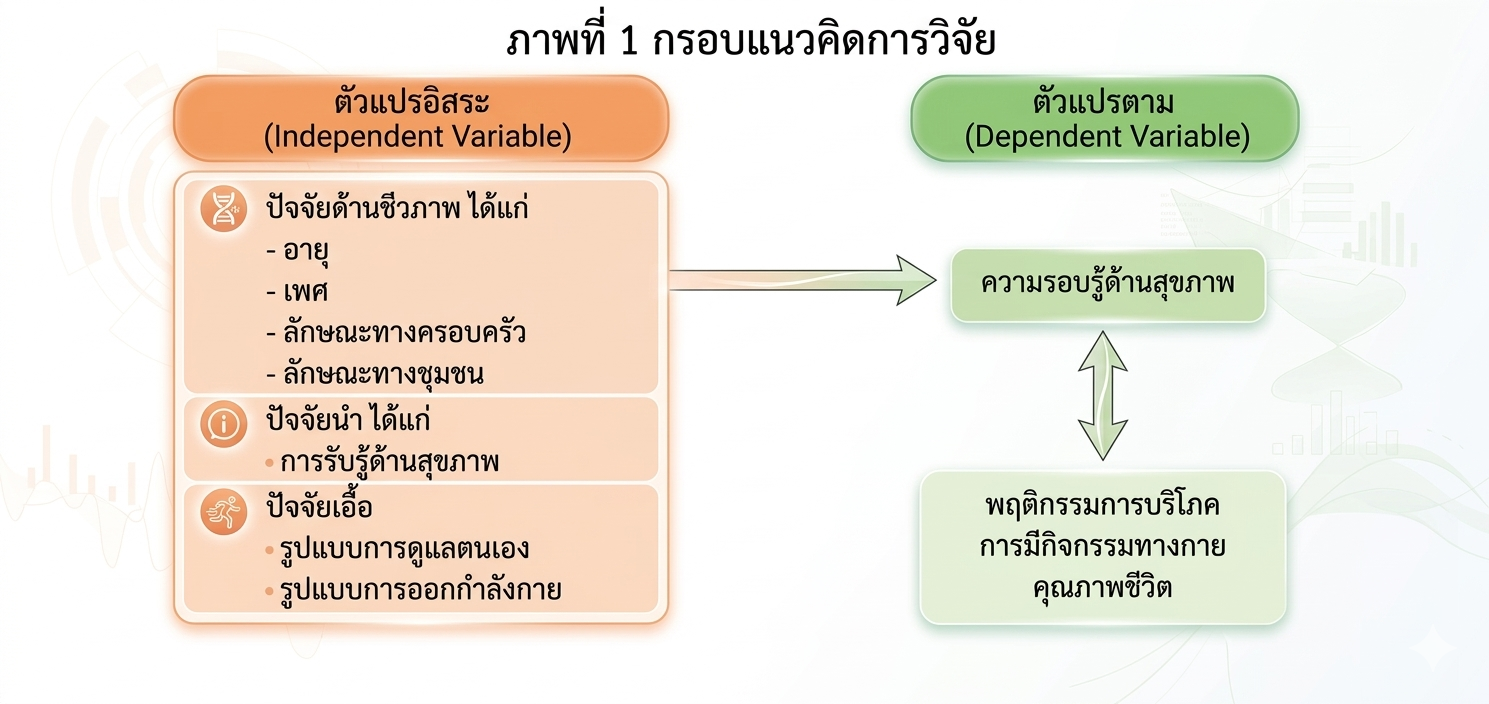
การวิจัยนี้มีวัตถุประสงค์เพื่อศึกษาความสัมพันธ์ที่มีผลต่อความรอบรู้ด้านสุขภาพ พฤติกรรมการบริโภค กิจกรรมทางกาย และคุณภาพชีวิตของผู้สูงอายุไทย รวมถึงวิเคราะห์ความสัมพันธ์ระหว่างพฤติกรรมการมีกิจกรรมทางกายกับระดับคุณภาพชีวิตของผู้สูงอายุในประเทศไทยใน 5 ภูมิภาค ภูมิภาค การวิจัยนี้ใช้ระเบียบวิจัยเชิงปริมาณ โดยเก็บข้อมูลจากผู้สูงอายุจำนวน 335 ราย จาก 5 ภูมิภาคโดยใช้แบบสอบถามเป็นเครื่องมือหลัก จากนั้นวิเคราะห์ข้อมูลด้วยสถิติเชิงพรรณนาและสถิติสหสัมพันธ์แบบเพียร์สัน
ผลการวิจัยพบว่าผู้สูงอายุส่วนใหญ่มีคุณภาพชีวิตที่สูงขึ้นและมีความสัมพันธ์ทางบวกในระดับปานกลางกับพฤติกรรมการมีกิจกรรมทางกาย (r = 0.85, p < 0.01) ความรอบรู้ด้านสุขภาพที่ดีมีความสัมพันธ์กับพฤติกรรมการบริโภคที่สมดุล และพบว่าในบางภูมิภาค เช่น ภาคเหนือและภาคตะวันออก ความรอบรู้ด้านสุขภาพที่ดีย่อมส่งผลโดยตรงต่อการเพิ่มระดับกิจกรรมทางกาย อย่างไรก็ตาม ในภูมิภาคอื่นพบว่ากิจกรรมทางกายของผู้สูงอายุไม่ได้ขึ้นอยู่กับปัจจัยด้านความรู้เพียงอย่างเดียว แต่ยังถูกหล่อหลอมด้วยบริบททางสังคมและวิถีชีวิต อาทิ การประกอบอาชีพเกษตรกรรม การใช้แรงงาน และการสนับสนุนจากท้องถิ่น ดังนั้น การส่งเสริมพฤติกรรมสุขภาพที่ยั่งยืนจึงจำเป็นต้องบูรณาการความรอบรู้ด้านสุขภาพควบคู่ไปกับการปรับใช้ปัจจัยเชิงพื้นที่และวิถีชีวิตจริงของผู้สูงอายุ
เอกสารอ้างอิง
Basnet, S., Merikanto, I., Lahti, T., Mannisto, S., Laatikainen, T., Vartiainen, E., et al. (2016). Associations of common chronic non-communicable diseases and medical conditions withsleep-related problems in a population-based health examination study. Sleep Science, 9(3), 249–254.
Bull, F. C., Maslin, T. S., & Armstrong, T. (2009). Global physical activity questionnaire (GPAQ): Nine-country reliability and validity study. Journal of Physical Activity and Health, 6(6), 790–804.
Chow, B. C., Duong, T. V., Jiao, J., Hassel, H., Kwok, T. C. Y., Nguyen, M. H., & Liu, H. (2024). Health literacy mediates the relationships of cognitive and physical functions with health-related quality of life in older adults. Frontiers in Public Health, 12, 1–12.
https://doi.org/10.3389/fpubh.2024.135539
Chuenjai, S., & Chatprasart, W. (2021). Factors related to life satisfaction among elderly club members under Kanchanaburi Municipality. Journal of Health Science Research, 15(1), 125–136.
Department of Health. (2021). Guidelines for promoting nutrition for older adults. Bangkok, Thailand: Nutrition Division, Department of Health, Ministry of Public Health. Retrieved from https://nutrition.anamai.moph.go.th
Edwards, M., Wood, F., Davies, M., & Edwards, A. (2012). The development of health literacy in patients with a long-term health condition: The health literacy pathway model. BMC Public Health, 12, 130. https://doi.org/10.1186/1471-2458-12-130
Green, T. J., Allen, O. B., & O'Connor, D. L. (1998). A three-day weighed food record and a semiquantitative food-frequency questionnaire are valid measures for assessing the folate and vitamin B-12 intakes of women aged 16 to 19 years. The Journal of Nutrition, 128(10), 1665–1671. https://doi.org/10.1093/jn/128.10.1665
McHill, A. W., Phillips, A. J., Czeisler, C. A., Keating, L., Yee, K., Barger, L. K., et al. (2017). Later circadian timing of food intake is associated with increased body fat. The American Journal of Clinical Nutrition, 106(5), 1213–1219.
National Statistical Office. (2020). Household socioeconomic survey report 2020. Bangkok, Thailand: National Statistical Office. Retrieved from https://www.nso.go.th
Nutbeam, D. (2000). Health literacy as a public health goal: A challenge for contemporary health education and communication strategies into the 21st century. Health Promotion International, 15(3), 259–267. https://doi.org/10.1093/heapro/15.3.259
Supakan, B., et al. (2019). Study of food consumption behaviors of older adults in Southern Thailand. Journal of Public Health Research, 28(3), 112–125.
Suerungreang, S., Chamnankhong, K., Wanwaja, M., & Kloaiam, S. (2024). Health literacy survey of Thai people aged 15 years and over, 2023 (2nd ed.): Promoting health literacy in Thailand—Current situation, determinants, and policy recommendations. Nonthaburi, Thailand: Health Systems Research Institute.
Suwimol, C. (2021). Physical activity and well-being of older adults in rural areas. Community Public Health Journal, 17(2), 45–59.
Suwimol, P. (2017). Introduction to research (12th ed.). Bangkok, Thailand: Suwiriyasarn.
Taylor, D. (2014). Physical activity is medicine for older adults. Postgraduate Medical Journal, 90(1059), 26–32. https://doi.org/10.1136/postgradmedj-2012-131366
Thanwawan, C. (2018). Food consumption behaviors of older adults in urban areas, Chiang Mai province. Journal of Public Health Nursing, 32(1), 45–56.
Wongnoy, K., Juwa, S., & Srisookkum, T. (2023). Behavior, social support and quality of life among socially dependent elderly people in Phayao Province, Thailand. Journal of Public Health and Development, 21(2), 189–200.
World Health Organization. (2010). Global recommendations on physical activity for health. Retrieved from https://www.who.int/publications/i/item/9789241599979
World Health Organization. (2015). Healthy diet: Fact sheet No. 394. Retrieved from https://www.who.int/news-room/fact-sheets/detail/healthy-diet
ดาวน์โหลด
เผยแพร่แล้ว
รูปแบบการอ้างอิง
ฉบับ
ประเภทบทความ
สัญญาอนุญาต
ลิขสิทธิ์ (c) 2026 วารสารสาธารณสุขและวิทยาศาสตร์สุขภาพ

อนุญาตภายใต้เงื่อนไข Creative Commons Attribution-NonCommercial-NoDerivatives 4.0 International License.
บทความทุกบทความที่ได้รับการตีพิมพ์ถือเป็นลิขสิทธิ์ของ วารสารสาธารณสุข