
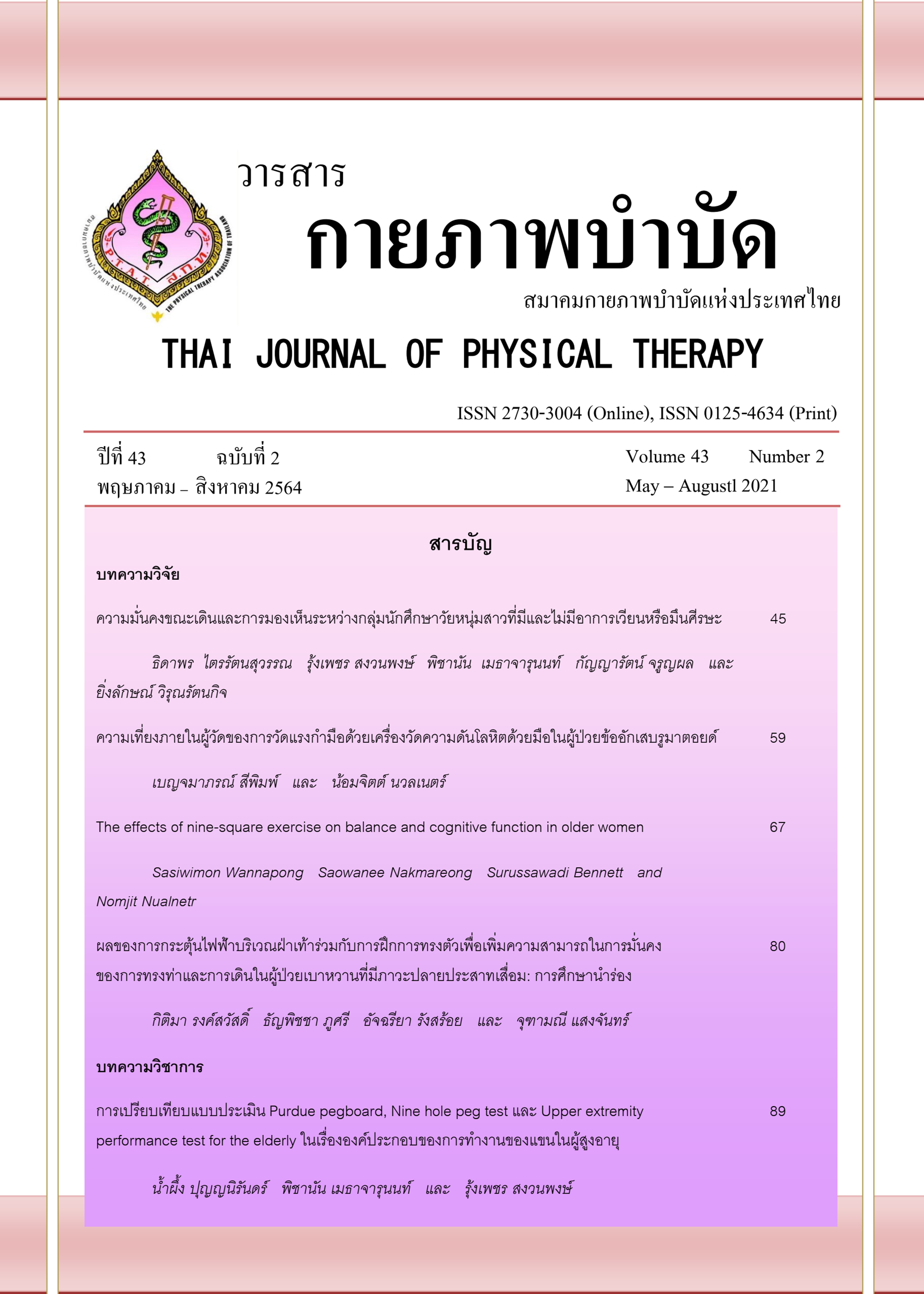
Effects of plantar electrical stimulation combined with balance training to improve postural stability and gait in patients with diabetic peripheral neuropathy: A pilot study
Article Sidebar
Main Article Content
Abstract
Background: Patients with type 2 diabetes mellitus with diabetic peripheral neuropathy (DPN) had reduced plantar sensation, which influenced the postural instability and was associated with the increased risk of falls. Previous studies found that balance training and plantar electrical stimulation can improve balance in a patient with DPN. However, the effects of combination training between plantar electrical stimulation and balance training remain unknown.
Objective: To determine the effects of 4 weeks of plantar electrical stimulation combined with standing balance training on postural stability and walking ability in patients with type 2 diabetes mellitus with DNP.
Methods: Seven patients with type 2 diabetes mellitus with DPN were enrolled in this study. Each patient was received plantar electrical stimulation combined with standing balance training three times per week for four weeks. Postural sway by Lord’s sway meter on four conditions (eyes opened and closed on a firm surface, eyes opened and closed on foam surface) and walking speed by 10-meter walk test (10MWT) were assessed at baseline and after training.
Results: After four weeks of training, there were significant (p<0.05) improvements in postural sway and walking speed.
Conclusion: Findings from this study showed that four weeks of plantar electrical stimulation combined with standing balance training could improve postural stability and walking ability in patients with type 2 diabetes mellitus with DNP.
Article Details
References
Cho NH, Shaw JE, Karuranga S, Huang Y, da Rocha Fernandes JD, Ohlrogge AW, et al. IDF Diabetes Atlas: Global estimates of diabetes prevalence for 2017 and projections for 2045. Diabetes Res Clin Pract. 2018; 138: 271–81.
IDF. Retrieved February 25, 2019, Available from: https://www.idf.org/our-network/regions-members/western-pacific/members/115-thailand.html
American Diabetes Association. Complications | ADA [Internet]. [cited 2019 Feb 25]. Available from: https://www.diabetes.org/diabetes/ complications
Ibrahim A. IDF Clinical Practice Recommendation on the Diabetic Foot: A guide for healthcare professionals. Diabetes Res Clin Pract. 2017; 127: 285–7.
Davies M, Brophy S, Williams R, Taylor A. The prevalence, severity, and impact of painful diabetic peripheral neuropathy in type 2 diabetes. Diabetes Care. 2006; 29(7): 1518–22.
Turcot K, Allet L, Golay A, Hoffmeyer P, Armand S. Investigation of standing balance in diabetic patients with and without peripheral neuropathy using accelerometers. Clin Biomech. 2009; 24(9): 716–21.
Dixon CJ, Knight T, Binns E, Ihaka B, O’brien D. Clinical measures of balance in people with type two diabetes: A systematic literature review. Gait Posture. 2017; 58: 325–32.
Sturnieks DL, Arnold R, Lord SR. Validity and reliability of the swaymeter device for measuring postural sway. BMC Geriatr [Internet]. 2011 Dec [cited 2019 Mar 15]; 11(1). Available from: http://bmcgeriatr. biomedcentral.com/articles/10.1186/1471-2318-11-63
Graham JE, Ostir GV, Fisher SR, Ottenbacher KJ. Assessing walking speed in clinical research: a systematic review. J Eval Clin Pract. 2008; 14(4): 552–62.
Peters DM, Fritz SL, Krotish DE. Assessing the reliability and validity of a shorter walk test compared with the 10-Meter Walk Test for measurements of gait speed in healthy, older adults. J Geriatr Phys Ther. 2013; 36(1): 24–30.
Ahmad I, Hussain E, Singla D, Verma S, Ali K. Balance Training in Diabetic Peripheral Neuropathy: A Narrative Review. JSM Diabetol Manag. 2017; 2(1): 1–9.
Ites KI, Anderson EJ, Cahill ML, Kearney JA, Post EC, Gilchrist LS. Balance interventions for diabetic peripheral neuropathy: a systematic review. J Geriatr Phys Ther. 2011; 34(3): 109–16.
Najafi B, Talal TK, Grewal GS, Menzies R, Armstrong DG, Lavery LA. Using Plantar Electrical Stimulation to Improve Postural Balance and Plantar Sensation Among Patients With Diabetic Peripheral Neuropathy: A Randomized Double Blinded Study. J Diabetes Sci Technol. 2017; 11(4): 693–701.
Najafi B, Crews RT, Wrobel JS. A Novel Plantar Stimulation Technology for Improving Protective Sensation and Postural Control in
Patients with Diabetic Peripheral Neuropathy: A Double-Blinded, Randomized Study. Gerontology. 2013; 59(5): 473–80.
International Diabetes Federation, Sinclair A, Dunning T, Colagiuri S. Managing older people with type 2 diabetes: global guideline. [Internet]. [cited 2019 Oct 25]. Available from: https://ifa.ngo/wp-content/uploads/2014/02/ IDF-Guideline-for-Older-People.pdf
Institute of Geriatric Medicine. Medical technology assessment: comparison of relationship between Mini-Mental State Examination Thai Version (MMSE-Thai) 2002 and Thai Mini-Mental State Examination (TMSE) for screening the elderly with dementia. Bangkok: CG tool Company Limited; 2008.
Thakral G, LaFontaine J, Najafi B, Talal TK, Kim P, Lavery LA. Electrical stimulation to accelerate wound healing. Diabet Foot Ankle. 2013; 4.
Pan X, Bai J. Balance training in the intervention of fall risk in elderly with diabetic peripheral neuropathy: A review. Int J Nurs Sci. 2014; 1(4):441–5.
Fortaleza AC de S, Chagas EF, Ferreira DMA, Mantovani AM, Barela JA, Chagas EFB, et al. Postural control and functional balance in individuals with diabetic peripheral neuropathy. Rev Bras Cineantropometria Amp Desempenho Hum. 2013; 15(3):305–14.
