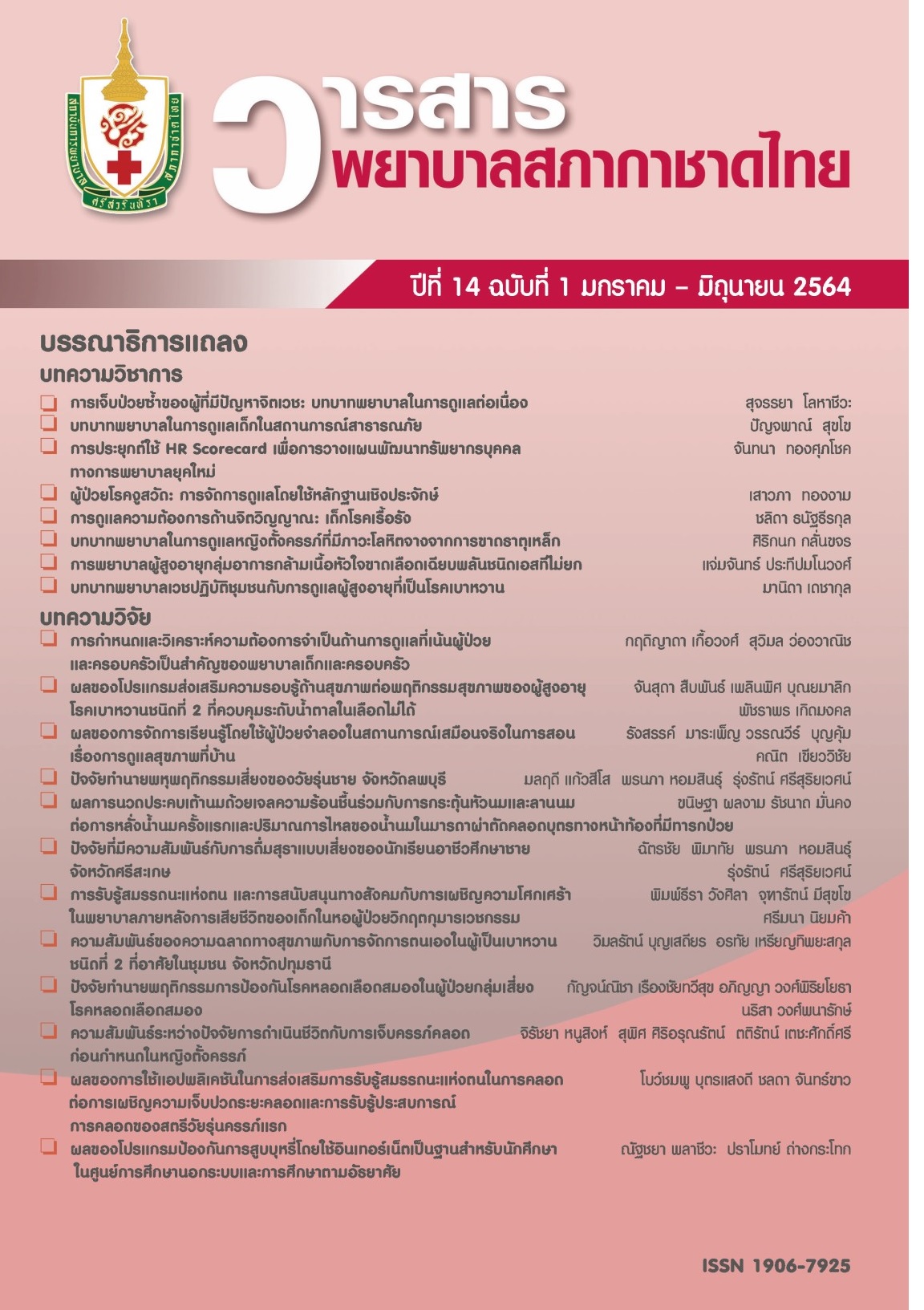
บทบาทพยาบาลในการดูแลหญิงตั้งครรภ์ที่มีภาวะโลหิตจางจากการขาดธาตุเหล็ก
คำสำคัญ:
iron deficiency anemia, pregnant women, role of nursesบทคัดย่อ
Iron deficiency anemia (IDA) in pregnant women is a serious global health issue. IDA has a negative impact on these women and their children at all stages: during pregnancy, labor and the postpartum period. IDA is also associated with increased rates of preterm labour, pregnancy induced hypertension, low birth weight, and perinatal death. Furthermore, postpartum hemorrhage, postpartum infection, a high rate of unsuccessful exclusive breast feeding, and postpartum depression are all correlated to IDA. Maternal physiological changes during pregnancy with inadequate iron intake are indicated as common causes of IDA in pregnancy. In Thailand, the Department of Health (DoH), Ministry of Public Health (MoPH) has policies in place to promote a decrease in the rate of IDA in pregnant women by providing iron supplements for all pregnant women. Furthermore, nurses are involved with group and individual health education about IDA, including topics such as severity, consequences, prevention, treatment, dietary and iron supplements, and self-care during pregnancy. These processes may decrease the rate of IDA in pregnant women and provide needed support.
Downloads
เอกสารอ้างอิง
2. Department of Health, Ministry of Public Health. Standard of care on maternal and child service of Department of Health, Ministry of Public Health [Internet]. 2018 [cited 2019 Feb 28]. Available form: http://www.hpc.go.th/director/data/standardUpload/LR_profile_090217_105208.pdf. (in Thai)
3. World Health Organization (WHO). Haemoglobin concentrations for the diagnosis of anemia and assessment of severity (in pregnancy). Geneva: World Health Organization (WHO); 2011.
4. Maka SS, Tondare SB, Tondare MB. Study of impact of anemia on pregnancy. Int J Reprod Contracept Obstet Gynecol 2017;6(11):4847-50.
5. Camaschella C. Iron-deficiency anemia. N Engl J Med 2015;372(19):1832-43.
6. Pinchaleaw D. Nurses and management of iron deficiency anemia in pregnant women. JOPN 2017;9(2):195-201. (in Thai)
7. Techakampholsarakit L, Kantaruksa K, Sansiriphun N. Interventions to promote anemia prevention among pregnant women: a systemic review. Nursing Journal 2018;45(1):62-74. (in Thai)
8. Lowdermilk DL, Perry SE, Cashion K, Alden KR. Maternity & Women’s health care. 11th ed. St. Louis, MO: Elsevier; 2016.
9. Sookdee J, Wanaratwichit C. Factors affecting iron deficiency anemia among pregnant women receiving antenatal care at sub-districts health promoting hospital. Journal of Health Science Research 2016;10(1):1-7. (in Thai)
10. Kaljarueg P. Anemia among pregnant women at U-Thong Community hospital, U-Thong district, Suphanburi province. Nursing Journal of the Ministry of Public Health 2017;27(1): 22-32. (in Thai)
11. Tandon R, Jain A, Malhorta P. Management of iron deficiency anemia in pregnancy in India. Indian J Hematol Blood Transfus 2018;34(2):204-15.
12. Braymann C. Iron deficiency anemia in pregnancy. Semin Hematol 2015; 52(4):339-47.
13. Chatterjee N, Fernandes G. ‘This is normal during pregnancy’: a qualitative study of anaemia-related perceptions and practices among pregnant women in Mumbai, India. Midwifery 2014;30(3):e56-63.
14. World Health Organization (WHO). WHO recommendations on antenatal care for a positive pregnancy experience. Luxembourg: World Health Organization (WHO); 2016.
15. Achebe MM, Gafter-Gvili A. How I treat anemia in pregnancy: iron, cobalamin, and folate. Blood 2017;129(8):940-49.
16. Food Division, Bureau of Food, Food and Drug Administration, Ministry of Public Health. Knowledge of food and nutrition for all ages. Bangkok: Food and Drug Administration; 2016. (in Thai)
17. Sirisopa N, Pongchaidecha M. Evaluation of a pharmaceutical care program with pregnant women with Iron deficiency anemia. Journal of Science & Technology, Ubon Ratchathani University 2015;17(2):53-62.
18. Pipatkul W, Sinsuksai N, Phahuwatanakorn W. Effects of a nutrition and iron supplement promoting program on iron deficiency anemia in pregnant women. J Nurs Sci 2015;33(1):69-76. (in Thai)
19. Jaranai P, Nirattharadorn M, Buaboon N. The effects of a nutrition promotion program on the Nutritional health behavior and hematocrit levels of adolescent pregnant women. Journal of Nursing Science Chulalongkorn University 2018;30(1):59-69. (in Thai)
20. Siu AL, U.S. Preventive Services Task Force. Screening for iron deficiency anemia and iron supplementation in pregnant women to improve maternal health and birth outcomes: U.S. preventive services task force recommendation statement. Ann Intern Med 2015;163(7):529-36.
ดาวน์โหลด
เผยแพร่แล้ว
รูปแบบการอ้างอิง
ฉบับ
ประเภทบทความ
สัญญาอนุญาต
เนื้อหาบทความหรือข้อคิดเห็นต่างๆ ในวารสารพยาบาลสภากาชาดไทยนี้ เป็นความคิดเห็นของผู้เขียนบทความ ไม่ใช่ความเห็นของกองบรรณาธิการ หรือสถาบันการพยาบาลศรีสวรินทิรา สภากาชาดไทย


