ผลของการใช้โปรแกรมการให้ความรู้และกำกับการกินยาด้วยวิดีโอผ่านแอปพลิเคชันมือถือ ต่อการยึดมั่นในการรับประทานยาของผู้ป่วยวัณโรค
คำสำคัญ:
โปรแกรมการให้ความรู้, กำกับการกินยา, วิดีโอผ่านแอปพลิเคชันมือถือ, การยึดมั่นในการรับประทานยาบทคัดย่อ
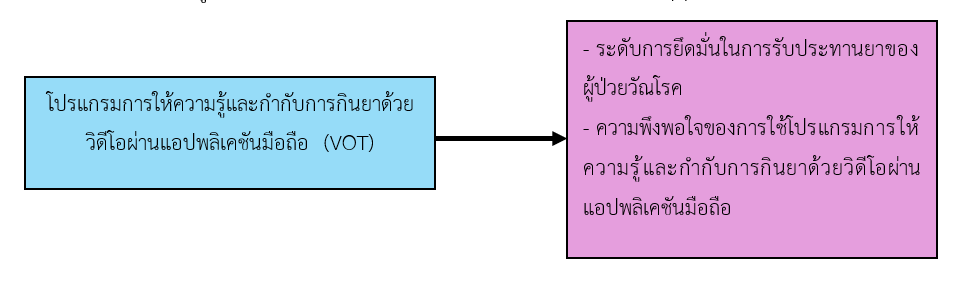
การวิจัยครั้งนี้มีวัตถุประสงค์เพื่อศึกษาผลของโปรแกรมการให้ความรู้และกำกับการกินยาด้วยวิดีโอผ่านแอปพลิเคชันมือถือต่อการยึดมั่นในการรับประทานยาของผู้ป่วยวัณโรค และความพึงใจต่อการใช้โปรแกรมกำกับการกินยาด้วยวิดีโอผ่านแอปพลิเคชันมือถือ กลุ่มตัวอย่าง คือ ผู้ป่วยทั้งชายและหญิงที่ได้รับการตรวจวินิจฉัยและขึ้นทะเบียนรักษาเป็นผู้ป่วยวัณโรคปอดรายใหม่ คลินิกวัณโรค ในจังหวัดตรัง จำนวน 25 คน ที่ได้รับโปรแกรมการให้ความรู้และการรักษาภายใต้การสังเกตโดยตรงโดยใช้แอปพลิเคชันมือถือ ซึ่งประยุกต์จากแนวคิด Telecare ระยะเวลาในการทดลอง 4 สัปดาห์ เก็บข้อมูลโดยใช้แบบสอบถามผ่านทางแอปพลิเคชันมือถือ และวิเคราะห์ข้อมูลโดยใช้สถิติ paired t-test
ผลการวิจัยพบว่า คะแนนการยึดมั่นในการรับประทานยาของผู้ป่วยวัณโรคในสัปดาห์ที่ 4 เพิ่มขึ้นเมื่อเปรียบเทียบกับคะแนนการยึดมั่นในการรับประทานยาของผู้ป่วยวัณโรคในสัปดาห์ที่ 1 โดยค่าเฉลี่ยความยึดมั่นในการรับประทานยาของผู้ป่วยวัณโรคในสัปดาห์ที่ 1 อยู่ในระดับปานกลาง (M= 7.18, SD= 0.60) ส่วนค่าเฉลี่ยความยึดมั่นในการรับประทานยาของผู้ป่วยวัณโรคในสัปดาห์ที่ 4 อยู่ในระดับมาก (M= 8.00, SD= 0.46) และค่าเฉลี่ยก่อนและหลังการใช้โปรแกรมฯ มีความแตกต่างกันอย่างมีนัยสำคัญทางสถิติที่ระดับ 0.05 นอกจากนี้ยังพบว่า กลุ่มตัวอย่างมีความพึงพอใจต่อการใช้โปรแกรมกำกับการกินยาด้วยวิดีโอผ่านแอปพลิเคชันมือถือโดยภาพรวมอยู่ในระดับมาก (M= 3.45, SD= 0.52) โดยข้อที่มีค่าเฉลี่ยมากที่สุด คือ โปรแกรมสามารถนำไปใช้ได้จริง (M= 3.64, SD= 0.51)
ผลการวิจัยครั้งนี้แสดงให้เห็นว่าโปรแกรมการให้ความรู้และกำกับการกินยาด้วยวิดีโอผ่านแอปพลิเคชันมือถือที่ใช้เวลานาน 4 สัปดาห์ สามารถทำให้การยึดมั่นในการรับประทานยาของผู้ป่วยวัณโรคเพิ่มขึ้น ข้อเสนอแนะควรใช้โปรแกรมการให้ความรู้และกำกับการกินยาด้วยวิดีโอผ่านแอปพลิเคชันมือถือโดยมีการให้ข้อมูลป้อนกลับและติดต่อสื่อสารแบบสองทาง เพื่อให้มีการรับประทานยาอย่างต่อเนื่องในผู้ป่วยวัณโรค
เอกสารอ้างอิง
Center for Disease Control and Prevention. (2021). Core curriculum on tuberculosis: What the Clinician Should Know. Georgia, USA: CDC.
Chantana, N., Maneesriwongul, W., & Putawatana, P. (2019). Factors related to adherence to multi-drug resistant tuberculosis treatment. Ramathibodi Nursing Journal, 25(3), 298-307. (in Thai)
Choowong, J., Tillgren, P., & Söderbäck, M. (2018). Directly observed therapy providers’ practices when promoting tuberculosis treatment in a local Thai community. Journal of Public Health in Development Countries, 4(1), 458-466.
Cohen, J. (1977). Statistical power analysis for the behavioral sciences (Rev. ed.). Lawrence Erlbaum Associates, Inc.
Division of Tuberculosis. (2021). National tuberculosis control programme guideline, Thailand 2021. Bangkok: Division of Tuberculosis. (in Thai)
Faul, F., Erdfelder, E., Lang, A. G., & Buchner, A. (2007). G*Power 3: A flexible statistical power analysis program for the social, behavioral, and biomedical sciences. Behavior Research Methods, 39(2), 175-191.
Ingkamanee, N., Kusuma Na Ayuthya, S., Puwarawuttipanit, W., & Peerapatdit, T. (2011). Effectiveness of promoting a problem-solving ability program on medication adherence in patients with type 2 diabetic. Journal of Nursing Science, 29(2), 56-64. (in Thai)
Kongkasem, P., Theeranut, A., & Srichan, C. (2020). Effects of innovation “KKU-TB-BOX” on adherence to tuberculosis treatment process. Journal of Nursing Science & Health, 43(2), 1-12. (in Thai)
Kumwichar, P., Chongsuvivatwong, V., & Prappre, T. (2021). Development of a video-observed therapy system to improve monitoring of tuberculosis treatment in Thailand: mixed-methods study. JMIR Formative Research, 5(7), e29463. https://doi.org/10.2196/29463.
Morisky, D. E., Ang, A., Krousel-Wood, M. & Ward, H. (2008) Predictive validity of a medication adherence measure for hypertension control. The Journal of Clinical Hypertension, 10, 348-354. http://dx.doi.org/10.1111/j.1751-7176.2008.07572.x
Naing, L., Winn, T., & Rusli, B. N. (2006). Practical issues in calculating the sample size for prevalence studies. Archives of Orofacial Sciences, 1(1), 9-14.
Pathaweesrisutha, P. (2021). Effects of education and treatment using directly observed treatment (DOT) program through line application on anti-tuberculosis medication adherence in patients with pulmonary tuberculosis. Research and Development Health System Journal, 14(2), 301-309. (in Thai)
Rattanasuwan, P. (2018). TB treatment: DOT vs. VOT. Journal of Bamrasnaradura Infectious Diseases Institute, 12(1), 43-47. (in Thai)
Thammakumpee, G. (2019). Pulmonary tuberculosis in the 21th century. (1st ed.). Bangkok: Sahamit Pattana Printing (1992) Company Limited. (in Thai)
Togun, T., Kampmann, B., Stoker, N.G., Lipman, M. (2020). Anticipating the impact of the COVID-19 pandemic on TB patients and TB control programmes. Annals of Clinical Microbiology and Antimicrobials, 19, 21. https://doi.org/10.1186/s12941-020-00363-1
Trang Provincial Public Health Office. (2021). Annual report 2020. Trang: Trang provincial public health office. (in Thai) Wongprakornkul, S. (2020). New era of healthcare through business ecosystem and telehealth. Mahidol R2R e-Journal, 7(2), 1-15.
World Health Organization. (2017). Handbook for the use of digital technologies to support tuberculosis medication adherence. Geneva, Switzerland.
World Health Organization. (2021). Review on palliative care with focus on 18 high tuberculosis priority countries, 2020. Copenhagen: WHO Regional Office for Europe; 2021. Geneva, Switzerland.
World Health Organization. (2021). WHO global lists of high burden countries for tuberculosis (TB), TB/HIV and multidrug/rifampicin-resistant TB (MDR/RR-TB), 2021 - 2025. Geneva, Switzerland.
Zimmer, A. J., Heitkamp, P., Malar, J., Dantas, C., O'Brien, K., Pandita, A., et al. (2021). Facility- based directly observed therapy (DOT) for tuberculosis during COVID-19: A community perspective. Journal of Clinical Tuberculosis and Other Mycobacterial Diseases, 24, 100248. https://doi.org/10.1016/j.jctube.2021.100248.
ดาวน์โหลด
เผยแพร่แล้ว
รูปแบบการอ้างอิง
ฉบับ
ประเภทบทความ
สัญญาอนุญาต
ลิขสิทธิ์ (c) 2025 วิทยาลัยพยาบาลบรมราชชนนี นครศรีธรรมราช

อนุญาตภายใต้เงื่อนไข Creative Commons Attribution-NonCommercial-NoDerivatives 4.0 International License.
บทความที่ได้รับการตีพิมพ์เป็นลิขสิทธิ์ของ วิทยาลัยพยาบาลบรมราชชนนี นครศรีธรรมราช
ข้อความที่ปรากฏในบทความแต่ละเรื่องในวารสารวิชาการเล่มนี้เป็นความคิดเห็นส่วนตัวของผู้เขียนแต่ละท่านไม่เกี่ยวข้องกับวิทยาลัยพยาบาลบรมราชชนนี นครศรีธรรมราช และบุคคลากรท่านอื่น ๆ ในวิทยาลัยฯ แต่อย่างใด ความรับผิดชอบองค์ประกอบทั้งหมดของบทความแต่ละเรื่องเป็นของผู้เขียนแต่ละท่าน หากมีความผิดพลาดใดๆ ผู้เขียนแต่ละท่านจะรับผิดชอบบทความของตนเองแต่ผู้เดียว