การใช้แอมเฟตามีนในหญิงตั้งครรภ์และภาวะความดันโลหิตสูงขณะตั้งครรภ์: การทบทวนวรรณกรรมแบบกำหนดขอบเขต
คำสำคัญ:
หญิงตั้งครรภ์, การใช้แอมเฟตามีน, ภาวะความดันโลหิตสูงขณะตั้งครรภ์บทคัดย่อ
การวิจัยครั้งนี้มีวัตถุประสงค์เพื่อเพื่ออธิบายลักษณะงานวิจัยที่ศึกษา ขอบเขตของข้อมูลงานวิจัยที่ศึกษา สังเคราะห์ผลลัพธ์ของงานวิจัยที่ศึกษา และระบุช่องว่างทางการวิจัยเกี่ยวกับความสัมพันธ์ระหว่างการใช้แอมเฟตามีนในหญิงตั้งครรภ์และภาวะความดันโลหิตสูงขณะตั้งครรภ์ โดยใช้ระเบียบวิธีการทบทวนวรรณกรรมแบบกำหนดขอบเขต (Scoping Review) ตามแนวคิดของ Joanna Briggs Institute (JBI) และรายงานผลตามแนวทาง Preferred Reporting Items for Systematic Reviews and Meta-Analyses Extension for Scoping Reviews (PRISMA-ScR) งานวิจัยที่นำมาทบทวนเป็นงานวิจัยปฐมภูมิทั้งภาษาไทยและภาษาอังกฤษที่ตีพิมพ์ระหว่างปี พ.ศ. 2558–2569 สืบค้นจากฐานข้อมูลอิเล็กทรอนิกส์ ได้แก่ CINAHL, PubMed Thai Journals Online (Thai JO) และ Google Scholar โดยใช้กรอบแนวคิด Population–Concept–Context (PCC) ในการกำหนดคำถามการวิจัย กระบวนการคัดเลือก และการสกัดข้อมูลดำเนินการอย่างเป็นอิสระตามแนวทางของ JBI จากนั้นนำข้อมูลมาวิเคราะห์เชิงพรรณนาและสังเคราะห์เชิงประเด็น
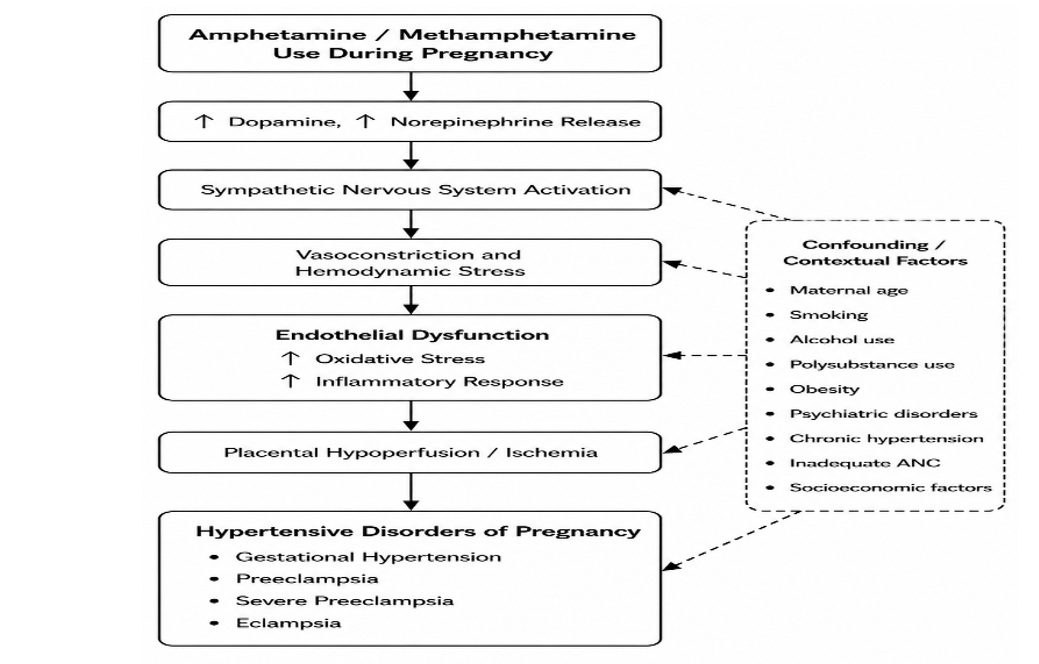
ผลการสังเคราะห์พบว่า การได้รับสารกระตุ้นกลุ่มแอมเฟตามีน (amphetamine-type stimulants; ATS) ระหว่างตั้งครรภ์ ครอบคลุม methamphetamine, amphetamine และ prescription psychostimulants มีความสัมพันธ์กับความเสี่ยงที่เพิ่มขึ้นของภาวะความดันโลหิตสูงขณะตั้งครรภ์ โดยเฉพาะ gestational hypertension และ preeclampsia หลักฐานส่วนใหญ่เป็นการศึกษาย้อนหลัง และมีข้อจำกัดด้านการควบคุมปัจจัยกวน ความแตกต่างของวิธีการประเมินการได้รับสาร การขาดข้อมูลเกี่ยวกับขนาดยาและช่วงเวลาของการได้รับสาร รวมทั้งหลักฐานจากประเทศรายได้ต่ำและปานกลางยังมีจำกัด
ผลการศึกษาครั้งนี้สามารถนำไปใช้เป็นข้อมูลการคัดกรองการใช้สาร การประเมินปัจจัยเสี่ยง และการเฝ้าระวังหญิงตั้งครรภ์กลุ่มเสี่ยงโดยทีมสหสาขาวิชาชีพ ทั้งนี้การวิจัยในอนาคตควรมุ่งพัฒนาการศึกษาแบบไปข้างหน้า ที่ใช้วิธีการประเมินการได้รับสารที่เป็นมาตรฐาน มีการควบคุมปัจจัยกวนอย่างเหมาะสม ศึกษาความสัมพันธ์ระหว่างขนาดยาและช่วงเวลาของการได้รับสารกับความเสี่ยงของภาวะความดันโลหิตสูงขณะตั้งครรภ์ และเปรียบเทียบผลกระทบของสารกระตุ้นในกลุ่มแอมเฟตามีนแต่ละชนิด เพื่อเสริมสร้างหลักฐานเชิงประจักษ์สำหรับการพัฒนาแนวทางการดูแลหญิงตั้งครรภ์ที่มีประสิทธิภาพ
เอกสารอ้างอิง
กรมอนามัย กระทรวงสาธารณสุข. (2568). กรมอนามัยเดินหน้าระบบเฝ้าระวัง คัดกรอง และดูแลการใช้สารเสพติดในหญิงตั้งครรภ์แบบบูรณาการ เน้นการดูแลโดยไม่ตีตราและเคารพสิทธิ. เว็บไซต์กรมอนามัย กระทรวงสาธารณสุข
ไพศิษฐ์ เพชรมะลิ. (2568). ผลลัพธ์ทางสูติกรรมของมารดาและทารกในมารดาเสพสารแอมเฟตามีนที่มาคลอดโรงพยาบาลท่าศาลา. วารสารวิชาการแพทย์เขต 11, 39(1), 55–68.
อดิศักดิ์ ไวเขตการณ์. (2564). ผลลัพธ์การตั้งครรภ์ของมารดาและทารกในสตรีตั้งครรภ์ที่เสพสารเมทแอมเฟตามีนระหว่างตั้งครรภ์. วารสารโรงพยาบาลมหาสารคาม, 18(2), 105–112.
หรรษา เรืองศิริปิยะกุล. (2569). ผลกระทบจากการใช้สารเมทแอมเฟตามีนของมารดาขณะตั้งครรภ์และภาวะถอนยาของทารกแรกเกิดในโรงพยาบาลสิรินธร จังหวัดขอนแก่น. วารสารสำนักงานสาธารณสุขจังหวัดขอนแก่น, 8(1), e280743.
Admon, L. K., Bart, G., Kozhimannil, K. B., Richardson, C. R., Dalton, V. K., & Winkelman, T. N. A. (2019). Amphetamine- and opioid-affected births: Incidence, outcomes, and costs, United States, 2004–2015. American Journal of Public Health, 109(1), 148–154. https://doi.org/10.2105/AJPH.2018.304771
Arksey, H., & O'Malley, L. (2005). Scoping studies: Towards a methodological framework. International Journal of Social Research Methodology, 8(1), 19–32. https://doi.org/10.1080/1364557032000119616
Chomchai, C., & Manaboriboon, B. (2012). Stimulant methamphetamine and dextromethorphan use among Thai adolescents: Implications for health of women and children. Journal of Medical Toxicology, 8, 291–294. https://doi.org/10.1007/s13181-012-0228-0
Cohen, J. M., Hernández-Díaz, S., Bateman, B. T., Park, Y., Desai, R. J., Gray, K. J., Patorno, E., Mogun, H., & Huybrechts, K. F. (2017). Placental complications associated with psychostimulant use in pregnancy. Obstetrics & Gynecology, 130(6), 1192–1201. https://doi.org/10.1097/AOG.0000000000002362
Garovic, V. D., Dechend, R., Karumanchi, S. A., Baird, S. M., Easterling, T., Magee, L. A., Rana, S., Vermunt, J. V., & August, P. (2022). Hypertension in pregnancy: Diagnosis, blood pressure goals, and pharmacotherapy: A scientific statement from the American Heart Association. Hypertension, 79(2), e21–e41. https://doi.org/10.1161/HYP.0000000000000208
Hayer, S., Garg, B., Wallace, J., Prewitt, K. C., Lo, J. O., & Caughey, A. B. (2024). Prenatal methamphetamine use increases risk of adverse maternal and neonatal outcomes. American Journal of Obstetrics and Gynecology, 231(3), 356.e1–356.e15. https://doi.org/10.1016/j.ajog.2024.05.033
Homsup, P., Phaloprakarn, C., Tangjitgamol, S., & Manusirivithaya, S. (2018). Maternal characteristics and pregnancy outcomes among illicit drug-using women in an urban setting. Taiwanese Journal of Obstetrics and Gynecology, 57(1), 83–88. https://doi.org/10.1016/j.tjog.2017.12.014
Newport, D. J., Hostetter, A. L., Juul, S. H., Porterfield, S. M., Knight, B. T., & Stowe, Z. N. (2016). Prenatal psychostimulant and antidepressant exposure and risk of hypertensive disorders of pregnancy. The Journal of Clinical Psychiatry, 77(11), 1538–1545. https://doi.org/10.4088/JCP.15m10506
Peters, M. D. J., Godfrey, C., McInerney, P., Munn, Z., Tricco, A. C., & Khalil, H. (2020). Chapter 11: Scoping reviews. In E. Aromataris & Z. Munn (Eds.), JBI manual for evidence synthesis. Joanna Briggs Institute. https://doi.org/10.46658/JBIMES-20-12
Pippard, N. S., Bandoli, G., & Baer, R. J. (2024). Trends and adverse pregnancy and birth outcomes associated with stimulant-related disorder diagnosis. Addiction, 119(11), 2006–2014. https://doi.org/10.1111/add.16636
Premchit, S., Orungrote, N., Prommas, S., Smanchat, B., Bhamarapravatana, K., & Suwannarurk, K. (2021). Maternal and neonatal complications of methamphetamine use during pregnancy. Obstetrics and Gynecology International, 2021, Article 8814168. https://doi.org/10.1155/2021/8814168
Roberts, J. M., & Hubel, C. A. (2009). The two-stage model of preeclampsia: Variations on the theme. Placenta, 30(Suppl. A), S32–S37. https://doi.org/10.1016/j.placenta.2008.11.009
Roloff, K. A., Stepanyan, G., & Valenzuela, G. (2015). Methamphetamine use increases chances of preeclampsia. Journal of Family Medicine and Disease Prevention, 1(3), Article 011. https://doi.org/10.23937/2469-5793/1510011
Russell, D. J., Wyrwoll, C. S., Preen, D. B., & Kelty, E. (2024). Investigating maternal and neonatal health outcomes associated with continuing or ceasing dexamphetamine treatment for women with attention-deficit hyperactivity disorder during pregnancy: A retrospective cohort study. Archives of Women's Mental Health, 27(5), 785–794. https://doi.org/10.1007/s00737-024-01450-4
Tricco, A. C., Lillie, E., Zarin, W., O'Brien, K. K., Colquhoun, H., Levac, D., Moher, D., Peters, M. D. J., Horsley, T., Weeks, L., Hempel, S., Akl, E. A., Chang, C., McGowan, J., Stewart, L., Hartling, L., Aldcroft, A., Wilson, M. G., Garritty, C., ... Straus, S. E. (2018). PRISMA extension for scoping reviews (PRISMA-ScR): Checklist and explanation. Annals of Internal Medicine, 169(7), 467–473. https://doi.org/10.7326/M18-0850
United Nations Office on Drugs and Crime. (2022). Synthetic drugs in East and Southeast Asia: Latest developments and challenges 2022. United Nations Office on Drugs and Crime.
United Nations Office on Drugs and Crime. (2025). World drug report 2025: Special points. United Nations Office on Drugs and Crime.
ดาวน์โหลด
เผยแพร่แล้ว
รูปแบบการอ้างอิง
ฉบับ
ประเภทบทความ
สัญญาอนุญาต
ลิขสิทธิ์ (c) 2026 วิทยาลัยพยาบาลบรมราชชนนี นครศรีธรรมราช

อนุญาตภายใต้เงื่อนไข Creative Commons Attribution-NonCommercial-NoDerivatives 4.0 International License.
บทความที่ได้รับการตีพิมพ์เป็นลิขสิทธิ์ของ วิทยาลัยพยาบาลบรมราชชนนี นครศรีธรรมราช
ข้อความที่ปรากฏในบทความแต่ละเรื่องในวารสารวิชาการเล่มนี้เป็นความคิดเห็นส่วนตัวของผู้เขียนแต่ละท่านไม่เกี่ยวข้องกับวิทยาลัยพยาบาลบรมราชชนนี นครศรีธรรมราช และบุคคลากรท่านอื่น ๆ ในวิทยาลัยฯ แต่อย่างใด ความรับผิดชอบองค์ประกอบทั้งหมดของบทความแต่ละเรื่องเป็นของผู้เขียนแต่ละท่าน หากมีความผิดพลาดใดๆ ผู้เขียนแต่ละท่านจะรับผิดชอบบทความของตนเองแต่ผู้เดียว