Predisposing, Enabling, Reinforcing Factors and Behaviors of Mask Wearing for Prevention and Control of COVID-19 among People in Chiang Mai Province
Keywords:
Face mask, COVID-19, Behavior, Community, Social supportAbstract
Covid-19 has been an endemic respiratory disease that the people still need preventive measures. A cross-sectional descriptive study aimed to investigate a preventive mask-wearing behavior and factors of predisposing, enabling, and reinforcing that related to the mask-wearing for prevention and control of COVID-19 outbreak among people in communities, Mueang district, Chiang Mai province. Collection of data carried out by an interview with a questionnaire between April–May, 2023 in 333 sampled population aged 15–69 years old in 8 sampled subdistricts. The study population were sampled and selected by the stratified random sampling method. Analysis methods involved the description and interpretation of the gathered data through the chi-square test and multiple logistic regression. The findings revealed that the mask-wearing behavior belonged to a good level that was fit for 54.65%. The predisposing, enabling, and reinforcing factors were determinants decisively affected the mask-wearing behavior with a statistical significance (p<0.05) that included knowing about mask-wearing, frequency of use, perception of government policy regarding mask-wearing, social and family support, and receiving information about it. However, the predisposing factor that could predict mask-wearing behavior was identified as the wearers who used it regularly when someone visited their home, they would likely to wear it 2.79 times compared to those who wore it occasionally or never. In addition, reinforcing factor was identified as people with better level of social support, would likely to wear it 1.81 times compared to those with nether level of social support. Therefore, public health sectors should foster mask-wearing policy and disseminate knowledge, enhance social and family support to encourage a correct behavior for the mask wearers in the communities.
References
กรมควบคุมโรค. (2563a). คู่มือเจ้าหน้าที่สาธารณสุขในการตอบโต้ภาวะฉุกเฉิน กรณีการระบาดโรคติดเชื้อไวรัสโคโรนา 2019 ในประเทศไทย. นนทบุรี: กรมควบคุมโรค.
กรมควบคุมโรค. (2563b). โรคติดเชื้อไวรัสโคโรนา 2019 Coronavirus Disease 2019 (COVID-19)
[ออนไลน์]. [สืบค้นเมื่อ 25 สิงหาคม 2564]; แหล่งข้อมูล: https://ddc.moph.go.th/viralpneumonia/file/g_km/handout001_12032020.pdf
กรมควบคุมโรค. (2565). สถานการณ์ผู้ป่วย COVID-19 ตามพื้นที่ [ออนไลน์]. [สืบค้นเมื่อ 27 มีนาคม 2565]; แหล่งข้อมูล: https://ddc.moph.go.th/covid19-dashboard/?dashboard=province
กรมอนามัย. (2563). ประชากรทะเบียนราษฎร์ จำแนกตามกลุ่มวัยและเพศ [ออนไลน์]. [สืบค้นเมื่อ 10 กันยายน 2564]; แหล่งข้อมูล: https://dashboard.anamai.moph.go.th/population
กองโรคติดต่อทั่วไป กรมควบคุมโรค. (2564). รวมแนวทางการเฝ้าระวัง ป้องกัน และควบคุมโรคติดเชื้อไวรัสโคโรนา 2019 สำหรับบุคลากรทางการแพทย์และสาธารณสุข [ออนไลน์]. [สืบค้นเมื่อ 1 กันยายน 2564]; แหล่งข้อมูล: https://ddc.moph.go.th/uploads/publish/1150920210610033910.pdf
ข้อกำหนดออกตามความในมาตรา 9 แห่งพระราชกำหนดการบริหารราชการในสถานการณ์ฉุกเฉิน พ.ศ. 2548 (ฉบับที่ ๔๖). (2565, 23 มิถุนายน). ราชกิจจานุเบกษา. เล่มที่ 139 ตอนพิเศษ 146 ง. หน้า 21-24.
ณฐนันทน์ ภูศรีเทศ และสรัญยา ลิ้มสายพรหม. (2565). ปัจจัยที่มีอิทธิพลต่อพฤติกรรมนิวนอร์มัลในสถานการณ์โควิด-19 ของคนวัยทำงานในอำเภอเมือง จังหวัดนครสวรรค์. วารสารวิชาการแพทย์และสาธารณสุข เขตสุขภาพที่ 3, 19(3), 285-300. [สืบค้นเมื่อ 15 ธันวาคม 2566]; แหล่งข้อมูล: https://thaidj.org/index.php/smj/article/view/12721/10571
ณรงค์ ใจเที่ยง, พัชรีภรณ์ ยะขอด และขวัญหทัย แสวงงาม. (2565). การสวมใส่หน้ากากอนามัยเพื่อหลีกเลี่ยง เชื้อโควิด 19 ในยุคชีวิตวิถีใหม่. วารสารกฎหมายและนโยบายสาธารณสุข, 8(1), 113-130. [สืบค้นเมื่อ 24 กุมภาพันธ์ 2567]; แหล่งข้อมูล: https://so05.tci-thaijo.org/index.php/journal_law/article/view/250622/172801
ธีระพงษ์ ทศวัฒน์ และปิยะกมล มหิวรรณ. (2563). การพัฒนาคุณภาพชีวิตทางสังคมของประชาชนและการ ป้องกันการแพร่ระบาดของโรคติดเชื้อไวรัสโคโรนา 2019 (COVID - 19). วารสารมหาจุฬานาครทรรศน์, 7(9), 40-55. [สืบค้นเมื่อ 12 มกราคม 2567]; แหล่งข้อมูล: https://so03.tci-thaijo.org/index.php/JMND/article/view/246723/166658
ปิยะนันท์ เรือนคำ, สุคนธา คงศีล, สุขุม เจียมตน, ยุวนุช สัตยสมบูรณ์ และเพ็ญพักตร์ อุทิศ. (2565). ปัจจัยที่มีความสัมพันธ์กับพฤติกรรมการป้องกันโรคติดเชื้อไวรัสโคโรนา 2019 ของประชากรผู้ใหญ่: กรณีศึกษาเขตจอมทอง กรุงเทพมหานคร. วารสารวิชาการสาธารณสุข, 31(ฉบับพิเศษ 2), S247-S259. [สืบค้นเมื่อ 24 กุมภาพันธ์ 2567]; แหล่งข้อมูล: https://thaidj.org/index.php/JHS/article/view/12586/10449
ประกาศกระทรวงสาธารณสุข เรื่อง ชื่อและอาการสำคัญของโรคติดต่ออันตราย (ฉบับที่ ๓) พ.ศ. 2563. (2563, 29 กุมภาพันธ์). ราชกิจจานุเบกษา. เล่มที่ 137 ตอนพิเศษ 48 ง. หน้า 1.
พันธนีย์ ธิติชัย และภันทิลา ทวีวิกยการ. (2564). รายงานผลการทบทวนสถานการณ์โรคโควิด-19 และ มาตรการควบคุมป้องกันในระดับโลก และในประเทศไทย. นนทบุรี: กองโรคไม่ติดต่อ กรมควบคุมโรค.
พินิดา จิวะไพศาลพงศ์, วลัยนารี พรมลา, จิฬาวัจน์ เลิกนอก, กิตติมาพร โลกาวิทย์ และพัชรียา สีห์จักร. (2564). พฤติกรรมการใช้หน้ากากอนามัยแบบผ้าในการป้องกันโควิด - 19 ของประชาชน ในจังหวัดปทุมธานี. วารสารวิชาการ สถาบันวิทยาการจัดการแห่งแปซิฟิค (สาขามนุษยศาสตร์และสังคมศาสตร์), 7(2), 650-659. [สืบค้นเมื่อ 27 มีนาคม 2565]; แหล่งข้อมูล: https://so05.tci-thaijo.org/index.php/pacific/article/view/254338/173674
ระเบียบคณะกรรมการโรคติดต่อแห่งชาติ ว่าด้วยหลักเกณฑ์การเปรียบเทียบความผิดกรณีฝ่าฝืนหรือไม่ปฏิบัติ ตามคำสั่งของเจ้าพนักงานควบคุมโรคติดต่อตามมาตรา 34 (6) แห่งพระราชบัญญัติโรคติดต่อ พ.ศ.2558 ในสถานการณ์การระบาดของโรคติดเชื้อไวรัสโคโรนา 2019 หรือโรคโควิด 19 พ.ศ. 2564. (2564, 7 มิถุนายน). ราชกิจจานุเบกษา. เล่มที่ 138 ตอนพิเศษ 122 ง. หน้า 4-7.
วิเชียร เกตุสิงห์. (2538). ค่าเฉลี่ยกับการแปลความหมาย: เรื่องง่ายๆ ที่บางครั้งก็พลาดได้. ข่าวสารการวิจัย การศึกษา, 18(3), 8-11.
สมบูรณ์ ขอสกุล. (2564). ปัจจัยที่มีความสัมพันธ์กับพฤติกรรมการใช้หน้ากากอนามัยแบบผ้าในการป้องกันโควิด-19 ของประชาชน ในจังหวัดปทุมธานี. วารสารพยาบาลสาธารณสุข, 35(2), 22-38. [สืบค้นเมื่อ 27 มีนาคม 2565]; แหล่งข้อมูล: https://he01.tci-thaijo.org/index.php/phn/article/view/249506/170282
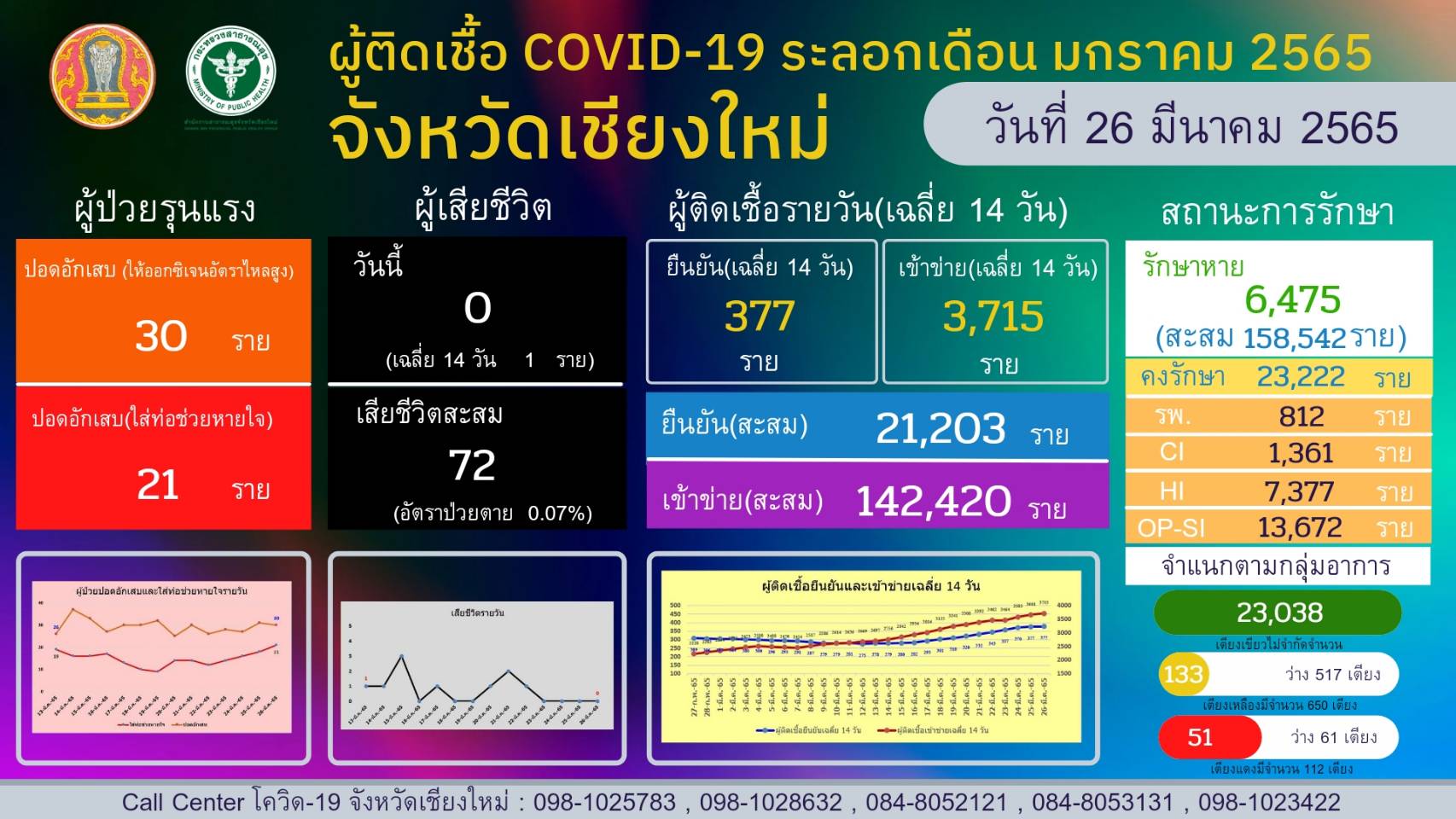
สำนักงานสาธารณสุขจังหวัดเชียงใหม่. (2565). ผู้ติดเชื้อ COVID-19 ระลอกเดือนมกราคม 2565 จังหวัดเชียงใหม่ [ออนไลน์]. [สืบค้นเมื่อ 27 มีนาคม 2565]; แหล่งข้อมูล: https://www.chiangmai.go.th/covid19/assets/img/situation/260365.jpg
Betsch, C., Korn, L., Sprengholz, P., et al. (2020). Social and behavioral consequences of mask policies during the COVID-19 pandemic. Proceedings of the National Academy of Sciences of the United States of America, 117(36), 21851-21853. [cited 2022 March 27]; Available from: https://doi.org/10.1073/pnas.2011674117
Bloom, B. S. (1968). Learning for Mastery. Instruction and Curriculum. Regional Education Laboratory for the Carolinas and Virginia, Topical Papers and Reprints, Number 1 [online]. [cited 2022 May 22]; Available from: https://eric.ed.gov/?id=eD053419
Daniel, W. W. (2010). Biostatistics: Basic Concepts and Methodology for the Health Sciences. (9th ed.). New York: John Wiley & Sons.
Green, L. W., & Kreuter, M. W. (2005). Health program planning: An educational and ecological approach. (4th ed.). New York: McGraw-Hill.
Kaewpan, W., Rojpaisarnkit, K., Pengpid, S., & Peltzer, K. (2022). Factors affecting face mask-wearing behaviors to prevent COVID-19 among Thai people: A binary logistic regression model. Frontiers in Psychology, 13, 996189. [cited 2023 August 4]; Available from: https://doi.org/10.3389/fpsyg.2022.996189
Poonaklom, P., Rungram, V., Abthaisong, P., & Piralam, B. (2020). Factors associated with preventive behaviors towards Coronavirus Disease (COVID-19) among adults in Kalasin province, Thailand, 2020. Outbreak, Surveillance, Investigation & Response Journal, 13(3), 78-89. [cited 2023 August 4]; Available from: https://www.osirjournal.net/index.php/osir/article/view/211
Rojpaisarnkit, K., Kaewpan, W., Pengpid, S., & Peltzer, K. (2022). COVID-19 preventive behaviors and influencing factors in the Thai population: A web-based survey. Frontiers in Public Health, 10, 816464. [cited 2023 August 4]; Available from: https://doi.org/10.3389/fpubh.2022.816464
Şenol, Y., & Avcı, K. (2022). Identification of risk factors that increase household transmission of COVID-19 in Afyonkarahisar, Turkey. Journal of Infection in Developing Countries, 16(6), 927-936. [cited 2023 August 4]; Available from: https://doi.org/10.3855/jidc.16145
Song, E., & Yoo, H. J. (2020). Impact of social support and social trust on public viral risk response: A COVID-19 survey study. International Journal of Environmental Research and Public Health, 17(18), 6589. [cited 2023 October 20]; Available from: https://doi.org/10.3390/ijerph17186589
Tam, V. C. W., Tam, S. Y., Khaw, M. L., Law, H. K. W., Chan, C. P. L., & Lee, S. W. Y. (2021). Behavioural insights and attitudes on community masking during the initial spread of COVID-19 in Hong Kong. Hong Kong Medical Journal, 27(2), 106-112. [cited 2023 October 20]; Available from: https://doi.org/10.12809/hkmj209015
Tjaden, A. H., Edelstein, S. L., Ahmed, N., et al. (2023). Association between COVID-19 and consistent mask wearing during contact with others outside the household-A nested case-control analysis, November 2020-October 2021. Influenza and Other Respiratory Viruses, 17(1), e13080. [cited 2024 February 20]; Available from: https://doi.org/10.1111/irv.13080
Wang, Y., Tian, H., Zhang, L., et al. (2020). Reduction of secondary transmission of SARS-CoV-2 in households by face mask use, disinfection and social distancing: a cohort study in Beijing, China. BMJ Global Health, 5(5), e002794. [cited 2022 May 22]; Available from: https://doi.org/10.1136/bmjgh-2020-002794
World Health Organization. (2020). Statement on the second meeting of the International Health Regulations (2005) Emergency Committee regarding the outbreak of novel coronavirus (2019-nCoV) [online]. [cited 2021 Jun 16]; Available from: https://www.who.int/news-room/detail/30-01-2020-statement-on-the-second-meeting- of-the-international-health-regulations-(2005)-emergency-committee-regarding-the- outbreak-of-novel-coronavirus-(2019-ncov)
Zhang, S. X., Looi, K. H., Li, N., Wan, X., & Li, J. (2021). Individual-level heterogeneity in mask wearing during the COVID-19 pandemic in Malaysia. The American Journal of Tropical Medicine and Hygiene, 105(6), 1516-1518. [cited 2022 May 22]; Available from: https://doi.org/10.4269/ajtmh.21-0566