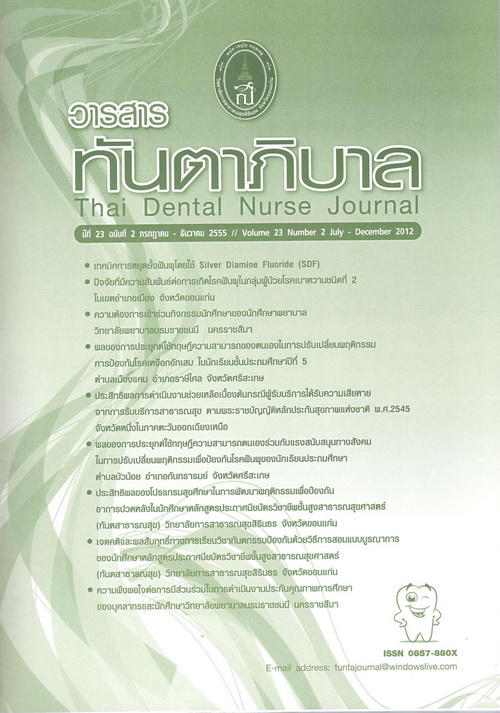
ผลของการประยุกต์ใช้ทฤษฎีความสามารถของตนเองในการปรับ เปลี่ยนพฤติกรรมการป้องกันโรคเหงือกอักเสบ ในนักเรียนชั้น ประถมศึกษาปีที่ 5 ตำบลเมืองแคน อำเภอราษีไศล จังหวัดศรีสะเกษ
คำสำคัญ:
ความสามารถตนเอง, การป้องกันโรคเหงือกอักเสบบทคัดย่อ
การวิจัยครั้งนี้เป็นการวิจัยแบบกึ่งทดลอง เพื่อศึกษาผลของการ ประยุกต์ใช้ทฤษฎีความสามารถของตนเองในการปรับเปลี่ยนพฤติกรรมการ ป้องกันโรคเหงือกอักเสบ ในนักเรียนชั้นประถมศึกษาปีที่ 5 ตำบลเมืองแคน อำเภอราษีไศล จังหวัดศรีสะเกษ ประชากรที่ศึกษา 68 คน โดยแบ่งเป็นกลุ่ม ทดลอง จำนวน 36 คน และกลุ่มเปรียบเทียบจำนวน 32 คน กลุ่มทดลองได้ รับโปรแกรมทันตสุขภาพ ด้วยการบรรยายประกอบสไลด์ เสนอตัวแบบ สาธิต และฝึกปฏิบัติ การแสดงบทบาทสมมติ เครื่องมือที่ใช้ในการเก็บรวบรวม ข้อมูลคือ แบบสอบถามและแบบบันทึกปริมาณแผ่นคราบจุลินทรีย์ การ วิเคราะห์ข้อมูลทั่วไปด้วยสถิติเชิงพรรณนา และสถิติเชิงอนุมานในการเปรียบ เทียบ คือ Paired Sample t-test และ Independent Sample t-test โดย กำหนดระดับนัยสำคัญที่ระดับ 0.05
ผลการวิจัยพบว่า ภายหลังการทดลอง ความรู้เรื่องโรคเหงือกอักเสบ มีคะแนนในระดับสูง (ร้อยละ 69.40) การรับรู้ความสามารถตนเอง มีคะแนน อยู่ในระดับสูง (ร้อยละ 69.40) ความคาดหวังในผลดี มีคะแนนอยู่ในระดับ ปานกลาง (ร้อยละ 58.30) การปฏิบัติตัวในการป้องกันโรคเหงือกอักเสบ มี คะแนนอยู่ในระดับสูง (ร้อยละ 72.20) ปริมาณแผ่นคราบจุลินทรีย์อยู่ในระดับ น้อย (ร้อยละ 100.00) เมื่อวิเคราะห์เปรียบเทียบกลุ่มทดลองมีคะแนนเฉลี่ย ด้านความรู้ การรับรู้ความสามารถของตนเอง ความคาดหวังในผลดี การ ปฏิบัติตัวในการป้องกันโรคเหงือกอักเสบ กลุ่มทดลองมีคะแนนเฉลี่ยมากกว่า ก่อนการทดลอง และมากกว่ากลุ่มเปรียบเทียบที่ระดับนัยสำคัญ 0.05 (P-Value <0.001) นอกจากนี้ กลุ่มทดลองมีปริมาณแผ่นคราบจุลินทรีย์ลด ลงมากกว่าก่อนการทดลอง และลดลงมากกว่ากลุ่มเปรียบเทียบที่ระดับนัย สำคัญ 0.05 (P-Value <0.001)
ผลจากการศึกษาครั้งนี้มีผลทำให้นักเรียนเกิดการเปลี่ยนด้านความรู้ การรับรู้ความสามารถของตนเอง ความคาดหวังในผลดี และการปฏิบัติตัว ในการป้องกันโรคเหงือกอักเสบเพิ่มมากขึ้น จึงควรมีการกระตุ้นให้ทุกหน่วย งานที่เกี่ยวข้อง ใช้กลวิธีในการดำเนินดังกล่าว โดยใช้รูปแบบวิธีการที่ส่งเสริม ให้นักเรียนใช้ความสามารถของตนเองให้มากที่สุด เพื่อให้เกิดความยั่งยืนในการดูแลสุขภาพช่องปาก ตลอดจนเกิดการเปลี่ยนแปลง ทางทันตสุขภาพที่ดีขึ้น และยั่งยืนในรายบุคคลต่อไป
เอกสารอ้างอิง
2. กองทันตสาธารณสุข กรมอนามัย กระทรวงสาธารณสุข. สถานการณ์งานส่งเสริมสุขภาพในเด็กนักเรียนประถมศึกษา. วิทยาสารทันตสาธารณสุข 2550:12(1).
3. รายงานผลการสำรวจสภาวะช่องปากระดับประเทศ ครั้งที่ 6 พ.ศ. 2549-2550. กรุงเทพฯ : โรงพิมพ์องค์การสงเคราะห์ทหารผ่านศึก;2551.
4. รายงานการสำรวจสภาวะสุขภาพช่องปากของเด็กนักเรียนประถมศึกษา อำเภอราษีไศล จังหวัดศรีสะเกษประจำปี พ.ศ. 2553. ราษีไศล: สำนักงานสาธารณสุขอำเภอราษีไศล;2553.
5. อรกัญญา บัวพัฒน์. ประสิทธิผลของโปรแกรมสุขศึกษาโดยการประยุกต์ทฤษฎีความสามารถของตนเองร่วมกับแรงสนับสนุนทางสังคมในการพัฒนาพฤติกรรม การแปรงฟันอย่างถูกต้องของนักเรียนชั้นประถมศึกษาปีที่ 6 โรงเรียนบ้านเลื่อม อำเภอเมือง จังหวัดอุดรธานี. วิทยานิพนธ์สาธารณสุขศาสตรมหาบัณฑิต. ขอนแก่น: มหาวิทยาลัยขอนแก่น;2551.
6. เวณิการ์ หล่าสระเกษ และพรรณี บัญชรหัตถกิจ. ผลของการประยุกต์ใช้ทฤษฎีความสามารถของตนเองร่วมกับแรงสนับสนุนทางสังคมในการฝึกผู้นำนักเรียนเพื่อการป้องกันโรคเหงือกอักเสบในนักเรียนชั้นประถมศึกษาปีที่ 5 อำเภอประทาย จังหวัดนครราชสีมา. วารสารวิจัยสาธารณสุขศาสตร์ มหาวิทยาลัยขอนแก่น 2552:2(2);29-38.
ดาวน์โหลด
ฉบับ
ประเภทบทความ
สัญญาอนุญาต
บทความที่ได้รับการตีพิมพ์ถือเป็นลิขสิทธิ์ของวารสารทันตาภิบาล


