
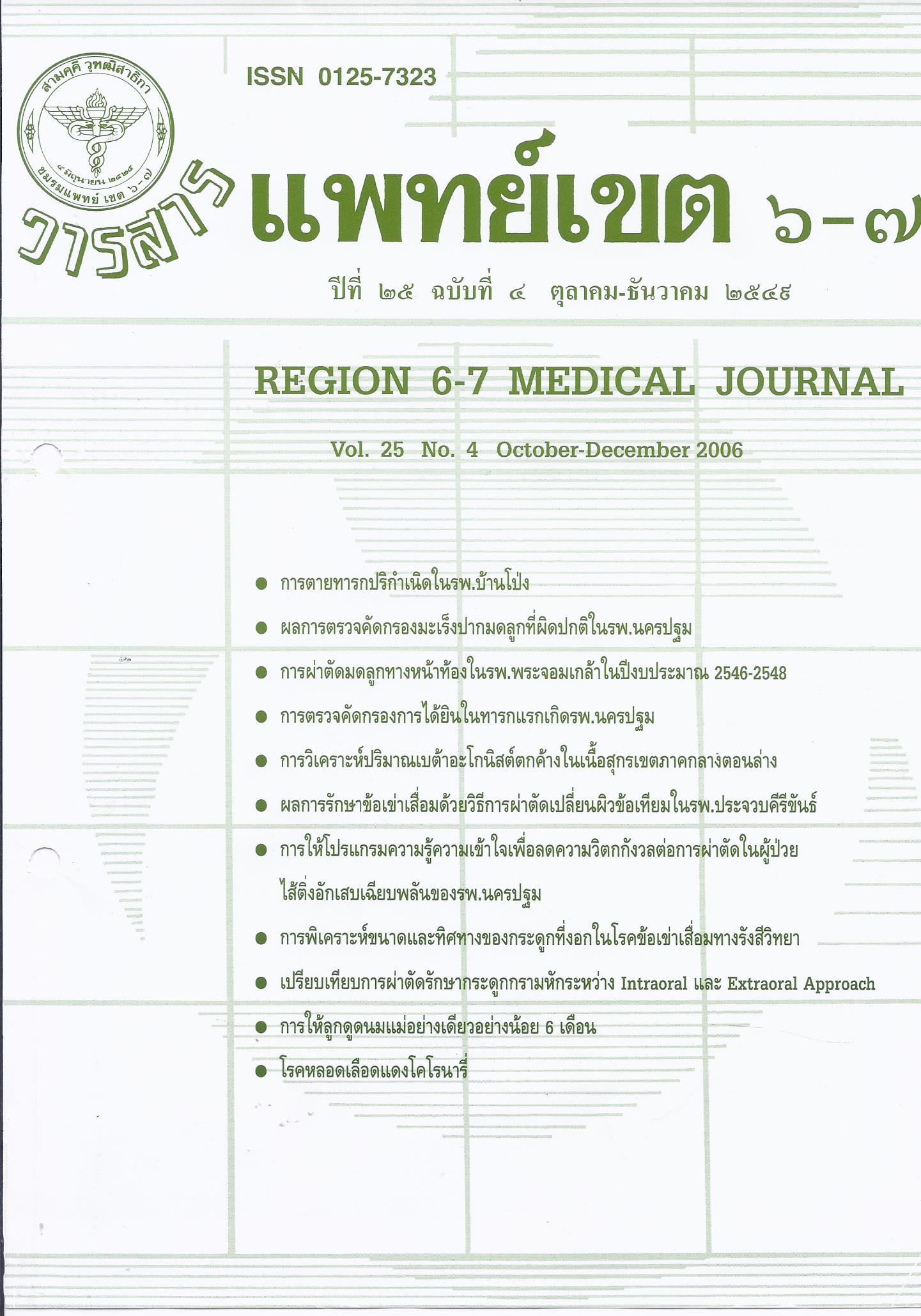
Open Reduction and Internal Fixation of Mandibular Fractures : Intraoral Versus Extraoral Approach
Abstract
Objective: This retrospective study shows results and complications of Intraoral and Extracral approaches for open reduction and internal fixation of mandibular fractures. The aim was to describe advantages and disadvantages of the techinques.
Materials and Methods : This study was a retrospective study in the patients with mandibular fractures occurring between April 2003 and April 2006. Only mandibular fractures requiring open reduction were selected for this study. Cases were evaluated for cause, age, gender, surgical approach. postoperative complications and operative time.
Results : Of the 119 patients, 62 were treated with Intraoral techniques and 57 were treated with Extraoral techniques. There were 8 complications from extraoral techniques and 10 complications from Extraoral tecthniques.
Conclusions : There was no significant difference between lntraoral and Extraoral approaches for the open reduction and internal lixation of mandibular fractures. So decision for the treatment approaches often related to surgeon experience and training.
Downloads
Published
How to Cite
Issue
Section
License
ลิขสิทธิ์บทความเป็นของผู้เขียนบทความ แต่หากผลงานของท่านได้รับการพิจารณาตีพิมพ์ลงวารสารแพทย์เขต 4-5 จะคงไว้ซึ่งสิทธิ์ในการตีพิมพ์ครั้งแรกด้วยเหตุที่บทความจะปรากฎในวารสารที่เข้าถึงได้ จึงอนุญาตให้นำบทความในวารสารไปใช้ประโยชน์ได้ในเชิงวิชาการโดยจำเป็นต้องมีการอ้างอิงถึงชื่อวารสารอย่างถูกต้อง แต่ไม่อนุญาตให้นำไปใช้ในเชิงพาณิชย์