
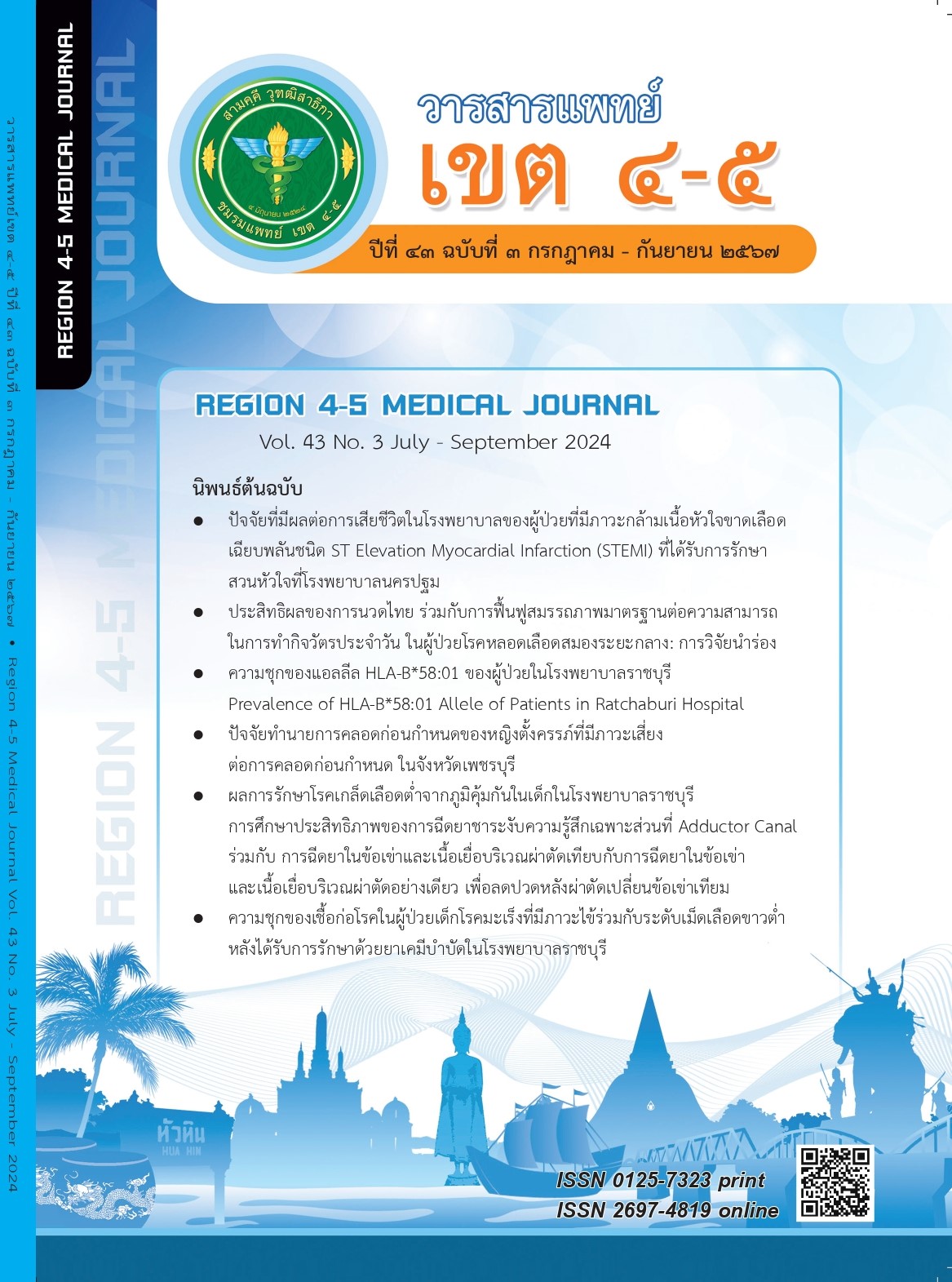
ปัจจัยทำนายการคลอดก่อนกำหนดของหญิงตั้งครรภ์ที่มีภาวะเสี่ยงต่อการคลอดก่อนกำหนด ในจังหวัดเพชรบุรี
คำสำคัญ:
การคลอดก่อนกำหนด, หญิงตั้งครรภ์ที่เสี่ยงต่อการคลอดก่อนกำหนด, ปากมดลูกสั้น, ภาวะซีดบทคัดย่อ
วัตถุประสงค์: เพื่อศึกษาปัจจัยทำนายการคลอดก่อนกำหนดของหญิงตั้งครรภ์ที่มีภาวะเสี่ยงต่อการคลอดก่อนกำหนด ในจังหวัดเพชรบุรี
วิธีการศึกษา: การศึกษาย้อนหลัง (retrospective study) หญิงตั้งครรภ์ที่มีภาวะเสี่ยงต่อภาวะคลอดก่อนกำหนด ที่คลอดในโรงพยาบาลเขตจังหวัดเพชรบุรี ระหว่างมกราคม พ.ศ. 2565 ถึง เมษายน พ.ศ. 2567 สุ่มอย่างเป็นระบบ จำนวน 165 ราย วิเคราะห์โดยใช้สถิติ ร้อยละ ค่าเฉลี่ย และส่วนเบี่ยงเบนมาตรฐาน วิเคราะห์ปัจจัยทำนายโดยใช้การถดถอยลอจิสติก (logistic regression)
ผลการศึกษา: ปากมดลูกสั้น ภาวะซีด และการฝากครรภ์ครั้งแรกหลังอายุครรภ์ 12 สัปดาห์ สามารถร่วมกันทำนายการคลอดก่อนกำหนดของหญิงตั้งครรภ์ที่มีภาวะเสี่ยงต่อการคลอดก่อนกำหนดได้ ร้อยละ 29.2 อย่างมีนัยสำคัญทางสถิติที่ .001 โดยหญิงตั้งครรภ์ที่มีปากมดลูกสั้นมีโอกาสคลอดก่อนกำหนดเป็น 11.27 เท่าของหญิงตั้งครรภ์ที่มีปากมดลูกปกติ (95% CI: 3.66–34.77) หญิงตั้งครรภ์ที่มีภาวะซีดมีโอกาสคลอดก่อนกำหนดเป็น 3.56 เท่า ของหญิงตั้งครรภ์ที่ไม่มีภาวะซีด (95% CI: 1.52–8.33) และหญิงตั้งครรภ์ที่ฝากครรภ์ครั้งแรกหลังอายุครรภ์ 12 สัปดาห์ มีโอกาสคลอดก่อนกำหนดเป็น 4.01 เท่า ของหญิงตั้งครรภ์ที่ฝากครรภ์ครั้งแรกก่อนอายุครรภ์ 12 สัปดาห์ (95% CI: 1.82–8.84) และสถานที่ฝากครรภ์ไม่สามารถทำนายการคลอดก่อนกำหนดได้
สรุป: ปากมดลูกสั้น ภาวะซีด และการฝากครรภ์ครั้งแรกหลังอายุครรภ์ 12 สัปดาห์ สามารถทำนายการคลอดก่อนกำหนดของหญิงตั้งครรภ์ที่มีภาวะเสี่ยงต่อการคลอดก่อนกำหนดในจังหวัดเพชรบุรีได้
เอกสารอ้างอิง
ราชวิทยาลัยสูตินรีแพทย์แห่งประเทศไทย. แนวทางเวชปฏิบัติของราชวิทยาลัยสูตินรีแพทย์แห่งประเทศไทย เรื่อง การดูแลรักษาภาวะเจ็บครรภ์คลอดและถุงน้ำคร่ำรั่วก่อนกำหนด [อินเทอร์เน็ต]. 2566 [เข้าถึงเมื่อ วันที่ 17 พฤษภาคม 2567]; เข้าถึงได้จาก: URL:
https://www.rtcog.or.th/files/1695091574_742852553aec29c37b5f.pdf
ระบบคลังข้อมูลด้านการแพทย์และสุขภาพ (health data center: HDC). ร้อยละหญิงตั้งครรภ์คลอดก่อนกำหนด 2564–2566 [อินเทอร์เน็ต]. 2566 [เข้าถึงเมื่อ วันที่ 17 พฤษภาคม 2567]; เข้าถึงได้จาก: URL:
ปิยะพร กองเงิน. การพยาบาลสูติศาสตร์สตรีที่มีภาวะแทรกซ้อนระหว่างตั้งครรภ์. กรุงเทพมหานคร: มหาวิทยาลัยธรรมศาสตร์; 2558.
ชเนนทร์ วนาภิรักษ์, ธีระ ทองสง. การเจ็บครรภ์และการคลอดก่อนกำหนด. ใน: ธีระ ทองสง, บรรณาธิการ. สูติศาสตร์. พิมพ์ครั้งที่ 6. เชียงใหม่: มหาวิทยาลัยเชียงใหม่; 2564. 244–59.
สายฝน ชวาลไพบูลย์. คลอดก่อนกำหนด. กรุงเทพมหานคร: พี เอ. ลิฟวิ่ง; 2553.
Simhan HN, Iams JD, Romeo R. Preterm labor and birth. In: Gabbe SG, Niebyl JR, Simpson JL, et al., editors. Obstetrics normal and problem pregnancies. 7th ed. Philadelphia, PA: Elsevier; 2017. 615–46.
พรรณี พิณตานนท์, กาญจนา คำดี, อัจฉรา วโรภาษ, และคณะ. ปัจจัยที่มีผลต่อการเจ็บครรภ์และการคลอดก่อนกำหนดในโรงพยาบาลส่งเสริมสุขภาพ ศูนย์อนามัยที่ 10 เชียงใหม่: บทคัดย่อการประชุมวิชาการโรงพยาบาลนครพิงค์ ประจำปี 2553 และเครือข่ายวิจัยโรงพยาบาลเขตภาคเหนือ (RNNRH) ครั้งที่ 3. ลำปางเวชสาร 2553;31(2):49.
Green LW, Krueter MW. Health promotion planning an education and ecological approach. 4th ed. Toronto: Mayfield; 2005.
อัสมะ จารู. ปัจจัยที่มีผลต่อพฤติกรรมการดูแลตนเองของหญิงตั้งครรภ์ที่ประสบความสำเร็จในการยับยั้งการเจ็บครรภ์คลอดก่อนกำหนด. [วิทยานิพนธ์ปริญญามหาบัณฑิต]. สาขาวิชาพยาบาลศาสตร์ (การผดุงครรภ์), บัณฑิตวิทยาลัย. สงขลา: มหาวิทยาลัยสงขลานครินทร์; 2561.
Hawkinson A. Application of the PRECEDE-PROCEED planning model in designing an infant mortality mitigation strategy [internet]. 2022 [cited 2024 May 27]. Available from: URL:
https://scholarcommons.sc.edu/senior_theses/500
ชัยกิจ อุดแน่น. ปัจจัยทำนายการคลอดก่อนกำหนดในสตรีตั้งครรภ์ที่โรงพยาบาลสมเด็จพระเจ้าตากสินมหาราช. วารสารศูนย์การศึกษาแพทยศาสตร์คลินิก โรงพยาบาลพระปกเกล้า 2565;39(3);294–301.
Committee on Practice Bulletins—Obstetrics, the American College of Obstetricians and
Gynecologists. Practice bulletin no. 130: prediction and prevention of preterm birth.
Obstet Gynecol 2012;120(4):964–73. doi: 10.1097/AOG.0b013e3182723b1b.
ศิริฉัตร รองศักดิ์, ประนอม พูลพัฒน์, มยุรัตน์ รักเกียรติ์. ภาวะโลหิตจางในสตรีตั้งครรภ์ที่มาฝากครรภ์และคลอดในโรงพยาบาลนพรัตนราชธานี. วารสารการพยาบาลและการดูแลสุขภาพ 2560;35(3):39–47.
Rahmati S, Azami M, Badfar G, et al. The relationship between maternal anemia during pregnancy with preterm birth: a systematic review and meta-analysis. J Matern Fetal Neonatal Med 2020;33(15):2679–89. doi: 10.1080/14767058.2018.1555811.
Haddrill R, Jones GL, Mitchell CA, et al. Understanding delayed access to antenatal care: a qualitative interview study. BMC Pregnancy Childbirth 2014;14:207. doi: 10.1186/1471-2393-14-207.
ดาวน์โหลด
เผยแพร่แล้ว
รูปแบบการอ้างอิง
ฉบับ
ประเภทบทความ
สัญญาอนุญาต

อนุญาตภายใต้เงื่อนไข Creative Commons Attribution-NonCommercial-NoDerivatives 4.0 International License.
ลิขสิทธิ์บทความเป็นของผู้เขียนบทความ แต่หากผลงานของท่านได้รับการพิจารณาตีพิมพ์ลงวารสารแพทย์เขต 4-5 จะคงไว้ซึ่งสิทธิ์ในการตีพิมพ์ครั้งแรกด้วยเหตุที่บทความจะปรากฎในวารสารที่เข้าถึงได้ จึงอนุญาตให้นำบทความในวารสารไปใช้ประโยชน์ได้ในเชิงวิชาการโดยจำเป็นต้องมีการอ้างอิงถึงชื่อวารสารอย่างถูกต้อง แต่ไม่อนุญาตให้นำไปใช้ในเชิงพาณิชย์