Quality of Cryoprecipitate from Thawed Plasma Prepared by Using Modified Circulating Water-bath Method
Quality of Cryoprecipitate Prepared by Thawed Plasma
Keywords:
Cryoprecipitate, Modified circulating water - bath, Fresh frozen plasmaAbstract
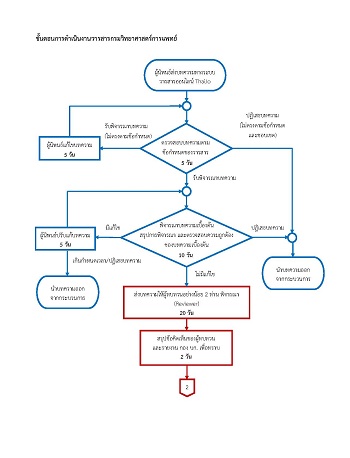
Cryoprecipitate (CRYO) is a blood component that contains high concentrations of coagulation factor VIII (FVIII), von Willebrand factor, and fibrinogen. It is prepared by thawing fresh frozen plasma (FFP) from blood donors at 1–6°C in a circulating water-bath and then centrifuging it to
collect the precipitate. This retrospective study aimed to evaluate the quality of CRYO produced using two different thawing methods: a conventional circulating water-bath (283 units) and a modified circulating water-bath (160 units). The quality of CRYO samples was assessed by measuring the FVIII levels and comparing the results between the two methods using an independent sample t-test. The results showed that the mean±SD of FVIII level in CRYO prepared by the conventional method was 102.22±72.61 IU/unit, whereas those of the modified method was 115.39±31.58 IU/unit. The FVIII concentrations were significantly higher in CRYO using the modified method than the conventional method (p < 0.05). Additionally, the modified method using FFP with a volume ≥ 200 mL also resulted in significantly higher FVIII levels compared to the conventional method (p < 0.05). The circulating water-bath was modified by increasing the water pump rate and using a loose-loading container to separate the FFP bags, preventing them from overlapping during thawing. This modification improved the quality of the CRYO, conforming to both national and international standards, which included a volume of 10–15 mL, absence of abnormal color, intact packaging, mean FVIII content ≥ 70 IU/unit, and fibrinogen ≥ 140 mg/unit. In conclusion, the study demonstrated that the modified method for producing CRYO at Songklanagarind Hospital was appropriate and met the requirement. This method can be used as a guideline for producing high-quality CRYO for patient care.
References
Onseng S, Sangsorat N, Chaiyasit N, Kraikate T, Insawang J, Sukjinda P. Factors affecting factor VIII and fibrinogen content in cryoprecipitate. J Hematol Transfus Med. 2019; 29: 9-19.
Insawang J, Onseng S, Sangsarat N, Chaiyasit N, Boonjan U. The efficiency of UPAC deep freezer in the production of cryoprecipitate from regional blood centre 9th Pitsanulok, Thai red cross society. HSCR: Health Science Clinical Research. 2021; 36: 16-25.
Onseng S, Insawang J. Review of cryoprecipitate component. J Hematol Transfus Med. 2020; 30: 61-73.
Dumont LJ, Papari M, Aronson CA, Dumont DF. Whole-blood collection and component processing. In: Fung MK, Grossman BJ, Hillyer CD, Westhoff CM, editors. Technical manual. 18th ed. Bethesda, MD.: American Association of Blood Banks; 2014. p. 135-65.
National Blood Centre, Thai Red Cross Society. Standards for blood banks and transfusion services. 4th ed. Bangkok: Udomsuksa; 2015.
Council of Europe. Guide to the preparation, use and quality assurance of blood components. 20th ed. Strasbourg: Council of Europe; 2017.
Siemens. Coagulation factor VIII, IX, XI and XII deficient plasmas [Package insert]. Marburg (Germany): Siemens Healthcare diagnostics Inc.; 2007.
Siemens. Dade® thrombin reagent [Package insert]. Marburg (Germany): Siemens Healthcare Diagnostics Inc.; 2021.
Hoffman M, Koepke JA, Widmann FK. Fibrinogen content of low-volume cryoprecipitate. Transfusion. 1987; 27: 356-8.
Bejrachandra S, Chandanayingyong D, Visudhiphan S, Tumliang S, Kaewkamol K, Siribunrit U. Factor VIII, factor IX and fibrinogen content in cryoprecipitate, fresh plasma and cryoprecipitate-removed plasma. Southeast Asian J Trop Med Public Health. 1993; 24: 162-4.
Sree Bhagavathi M, Prakash S, Chhabra G, Sahu A, Mishra D, Mukherjee S. A comparative evaluation of the quality of cryoprecipitate prepared from 350 ml versus 450 ml of whole blood and different methods of thawing of plasma: a prospective observational study. Transfus Clin Biol. 2023; 30: 329-34.
World Food Logistics Organisation (WFLO). Thawing and tempering. [online]. 2018; [cited 2024 May 24]: [6 screens]. Available from: URL: https://www.gcca.org/legacy-system/WFLO-Commodity-Storage-Manual-2018-Thawing%20and%20Tempering.pdf.
Subramaniyan R, Marwaha N, Jain A, Ahluwalia J. Factors affecting the quality of cryoprecipitate. Asian J Transfus Sci. 2017; 11(1): 33-9.
Philip J, Kumarage S, Chatterjee T, Kumar S, Mallhi R. The possible advantages of cryoprecipitate prepared from fresh frozen plasma from blood stored for 24 hours. Lab Med. 2014; 45(2): 111-5.
Lieuw K. Many factor VIII products available in the treatment of hemophilia A:an embarrassment of riches?. J Blood Med. 2017; 8: 67-73.
Nascimento B, Goodnough LT, Levy JH. Cryoprecipitate therapy. Br J Anaesth. 2014; 113(6): 922-34.
Downloads
Published
How to Cite
Issue
Section
License
Copyright (c) 2024 BULLETIN OF THE DEPARTMENT OF MEDICAL SCIENCES

This work is licensed under a Creative Commons Attribution-NonCommercial-NoDerivatives 4.0 International License.