
ปัจจัยที่มีผลต่อการไม่ประสงค์ใช้อินซูลินในผู้ป่วยเบาหวานชนิดที่ 2 ที่มีข้อบ่งชี้ใช้อินซูลิน ในโรงพยาบาลชุมชน
คำสำคัญ:
โรคเบาหวาน, การไม่ประสงค์ใช้อินซูลิน, โรงพยาบาลชุมชนบทคัดย่อ
โรคเบาหวานชนิดที่ 2 เป็นชนิดที่พบบ่อย และแพทย์มักประสบปัญหาเรื่องผู้ป่วยขอปฏิเสธการฉีดอินซูลินในผู้ป่วยเบาหวานทั้งที่มีข้อบ่งชี้ในการรักษา ดังนั้น ผู้วิจัยจึงสนใจศึกษาหาสัดส่วนและปัจจัยที่สัมพันธ์กับการไม่ประสงค์ใช้อินซูลินในผู้ป่วยเบาหวานชนิดที่ 2 ที่มีข้อบ่งชี้ใช้อินซูลิน โดยการศึกษานี้เป็นการศึกษาแบบภาคตัดขวาง คัดเลือกจากกลุ่มตัวอย่างผู้ป่วยนอกโรคเบาหวานที่อายุ 18 ถึง 65 ปี ที่มาติดตามการรักษาที่โรงพยาบาล จำนวน 155 ราย เครื่องมือที่ใช้คือ แบบบันทึกข้อมูลทั่วไป ข้อมูลการรักษา ความรู้และทัศนคติเกี่ยวกับการรักษาเบาหวาน วิเคราะห์ข้อมูลโดยใช้สถิติเชิงวิเคราะห์ ได้แก่ ความถี่ ร้อยละ ค่าอัตราความชุกพร้อมช่วงเชื่อมั่นร้อยละ 95 ค่าเฉลี่ย
การทดสอบไคสแควร์ของเพียร์สัน และการวิเคราะห์ถดถอยโลจิสติก
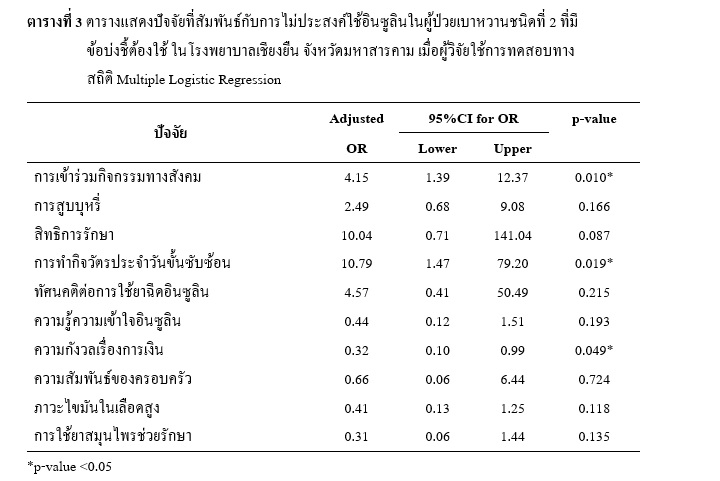
ผลการศึกษาพบว่า กลุ่มตัวอย่างผู้ป่วยเบาหวานชนิดที่ 2 ที่เข้าร่วมการศึกษาครั้งนี้มี 155 ราย ส่วนใหญ่เป็นเพศหญิงร้อยละ 58.10 สัดส่วนของผู้ป่วยที่ไม่ประสงค์ใช้อินซูลินทั้งที่มีข้อบ่งชี้มีค่าร้อยละ 81.94 (95% CI 75.81-88.06) ปัจจัยที่สัมพันธ์กับการไม่ประสงค์ใช้อินซูลินอย่างมีนัยสำคัญทางสถิติ คือ การเข้าร่วมกิจกรรมทางสังคม (Adjust OR= 4.16, 95% CI:1.39-12.37) ความสามารถในการทำกิจวัตรประจำวันขั้นซับซ้อน (L-IADL) (Adjust OR= 10.79, 95%CI: 1.47-79.20) และความกังวลเรื่องการเงิน (Adjust OR= 0.66, 95%CI: 0.07-6.45)
สรุปผลการศึกษาพบว่า ร้อยละ 80 ของผู้ป่วยเบาหวานชนิดที่ 2 ที่มีข้อบ่งชี้ใช้อินซูลินนั้นไม่ประสงค์ใช้อินซูลิน ทั้งนี้ การให้ความรู้แก่ผู้ป่วยเบาหวานรวมถึงข้อมูลเรื่องยาที่ถูกต้อง มีส่วนสำคัญที่ทำให้ผู้ป่วยมีทัศนคติต่อการรักษาที่ถูกต้อง นำไปสู่การลดการเกิดภาวะแทรกซ้อนและเพิ่มคุณภาพชีวิตของผู้ป่วยให้ดีขึ้น
Downloads
เอกสารอ้างอิง
กรมควบคุมโรค. เตือนประชาชนใส่ใจดูแลสุขภาพตนเองและคนในครอบครัวระวังป่วยโรคเบาหวาน. 2560.
ชัชลิต รัตรสาร. สถานการณ์ปัจจุบัน และความร่วมมือเพื่อ ปฏิรูปการดูแลรักษาโรคเบาหวานใน ประเทศไทย การยกระดับมาตรฐานการดู แลรักษา และ ขยายการเข้าถึงการรักษาโรคเบาหวาน นำไปสู่สังคมสุขภาพที่ยั่งยืน. กรุงเทพมหานคร; 2561.
สมาคมโรคเบาหวานแห่งประเทศไทยในพระราชูปถัมภ์สมเด็จพระเทพรัตนราชสุดาฯ สยามบรมราชกุมารี, สมาคมโรคต่อมไร้ท่อแห่งประเทศไทย, กรมการแพทย์ กระทรวงสาธารณสุข. แนวทางเวชปฏิบัติสำหรับโรคเบาหวาน 2560. กรุงเทพมหานคร: อรุณการพิมพ์; 2560.
Goh SY, Ang E, Bajpai S, Deerochanawong C, Hong E-G, Hussein Z, et al. A patient-centric approach to optimize insulin therapy in Asia. J Diabetes Complications [Internet]. 2016 Aug;30(6):973–80. Available from: https://linkinghub.elsevier.com/retrieve/pii/S1056872716301726
ราม รังสินธุ์. สรุปการประเมินผลลัพธ์การดูแลรักษาผู้ป่วยเบาหวานและความดันโลหิตสูง 2553-2558. 2559.
Division of Diabetes Translation. Estimates of Diabetes and Its Burden in the Epidemiologic estimation methods, National Diabetes Statistics Report , 2014. Atlanta; 2014.
กีรตี ไตรคีรีสถิต, ทิพาพร ธาระวานิช. อัตราการยินยอมฉีดอินซูลินภายหลังการเข้าโปรแกรมอบรมแบบครอบคลุม เปรียบเทียบกับการให้คำปรึกษาตามปกติในผู้ป่วยเบาหวานชนิดที่ 2 ที่ปฏิเสธการฉีดอินซูลิน. ธรรมศาสตร์เวชสาร. 2561;18(3):291–9.
Yilmaz A, Ak M, Cim A, Palanci Y, Kilinc F. Factors influencing insulin usage among type 2 diabetes mellitus patients: A study in Turkish primary care. Eur J Gen Pract. 2016;22(4):255–61.
Peyrot M, Rubin RR, Kruger DF, Travis LB. Correlates of insulin injection omission. Diabetes Care. 2010 Feb;33(2):240–5.
ปิยะพร ทองเนื้อนวล. ความสัมพันธ์และอำนาจในการทำนายของการสนับสนุนทางสังคมที่มีต่อพฤติกรรมการดูแลตนเองของผู้ป่วยเบาหวานที่ควบคุมระดับน้ำตาลได้. วารสารสาธารณสุขและวิทยาศาสตร์สุขภาพ. 2562;2(2):14–25.
Arissara Sukwatjanee, Kanaungnit Pongthavornkamol, Gail Low, Nantawon Suwonnaroop W, Pinyopasakul SC. Benefits of a Self-Help Group for Rural Thai Elders with Type-2 Diabetes. Pacific Rim Int J Nurs Res. 2011;15(3):220–33.
Prommaloon S, Wattanakitkrileart D. Factors Influencing Insulin Adherence in Patients with Type 2 Diabetes. 2017;35(1):61–71.
ดาวน์โหลด
เผยแพร่แล้ว
รูปแบบการอ้างอิง
ฉบับ
ประเภทบทความ
สัญญาอนุญาต
ลิขสิทธิ์ (c) 2022 วารสารวิจัยและพัฒนาระบบสุขภาพ

อนุญาตภายใต้เงื่อนไข Creative Commons Attribution-NonCommercial-NoDerivatives 4.0 International License.
เนื้อหาและข้อมูลในบทความที่ลงตีพิมพ์ในวารสารศูนย์ดัชนีการอ้างอิงวารสารไทย ถือเป็นข้อคิดเห็นและความรับผิดชอบของผู้เขียนบทความโดยตรงซึ่งกองบรรณาธิการวารสาร ไม่จำเป็นต้องเห็นด้วย หรือร่วมรับผิดชอบใด ๆบทความ ข้อมูล เนื้อหา รูปภาพ ฯลฯ ที่ได้รับการตีพิมพ์ในวารสารศูนย์ดัชนีการอ้างอิงวารสารไทย ถือเป็นลิขสิทธิ์ของวารสารศูนย์ดัชนีการอ้างอิงวารสารไทย หากบุคคลหรือหน่วยงานใดต้องการนำทั้งหมดหรือส่วนหนึ่งส่วนใดไปเผยแพร่ต่อหรือเพื่อกระทำการใด จะต้องได้รับอนุญาตเป็นลายลักณอักษรจากวารสารศูนย์ดัชนีการอ้างอิงวารสารไทยก่อนเท่านั้น



