
KNOWLEDGE, ATTITUDE AND BEHAVIOR ON USING MEDICINAL PLANTS FOR CORONAVIRUS DISEASE 2019 PREVENTION AMONG MUSLIMS, TAPO YO SUB DISTRICT, YI NGO DISTRICT, NARATHIWAT PROVINCE
Keywords:
Knowledge, Attitude, Behavior, Medicinal plants, Coronavirus disease 2019Abstract
This survey research aimed to study the level of knowledge, attitude and using herbal behaviors of coronavirus disease 2019 prevention. And study the personal characteristic factors related to the knowledge, attitude and using herbal behavior of coronavirus disease 2019 prevention among muslim in Tapo Yo sub district, Yi-Ngo district, Narathiwat province. Analyzed using descriptive statistics and Chi-square test.
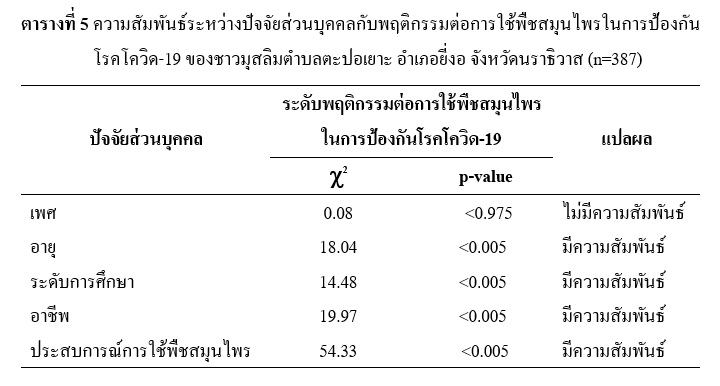
It found that most subjects had high level of knowledge (77.78%), attitude (96.38%), and using herbal behaviors of coronavirus disease 2019 prevention (73.39%). And personal characteristic factors related to the performance of knowledge, attitudes and behaviors were, 1) age, occupation, and experience of using herbal related to the knowledge of using herbal for coronavirus disease 2019 (p-value<0.005, <0.01 and <0.01), 2) occupation and experience of using herbal related to the attitude of using herbal for coronavirus disease 2019 prevention (p-value<0.005), and 3) age, education level, occupation and experience of using herbal related to the using herbal behaviors of coronavirus disease 2019 prevention (p-value<0.005).
Downloads
References
สุรัยยา หมานมานะ, โสภณ เอี่ยมศิริถาวร และสุมนมาลย์ อุทยมกุล. โรคติดเชื้อไวรัสโคโรนา 2019 (COVID-19). วารสารสถาบันบำราศนราดูร 2563; 14: 124-33.
สำนักงานจังหวัดนราธิวาส. สถานการณ์ Covid-19 [อินเทอร์เน็ต]. นราธิวาส; 2565 [เข้าถึงเมื่อ 10 ส.ค. 2565]. เข้าถึงได้จาก: http://www2.narathiwat.go.th/nara2016/covid
เสนาะ ขาวขำ, เทวัญ ธานีรัตน์ และพระปลัดสมชาย ปโยโค. การใช้สมุนไพรตามพุทธานุญาตเพื่องานสาธารณสุขมูลฐาน. วารสารสันติศึกษาปริทรรศน์ 2560; 5: 237-49.
กรมสุขภาพจิต. ฟ้าทะลายโจรกับการระบาดของโควิด-19. นนทบุรี; กรมสุขภาพจิต กระทรวงสาธารณสุข; 2564 [เข้าถึงเมื่อ 1 ส.ค. 2565]. เข้าถึงได้จาก:https://dmh.go.th/news/view.asp?id=2369.
Khaerunnisa S, Kurniawan H, Awaluddin R, Suhartati S, Soetjipto S. Potential inhibitor of COVID-19 main protease (Mpro) from several medicinal plant compounds by molecular docking study. Preprints 2020, 2020030226; doi: 10.20944/preprints202003.
Ranjan P, Mohapatra B, Das P. A rational drug designing: what bioinformatics approach tells about the wisdom of practicing traditional medicines for screening the potential of Ayurvedic and natural compounds for their inhibitory effect against COVID-19 Spike, Indian strain Spike, Papain-like protease and Main Protease protein. Research Square 2020; doi.org/10.21203/rs.3.rs-30366/v1.
Orem D, Taylor S, Renpenning K. Nursing: Concepts of practice (6thed.). St. Louis: Mosby; 2001.
ธีรวุฒิ เอกะกลุ. ระเบียบวิธีวิจัยทางพฤติกรรมศาสตร์และสังคมศาสตร์. อุบลราชธานี: สถาบันราชภัฎอุบลราชธานี; 2543.
เขมิกา ขุนเพ็ชร, ตัสนีม จาเงาะ, นูรอาซียะห์ ซามะ, โนรีซา สะมะเเอม, พิมพิมล บัวสงค์, รอซีดะห์ ดาโอ๊ะ, วิทวัส หมาดอี และกุสุมาลย์ น้อยผา. ความรู้ เจตคติและพฤติกรรมการใช้พืชสมุนไพรฟ้าทะลายโจรในการป้องกันโรคโควิด-19 ของนิสิตมหาวิทยาลัยทักษิณ วิทยาเขตพัทลุง. วารสารวิจัยและพัฒนาระบบสุขภาพ 2563; 13: 346-56.
เทพไทย โชติชัย, เสาวลักษณ์ ศรีดาเกษ, กิรณา แต้อารักษ์, สายันห์ ปัญญาทรง, และอ้อยทิพย์ บัวจันทร์. ปัจจัยที่มีความสัมพันธ์กับความรอบรู้ด้านสุขภาพในการป้องกันโรคความดันโลหิตสูง ของประชากรกลุ่มเสี่ยงโรคความดันโลหิตสูง ตำบลสำราญ อำเภอเมือง จังหวัดขอนแก่น. วารสารเครือข่ายวิทยาลัยพยาบาลและการสาธารณสุขภาคใต้ 2563; 7: 45-56.
พนธกร เหมะจันทร, ณัชชวรรณ์ รัมมะนพ และลภาวัน โลหิตไทย. ความรู้ เจตคติ และพฤติกรรมการใช้ยาพืชสมุนไพรในผู้ป่วยโรคเบาหวานและความดันโลหิตสูง ศูนย์เวชปฏิบัติครอบครัวโรงพยาบาลพระนครศรีอยุธยา. วารสารสมาคมเวชศาสตร์ป้องกันแห่งประเทศไทย 2562; 9: 87-100.
ดรัญชนก พันธ์สุมา และพงษ์สิทธิ์ บุญรักษา. ความรู้ ทัศนคติ และพฤติกรรมการป้องกันโควิด-19 ของประชาชนในตำบลปรุใหญ่ อำเภอเมือง จังหวัดนครราชศรีมา. ศรีนครินทร์เวชสาร 2564; 36: 597- 604.
ชนิดา มัททวางกูร, ขวัญเรือน ก๋าวิตู, สุธิดา ดีหนู และสิริณัฐ สินวรรณกุล. ปัจจัยที่มีความสัมพันธ์กับพฤติกรรมการใช้พืชสมุนไพรของประชาชนในเขตภาษีเจริญ. วารสารพยาบาลศาสตร์ มหาวิทยาลัยสยาม 2562; 20: 99-109.
วิริญญา เมืองช้าง. ปัจจัยที่มีความสัมพันธ์กับพฤติกรรมการใช้พืชสมุนไพรในการดูแลสุขภาพตนเองของประชาชน ในอำเภอแม่ใจ จังหวัดพะเยา [วิทยานิพนธ์ปริญญามหาบัณฑิต]. ปทุมธานี: มหาวิทยาลัยธรรมศาสตร์; 2564.
จารุวรรณ ศรีสร้อย, พิไลวรรณ ลี้พล, และกาญจนา วงษ์สวัสดิ์. ปัจจัยที่มีผลต่อการบริโภคยาต้มพืชสมุนไพรของประชาชนบ้านโคกลาย ตำบลม่วงลาย อำเภอเมือง จังหวัดสกลนคร [วิทยานิพนธ์ปริญญาบัณฑิต]. สกลนคร: มหาวิทยาลัยราชภัฏสกลนคร; 2553.
Downloads
Published
How to Cite
Issue
Section
License
Copyright (c) 2023 Research and Development Health System Journal

This work is licensed under a Creative Commons Attribution-NonCommercial-NoDerivatives 4.0 International License.
เนื้อหาและข้อมูลในบทความที่ลงตีพิมพ์ในวารสารศูนย์ดัชนีการอ้างอิงวารสารไทย ถือเป็นข้อคิดเห็นและความรับผิดชอบของผู้เขียนบทความโดยตรงซึ่งกองบรรณาธิการวารสาร ไม่จำเป็นต้องเห็นด้วย หรือร่วมรับผิดชอบใด ๆบทความ ข้อมูล เนื้อหา รูปภาพ ฯลฯ ที่ได้รับการตีพิมพ์ในวารสารศูนย์ดัชนีการอ้างอิงวารสารไทย ถือเป็นลิขสิทธิ์ของวารสารศูนย์ดัชนีการอ้างอิงวารสารไทย หากบุคคลหรือหน่วยงานใดต้องการนำทั้งหมดหรือส่วนหนึ่งส่วนใดไปเผยแพร่ต่อหรือเพื่อกระทำการใด จะต้องได้รับอนุญาตเป็นลายลักษณ์อักษรจากวารสารศูนย์ดัชนีการอ้างอิงวารสารไทยก่อนเท่านั้น



