
ผลของโปรแกรมป้องกันการพลัดตกหกล้มโดยประยุกต์ตามแบบแผนความเชื่อ ด้านสุขภาพร่วมกับแรงสนับสนุนทางสังคมต่อพฤติกรรมป้องกันการพลัดตกหกล้มของผู้สูงอายุในอำเภอเกาะจันทร์ จังหวัดชลบุรี
คำสำคัญ:
ผู้สูงอายุ, การพลัดตกหกล้ม, พฤติกรรมป้องกันพลัดตกหกล้ม, โปรแกรมป้องกันการพลัดตกหกล้มบทคัดย่อ
การวิจัยแบบกึ่งทดลองนี้มีวัตถุประสงค์ เพื่อศึกษาผลของโปรแกรมป้องกันการพลัดตกหกล้มโดยประยุกต์ตามแบบแผนความเชื่อด้านสุขภาพร่วมกับแรงสนับสนุนทางสังคม กลุ่มตัวอย่างเป็นสมาชิกชมรมผู้สูงอายุ อำเภอเกาะจันทร์ จังหวัดชลบุรี ที่มีอายุ 60-70 ปี สุ่มอย่างง่ายเลือก ชมรมผู้สูงอายุเทศบาลตำบลเกาะจันทร์เป็นกลุ่มทดลอง จำนวน 30 คน และชมรมผู้สูงอายุเทศบาลเมืองปรกฟ้าเป็นกลุ่มควบคุม จำนวน 32 คน โดยกลุ่มทดลองได้รับโปรแกรมป้องกันการพลัดตกหกล้ม เก็บรวบรวมข้อมูลโดยใช้แบบสัมภาษณ์ ก่อนทดลอง หลังทดลอง และติดตามผลในระหว่าง เดือนกรกฎาคม ถึง ตุลาคม 2564 วิเคราะห์ข้อมูลด้วยสถิติ Paired samples t-test และ Independent samples t-test
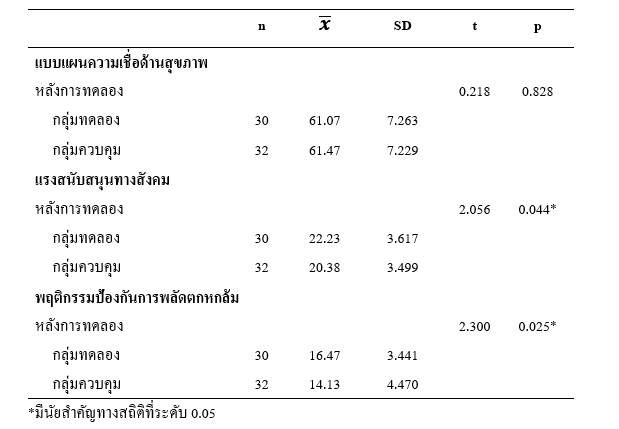
ผลการวิจัยพบว่า หลังการทดลองกลุ่มทดลองมีค่าเฉลี่ยแบบแผนความเชื่อด้านสุขภาพแรงสนับสนุนทางสังคม และพฤติกรรมป้องกันการพลัดตกหกล้มสูงกว่าก่อนการทดลองอย่างมีนัยสำคัญทางสถิติ (p < .05) และเมื่อเปรียบเทียบกับกลุ่มควบคุมพบว่ากลุ่มทดลองมีค่าเฉลี่ยแรงสนับสนุนทางสังคมและพฤติกรรมป้องกันการพลัดตกหกล้มสูงกว่ากลุ่มควบคุมอย่างมีนัยสำคัญทางสถิติ (p < .05)
การศึกษานี้แสดงให้เห็นว่า โปรแกรมป้องกันการพลัดตกหกล้มนี้ ส่งผลทำให้ผู้สูงอายุมีพฤติกรรมป้องกันการพลัดตกหกล้มสูงขึ้น ดังนั้น บุคลากรสาธารณสุขสามารถนำโปรแกรมนี้ไปใช้เพื่อส่งเสริมการป้องกันการหกล้มในผู้สูงอายุ
Downloads
เอกสารอ้างอิง
World Health Organization. Fact Sheet: Falls [Internet]. 2012. [Cited 2020 June 4]. Available from: http://www.who.int/mediacentre/factsheets/fs344/en/.
สำนักระบาดวิทยา กรมควบคุมโรค กระทรวงสาธารณสุข. (2558). สรุปรายงานการเฝ้าระวังโรค ประจำปี 2558. [วันที่เข้าถึง 1 มิถุนายน 2563]. เข้าถึงจาก: http://www.boe.moph.go.th/Annual/AESR2015/aesr2558/Part%201/10/accidental_falls.pdf
กรมควบคุมโรค กระทรวงสาธารณสุข. สรุปแนวทางการวิเคราะห์ระบบเฝ้าระวัง 5 กลุ่มโรค 5 มิติ ปี พ.ศ.2559 : ผลการวิเคราะห์ความเสี่ยงของเหตุการณ์ผิดปกติทางสาธารณสุข. 2559. พิมพ์ครั้งที่ 1 นนทบุรี: บริษัท ทีเอส อินเตอร์พริ้นท์ จำกัด.
ศรวณีย์ ทนุชิต, ดนัย ชินคำ, ณัฐธิดา มาลาทอง, สุรเดช ดวงทิพย์สิริกุล และศรีเพ็ญ ตันติเวสส. (2560). การศึกษาเพื่อจัดทำข้อเสนอเกี่ยวกับการจัดบริการการแพทย์ฉุกเฉินที่เหมาะสมสำหรับผู้สูงอายุในประเทศไทย. นนทบุรี:สถาบันการแพทย์ฉุกเฉินแห่งชาติ.
วรรณพร บุญเปล่ง, วดีรัตน์ ศรีวงศ์วรรณ และ พัฒนา เศรษฐวัชราวนิช. (2558). อัตราและปัจจัยที่มีความสัมพันธ์กับการหกล้มของผู้สูงอายุชุมชนริมแม่น้าเจ้าพระยาจังหวัดนนทบุรี.Journal of Nursing Science. 33(3),75-86.
นิพา ศรีช้าง และ ลวิตรา ก๋าวี. (2560).รายงานการพยากรณ์การพลัดตกหกล้มของผู้สูงอายุ (อายุ 60 ปีขึ้นไป) ในประเทศไทย ปี พ.ศ. 2560 - 2564. สานักโรคไม่ติดต่อ กรมควบคุมโรค กระทรวงสาธารณสุข.กรุงเทพฯ: สำนักงานกิจการโรงพิมพ์องค์การสงเคราะห์ทหารผ่านศึกในพระบรมราชูปถัมภ์.
เยาวลักษณ์ คุมขวัญ และคณะ (2561). แนวทางการป้องกันการพลัดตกหกล้มที่บ้านในผู้สูงอายุ:บริบทของประเทศไทย. วารสารพยาบาลกระทรวงสาธารณสุข.
ละออม สร้อยแสง, จริยวัตร คมพยัคฆ์ และ กนกพร นทีธนสมบัติ. (2557).การศึกษาแนวทางการป้องกันการหกล้มในผู้สูงอายุชุมชนมิตรภาพพัฒนา.วารสารพยาบาลทหารบก.15,(มกราคม-เมษายน):122-128.
ปริศนา รถสีดำ. (2561).การป้องกันการหกล้มของผู้สูงอายุในชุมชน:บทบาทพยาบาลกับการดูแลสุขภาพที่บ้าน.วารสารสภากาชาดไทย.11 (กรกฎาคม-ธันวาคม):15-25.
วิทยา วาโย. (2560). ผลของโปรแกรมป้องกันการหกล้มแบบสหปัจจัยต่อพฤติกรรมการป้องกันการหกล้มของผู้สูงอายุในชุมชน. วารสารการพยาบาลและการดูแลสุขภาพ, 35(2), 25-33.
House, J. S. (1981). Work stress and social support. Reading, MA: Addison- Wesley.
เสาวลักษณ์ ศรีดาเกษ. (2562). ปัจจัยที่มีความสัมพันธ์กับพฤติกรรมการดูแลสุขภาพตนเองของผู้สูงอายุ ตําบลสําราญ อําเภอเมือง จังหวัดขอนแก่น. วารสารวิจัยและพัฒนาระบบสุขภาพ, 12(2), 141-147.
ยุวดี รอดจากภัย, (2561). แนวปฏิบัติที่ดีสำหรับผู้สูงอายุในประเทศไทย. วารสารวิจัยและพัฒนาระบบสุขภาพ, 11(1), 162-167.
Thiamwong L, Thamarpirat J, ManeesriwongulW,Jitapunkul S. Thai Falls Risk Assessment Test (Thai-FRAT) Developed for Community-Dwelling Thai Elderly. Journal of the Medical Association of Thailand 2008; 91(12):1823-1832.
ธีรภัทร อัตวินิจตระการ. (2562). ประสิทธิผลของโปรแกรมการเตรียมความพร้อมและป้องกันการหกล้มในผู้สูงอายุ. วารสารแพทย์เขต 4-5, 38(4), 288-298.
มานิตา รักศรี, นารีรัตน์ จิตรมนตรี, &เสาวลักษณ์ จิรธรรมคุณ. (2562). ผลของโปรแกรมการปรับความเชื่อด้านสุขภาพต่อพฤติกรรมป้องกันการหกล้มของผู้ป่วยสูงอายุในโรงพยาบาล. วารสารพยาบาลสภากาชาดไทย, 12(2), 134-150.
ยากันล้ม คู่มือป้องกันการหกล้มในผู้สูงอายุ. มูลนิธิสถาบันวิจัยและพัฒนาผู้สูงอายุไทย(มสผส.). สำนักงานกองทุนสนับสนุนการสร้างเสริมสุขภาพ (สสส.)
สุทธิวรร เขตคาม. (2561). ความสัมพันธ์ระหว่างควมเชื่อทางด้านสุขภาพและพฤติกรรมของผู้ดูแลในการป้องกันการหกล้มของผู้สูงอายุในชุมชนชนบท. วารสารวิจัยและพัฒนาระบบสุขภาพ, 11(2), 389-398.
กนกวรรณ เมืองศิริ. (2560). ปัจจัยที่มีความสัมพันธ์ต่อพฤติกรรมการป้องกันการหกล้มของผู้สูงอายุ จังหวัดชลบุรี. วารสารวิทยาศาสตร์และเทคโนโลยี มหาวิทยาลัยนเรศวร, 25(4).
ฐิติมา ทาสุวรรณอินทร์ และกรรณิการ์ เทพกิจ. (2559). ผลของโปรแกรมการป้องกันการพลัดตกหกล้มในผู้สูงอายุ. วิทยานิพนธ์พยาบาลศาสตรมหาบัณฑิต, มหาวิทยาลัยราชภัฏเชียงราย.
วิลาวรรณ สมตน. (2556). ผลของโปรแกรมป้องกันการหกล้มสำหรับผู้สูงอายุ.วารสารพยาบาลสาธารณสุข, 27(3). 58-70.
ดาวน์โหลด
เผยแพร่แล้ว
รูปแบบการอ้างอิง
ฉบับ
ประเภทบทความ
สัญญาอนุญาต
ลิขสิทธิ์ (c) 2022 วารสารวิจัยและพัฒนาระบบสุขภาพ

อนุญาตภายใต้เงื่อนไข Creative Commons Attribution-NonCommercial-NoDerivatives 4.0 International License.
เนื้อหาและข้อมูลในบทความที่ลงตีพิมพ์ในวารสารศูนย์ดัชนีการอ้างอิงวารสารไทย ถือเป็นข้อคิดเห็นและความรับผิดชอบของผู้เขียนบทความโดยตรงซึ่งกองบรรณาธิการวารสาร ไม่จำเป็นต้องเห็นด้วย หรือร่วมรับผิดชอบใด ๆบทความ ข้อมูล เนื้อหา รูปภาพ ฯลฯ ที่ได้รับการตีพิมพ์ในวารสารศูนย์ดัชนีการอ้างอิงวารสารไทย ถือเป็นลิขสิทธิ์ของวารสารศูนย์ดัชนีการอ้างอิงวารสารไทย หากบุคคลหรือหน่วยงานใดต้องการนำทั้งหมดหรือส่วนหนึ่งส่วนใดไปเผยแพร่ต่อหรือเพื่อกระทำการใด จะต้องได้รับอนุญาตเป็นลายลักณอักษรจากวารสารศูนย์ดัชนีการอ้างอิงวารสารไทยก่อนเท่านั้น



