
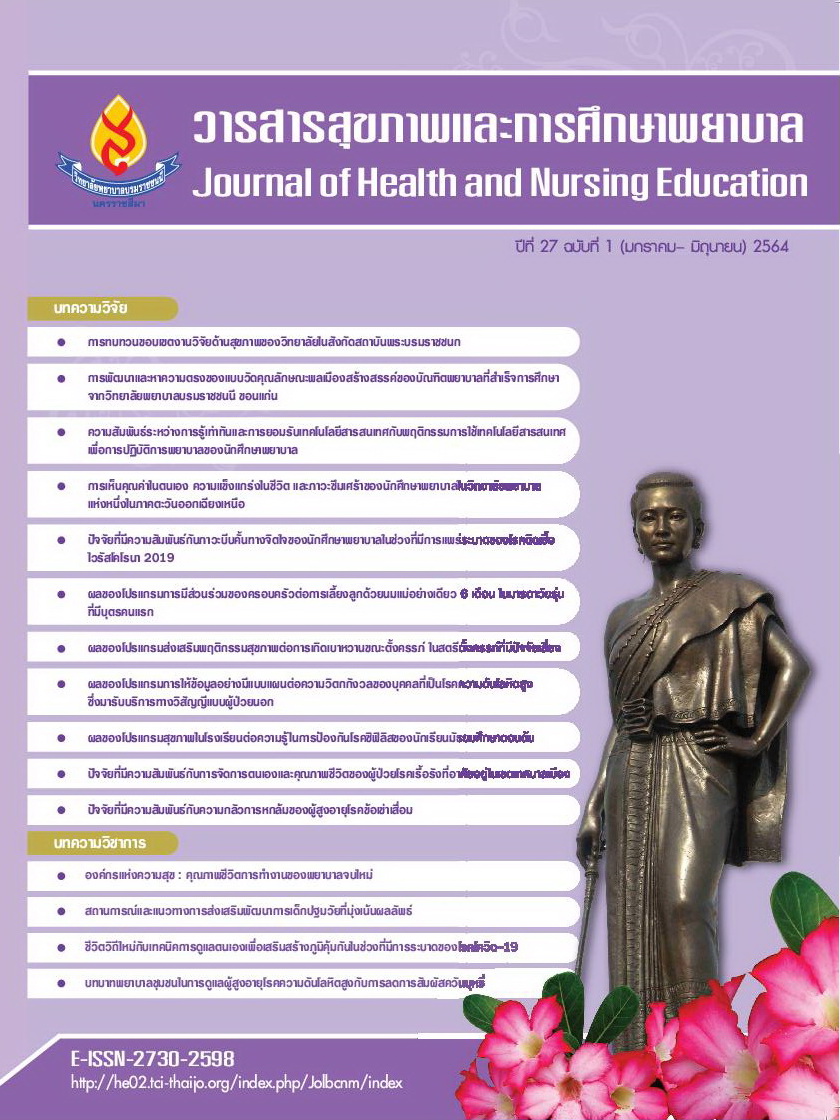
การทบทวนขอบเขตงานวิจัยด้านสุขภาพของวิทยาลัยในสังกัดสถาบันพระบรมราชชนก
คำสำคัญ:
วิจัยด้านสุขภาพ, สถาบันพระบรมราชชนก, การทบทวนขอบเขตบทคัดย่อ
การรวบรวมจัดหมวดหมู่และสังเคราะห์งานวิจัยในสถาบันการศึกษาเป็นแนวทางส่งเสริมให้บุคลากรได้พัฒนาตนเองผ่านกระบวนการวิจัย งานวิจัยครั้งนี้เพื่อทบทวนขอบเขตงานวิจัยด้านสุขภาพของวิทยาลัยในสังกัดสถาบันพระบรมราชชนก (Praboromrajchanok Institute [PI]) ประชากรเป็นงานวิจัยด้านสุขภาพของบุคลากรของวิทยาลัยในสังกัด PI ที่เผยแพร่ระหว่างปี พ.ศ. 2550-2559 จำนวน 3,672 เรื่อง จากวิทยาลัย จำนวน 39 แห่ง เครื่องมือวิจัย คือ โปรแกรมคอมพิวเตอร์สำหรับบันทึกงานวิจัย PI ที่นักวิจัยพัฒนาขึ้นเพื่อบันทึกข้อมูลทั่วไปและคุณลักษณะของงานวิจัยที่ทำโดยบุคลากรในสังกัด PI วิเคราะห์ข้อมูลโดยใช้ค่าความถี่ ร้อยละ และการวิเคราะห์เนื้อหา ผลการวิจัยพบว่า ส่วนมากเป็นวิจัยทางการพยาบาล (ร้อยละ 72.47) เป็นวิจัยด้านการเรียนการสอน (ร้อยละ 34.97) พื้นที่วิจัยส่วนมากเป็นวิจัยในชุมชน (ร้อยละ 29.71) แต่ที่พบส่วนน้อย ได้แก่ วิจัยทบทวนเอกสารอย่างเป็นระบบ (ร้อยละ 1.39) วิจัยในคลินิก (ร้อยละ 14.95) วิจัยใช้ประโยชน์เชิงพาณิชย์ (ร้อยละ 23.12) และทุนสนับสนุนจากแหล่งทุนต่างประเทศ (ร้อยละ 0.90) มีประเด็นการวิจัย 7 ด้าน คือ 1) วิจัยทางพยาบาลศาสตร์ 2) มีพื้นที่ศึกษาอยู่ในชุมชน 3) เป็นวิจัยการเรียนรู้แบบบูรณาการ 4) นักศึกษาเป็นกลุ่มตัวอย่าง 5) องค์ประกอบของการประกันคุณภาพการศึกษาในเรื่องคุณลักษณะนักศึกษา 6) มุ่งศึกษาผู้ป่วยกลุ่มโรคไม่ติดต่อ และ 7) เน้นการส่งเสริมสุขภาพและการป้องกันโรค ส่วนการสังเคราะห์องค์ความรู้จากงานวิจัย พบว่าครอบคลุมตามประเด็นของวิชาชีพการพยาบาลและการสาธารณสุขตามแนวโน้มของนโยบายด้านสาธารณสุขระดับประเทศในช่วงที่ทำวิจัย การศึกษานี้มีข้อเสนอแนะคือสนับสนุนบุคลากรในการทำวิจัยมากขึ้น รวมทั้งส่งเสริมการทำวิจัยในคลินิกของอาจารย์เพิ่มขึ้น
เอกสารอ้างอิง
คณะกรรมการประกันคุณภาพภายในระดับอุดมศึกษา. (2558). คู่มือการประกันคุณภาพภายในระดับอุดมศึกษา พ.ศ. 2557. นนทบุรี:
ห้างหุ้นส่วนจำกัด ภาพพิมพ์.
ดาราวรรณ รองเมือง, ยศพล เหลืองโสมนา, สุกัญญา ขันวิเศษ, จรัญญา ดีจะโปะ, และสุปราณี ฉายวิจิตร. (2561). การทบทวนขอบเขต
ของผลงงานวิจัยของวิทยาลัยพยาบาลพระปกเกล้าจันทบุรี. วารสารวิทยาลัยพยาบาลพระปกเกล้าจันทบุรี, 29(2), 136-146.
ประณีต ส่งวัฒนา. (2552). สถานภาพและทิศทางการวิจัยทางการพยาบาล: มุมมองจากประสบการณ์. วารสารมหาวิทยาลัยนราธิวาส
ราชนครินทร์, 1(1), 1-7.
รัตนะ บัวสนธ์, เอื้อมพร หลินเจริญ, นันทิมา นาคาพงศ์, ประภัสสร วงษ์ดี, และยุพิน โกณฑา. (2553). การสังเคราะห์งานวิจัยด้านการคิด
วิเคราะห์ของนักเรียน: การวิเคราะห์อภิมาน. วารสารศึกษาศาสตร์ มหาวิทยาลัยนเรศวร, 12(3), 19-32.
พระราชบัญญัติสถาบันพระบรมราชชนก พุทธศักราช 2562. (2562, 5 เมษายน). ราชกิจจานุเบกษา. เล่ม 136 ตอน 43 ก. หน้า 40-65.
สถาบันพระบรมราชชนก. (2564). คู่มือประกันคุณภาพการศึกษาภายใน สถาบันพระบรมราชชนก พ.ศ. 2564, เอกสารอัดสำเนา.
สภาการพยาบาล. (2561). รายงานประจำปี: สภาการพยาบาล. สืบค้น
จากhttps://www.tnmc.or.th/images/userfiles/files/anm-report-61.pdf
สัจธรรม พรทวีกุล, และจิตราภรณ์ วงศ์คำจันทร์. (2561). การสังเคราะห์งานวิจัยที่เกี่ยวกับการพัฒนาสังคมแห่งการเรียนรู้เพื่อการ
พัฒนาอย่างยั่งยืน. วารสารมหาวิทยาลัยนครพนม, 8(3), 109-117.
สัญญา เคณาภูมิ. (2562). หลักการและแนวทางการสังเคราะห์งานวิชาการ. วารสารการบริหารการปกครองและนวัตกรรมท้องถิ่น, 3(2),
-106.
อรพินทร์ ชูชม. (2552). การวิจัยกึ่งทดลอง. วารสารพฤติกรรมศาสตร์, 15(1), 1-15.
อรุณ จิรวัฒน์กุล. (2558). สถิติทางวิทยาศาสตร์สุขภาพเพื่อการวิจัย (พิมพ์ครั้งที่ 4). กรุงเทพฯ: วิทยพัฒน์.
อังศินันท์ อินทรกำแหง, นิพิฐพนธ์ แสงด้วง, และปิยะ บูชา. (2557). การสังเคราะห์งานวิจัยทางการศึกษาด้วยการวิเคราะห์สังเคราะห์
งานวิจัยทางวิทยาศาสตร์ มนุษยศาสตร์และสังคมศาสตร์: กรณีศึกษามหาวิทยาลัยศรีนครินทรวิโรฒ ด้วยการวิเคราะห์เนื้อหาและ
อภิมาน. วารสารพฤติกรรมศาสตร์, 20(1), 19-34.
Arksey, H., & O'Malley, L. (2005). Scoping studies: Towards a methodological framework. Journal of Social
Research Methodology, 8(1), 19-32. doi: 10.1080/1364557032000119616
Levac, D., Colquhoun, H., & O’Brien, K. K. (2010). Scoping studies: Advancing the methodology. Implementation
Science, 5(1), 69. Retrieved from https://implementationscience.biomedcentral.com/track/pdf/10.1186/1748-
-5-69
Pham, M. T., Raji, ć. A., Greig, J. D., Sargeant, J. M., Papadopoulos, A., & McEwena, S. A. (2014). A scoping review of
scoping reviews: Advancing the approach and enhancing the consistency. Research Synthesis Methods, 5(4),
-385. doi: 10.1002/jrsm.1123
Power, B., & Hubbard, R. (1999). Becoming teacher researchers one moment at a time. Language Arts, 77(1), 34-
Ruiz-Perez, I., & Petrova, D. (2019, August). Scoping reviews. Another way of literature review. Medicina Clínica
(English Edition), 153(4), 165-168. doi: 10.1016/j.medcle.2019.02.026
Rumrill, P. H., Fitzgerald, S. M., & Merchant, W. R. (2010). Using scoping literature reviews as a means of
understanding and interpreting existing literature. Work, 35(3), 399-404. doi: 10.3233/WOR-2010-0998
Sucharew, H., & Macaluso, M. (2019). Methods for research evidence synthesis: The scoping review approach.
Journal of Hospital Medicine, 14(7), 416-418.
ดาวน์โหลด
เผยแพร่แล้ว
ฉบับ
ประเภทบทความ
สัญญาอนุญาต
บทความที่ได้รับการตีพิมพ์เป็นลิขสิทธิ์ของ วารสารสุขภาพและการศึกษาพยาบาล ซึ่งดำเนินการโดยวิทยาลัยพยาบาลบรมราชชนนี นครราชสีมา
ข้อความที่ปรากฏในบทความในวารสารเล่มนี้เป็นความคิดเห็นส่วนตัวของผู้เขียนแต่ละท่านไม่เกี่ยวข้องกับกองบรรณาธิการวารสารสุขภาพและการศึกษาพยาบาล หรือวิทยาลัยพยาบาลบรมราชชนนี นครราชสีมา แต่อย่างใด ความรับผิดชอบองค์ประกอบทั้งหมดของบทความแต่ละเรื่องเป็นของผู้เขียนแต่ละท่าน หากมีความผิดพลาดใดๆ ผู้เขียนแต่ละท่านจะรับผิดชอบบทความของตนเองแต่ผู้เดียว


