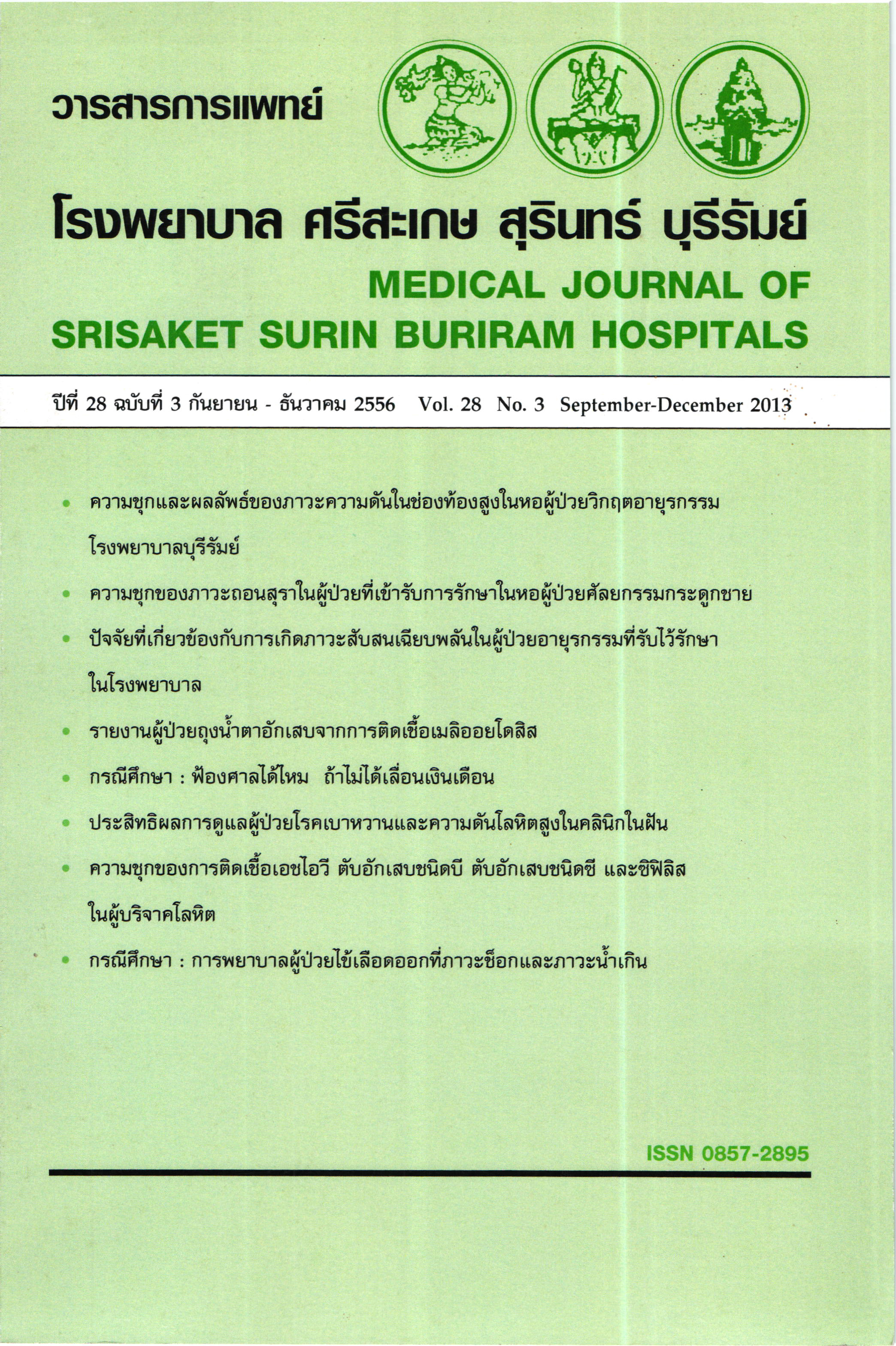
ความชุกของภาวะถอนสุราในผู้ป่วยที่เข้ารับการรักษาในหอผู้ป่วยศัลยกรรมกระดูกชาย
Article Sidebar
Main Article Content
บทคัดย่อ
เหตุผลของการทำการศึกษา: ปัญหาการติดสุราและการดื่มสุราแบบอันตรายมีเพิ่มมากขึ้น การลดปริมาณ ดื่มอย่างทันทีในผู้ติดสุรากระตุนให้เกิดภาวะถอนสุรา การดื่มสุรามากเกินไป ยังเป็นสาเหตุทำให้เกิดอุบัติเหตุบนท้องถนน การตกจากที่สูง หรืออุบัติเหตุ จากการทำงาน ผู้บาดเจบที่เข้ารับการรักษาที่แผนกอุบัติเหตุฉุกเฉินสวนหนึ่ง ตรวจพบปริมาณแอลกอฮอลในลมหายใจ ผู้ป่วยกลุ่มนี้มีโอกาสเกิดภาวะถอนสุราขณะเข้ารับการรักษาในโรงพยาบาล
วัตถุประสงค์: เพื่อศึกษาความซุกของภาวะถอนสุรา ความสัมพันธ์ของระยะเวลาในการนอน โรงพยาบาลและค่าใช้จ่ายของผู้ป่วยที่เข้ารับการรักษาในหอผู้ป่วยศัลยกรรม กระดูกขาย
สถานที่ทำการศึกษา: โรงพยาบาลศรีสะเกษ
รูปแบบการศึกษา: การศึกษาย้อนหลังเซิงพรรณนา
ผู้ป่วยและวิธีการศึกษา: รวบรวมข้อมูลจากเวชระเบียนผู้ป่วยในที่เช้ารับการรักษาในหอผู้ป่วย ศัลยกรรมกระดูกขายโรงพยาบาลศรีสะเกษ ที่มีวินิจฉัยโรคร่วม 1. Alcohol, acute intoxication 2.Alcohol, harmful use หรือ 3.Alcohol dependence ในช่วงเวลาตั้งแต่วันที่ 1 ตุลาคม พ.ศ. 2555 ถึงวันที่ 31 สิงหาคม พ.ศ. 2556 จำนวน 82 ราย วิเคราะห์ข้อมูลด้วยสถิติเซิงพรรณนา ได้แก่ จำนวน ร้อยละ ค่าเฉลี่ย ส่วนเบี่ยงเบนมาตรฐาน ค่าสูงสุด ค่าตํ่าสุด และสถิติ Chi-square
ผลการศึกษา: ความซุกของภาวะถอนสุราในผู้ป่วยที่เข้ารับการรักษาในหอผู้ป่วยศัลยกรรม กระดูกขาย โรงพยาบาลศรีสะเกษ ร้อยละ 41.5 ผู้ป่วยส่วนใหญ่สถานภาพ สมรสคู่ (ร้อยละ 48.8) และประกอบอาชีพเกษตรกร (ร้อยละ 51.2) อายุ เฉลี่ยของผู้ป่วย 37.8 ปี (ค่าเบี่ยงเบนมาตรฐาน 13.0) ผู้ป่วยส่วนใหญ่วินิจฉัย Cerebral concussion without open intracranial wound (ร้อยละ 30.5)
ผู้ป่วยกลุ่มที่เกิดคำสำคัญ: ภาวะถอนสุรามีระยะเวลาในการนอนโรงพยาบาลนานกว่ากลุ่เมที่ไม่เกดภาวะถอนสุราอยางมีนัยสำคัญทางสถิติ (p-value = 0.002) แต่ไม่แตกต่างกันอย่างมีนัยสำคัญทางสถิติในเรื่องค่าใช้จ่ายในการรักษาพยาบาล (p-value = 0.116)
สรุป: ความซุกของภาวะถอนสุราร้อยละ 41.5 ของผู้ป่วยที่เช้ารับการรักษาในหอ ผู้ป่วยศลยกรรมกระดูกขาย โรงพยาบาลศรีสะเกษ ผู้ป่วยกลุ่มที่เกิดภาวะ ถอนสุรามีระยะเวลาในการนอนโรงพยาบาลนานขึ้น
คำสำคัญ: ภาวะถอนสุรา, ความซุกภาวะถอนสุรา
Article Details
เอกสารอ้างอิง
2. บัณฑิต ศรไพศาล, จุฑาภรณ์ แก้วมุงคุณ, กมลา วัฒนพร. รายงานสถานการณ์สุราประจำปี พ.ศ. 2553. กรุงเทพๆ : ศูนย์วิจัยปัญหาสุรา; 2553.
3. Victor M, Adams RD. The effect of alcohol on the nervous system. Res Publ Assoc Res Nerv Ment Dis 1953; 32: 526-73.
4. มาโนช หล่อตระกูล. กลุ่มอาการเนื่องจากการขาดสุราและการรักษาในปัจจุบัน (Alcohol withdrawal syndromes).
5. Anderson P, Cremona A, Paton A, Turner C, Wallace P. The risk of alcohol. Addiction 1993; 88: 1493-508.
6. ทักษพล ธรรมรังสี, สุรศักดิ์ ไชยสงค์, ประพักตร์ เนรมิตพิทักษ์กุล, กมลา วัฒนพร, นงนุช ใจชื่น. ผลการศึกษาความสัมพันธ์เกี่ยวกับพฤติกรรมการดื่มเครื่องดื่มเครื่องดื่มแอลกอฮอล์กับการบาดเจ็บที่มาเข้ารับบริการที่แผนกอุบัติเหตุฉุกเฉิน. กรุงเทพฯ : ศูนย์วิจัยปัญหาสุรา; 2556
7. WHO. int (Homepage on the internet). International Classification of Diseases (ICD)
8. WHO. int (homepage on the internet). Atlas of substance use disorders. Resources for the prevention and treatment of substance use disorders (SUD). Country Profile: Thailand.
9. ชาญวิทย์ พนมเสริฐ. ผลการใช้แบบประเมินการถอนแอลกอฮอล์ในการรักษาผู้ป่วยโรคติดสุราหอผู้ป่วยจิตเวชโรงพยาบาลสุรินทร์. วารสารการแพทย์โรงพยาบาลศรีสะเกษ สุรินทร์ บุรีรัมย์ 2554;26: 2:331-42
10. Natapon Burapakajornpong, Benchalak Maneton, Manit Srisurapanont. Pattern and risk factors of alcohol withdrawal delirium. J Med Assoc Thai 2011; 94: 8: 991-7
