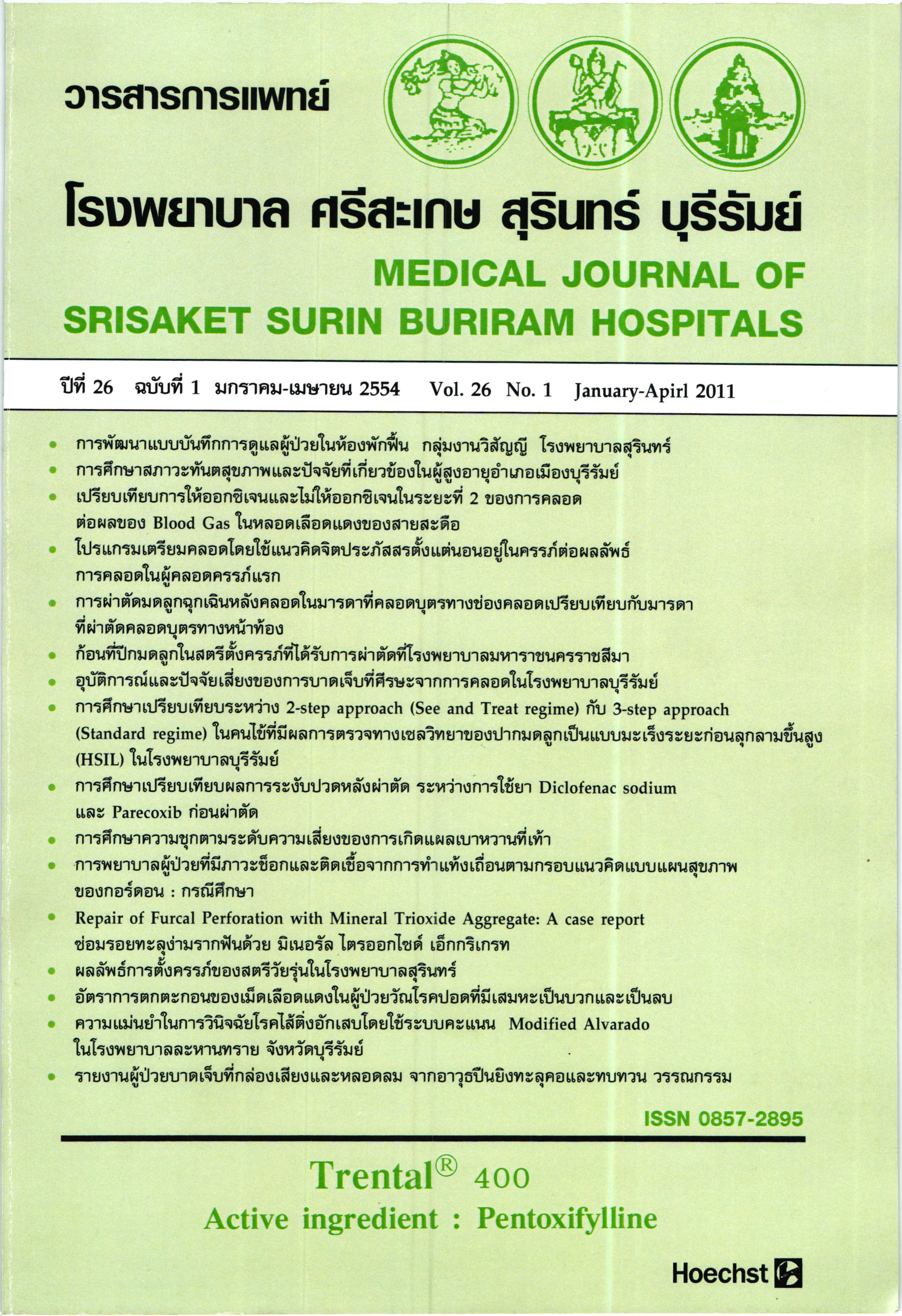
การพยาบาลผู้ป่วยที่มีภาวะช็อกและติดเชื้อจากการทำแท้งเถื่อน ตามกรอบแนวคิดแบบแผนสุขภาพของกอร์ดอน : กรณีศึกษา
Article Sidebar
Main Article Content
บทคัดย่อ
ความเป็นมาของปัญหา: การทำแท้ง หมายถึง การทำให้สิ้นสุดการตั้งครรภ์ก่อนอายุครรภ์ 28 สัปดาห์ หรือ ในขณะที่ทารกมีน้ำหนักน้อยกว่า 1,000 กรัม ซึ่งการทำแท้ง สามารถทำให้เกิด ปัญหา แทรกซ้อน คือ มดลูกทะลุ การบาดเจ็บต่อปากมดลูก ภาวะเลือดคั่งในโพรงมดลูกเฉียบพลัน การติดเชื้อ การมีเศษรกค้างอาจทำให้มีการตกเลือดมากจนเกิดภาวะช็อกได้ บทบาทของพยาบาลวิชาชีพคือ ต้องติดตามอาการ และให้การรักษาได้ทันเวลาจึงจะป้องกันภาวะแทรกซ้อนนี้ได้
วัตถุประสงค์: เพื่อศึกษาการดำเนินโรคของผู้ป่วย ปัญหาสุขภาพที่ผู้ป่วยต้องเผชิญการรักษาพยาบาล ที่ได้รับและผลของการรักษาพยาบาล
กรณีศึกษาและสถานที่: คัดเลือกจากประชากรป่วยแบบเจาะจง 1 ราย ที่ได้รับการวินิจฉัยว่าทำแท้งเถื่อน ทีมภาวะติดเชื้อ และภาวะช็อกที่รับการรักษา ที่หอผู้ป่วย นรีเวชกรรมโรงพยาบาลจังหวัดศรีสะเกษ
วิธีการศึกษา: โดยศึกษาเป็นรายกรณี ทำการเก็บข้อมูลย้อนหลัง จากเอกสาร เวชระเบียนผู้ป่วย
ผลการศึกษา: ผู้ป่วยหญิงไทย อายุ 19 ปี สถานภาพ โสด G2P0A1L0 ตั้งครรภ์ 7 สัปดาห์ ทาแท้ง โดยการ ฉีดยาเข้าช่องคลอด ก่อนมาโรงพยาบาล 3 ชั่วโมง มีอาการไข้สูง หนาวสั่น มีน้ำไหลทางช่องคลอด มีกลิ่นเหม็น หน้ามืด วิงเวียนและปวดท้องน้อยมาก ไปโรงพยาบาลชุมชน มีภาวะ ช็อก BP 60/30 mmHg ได้รับการแก้ไขภาวะช็อกโดยให้สารน้ำทางหลอดเลือดดำ2,000 CC ให้ยาปฏิชีวนะ แล้วส่งต่อมาโรงพยาบาลศรีสะเกษ แรกรับที่โรงพยาบาลศรีสะเกษยังมีอาการช็อก BP 80/50 mmHg ปรับสารน้ำ 0.9 NSS200 cc/hrx3hrs ให้ออกซิเจน 5 L/min ให้ RLS ทางหลอดเลือดดำ 100 cc/hr เพิ่มอีก 1 เส้น ต่อมาอาการดีขึ้นภาวะแท้งบุตรได้ รับการรักษา โดยการขูดมดลูกให้ยาปฏิชีวนะจนอาการดีขึ้น ภาวะช็อกและติดเชื้อจากการทำแท้งเถื่อน นับเป็นภาวะวิกฤตที่สำคัญ การประเมินภาวะผู้ป่วยได้ตั้งแต่เริ่มต้นมีความสำคัญเป็นอย่างมาก ดังนั้น การใช้ทฤษฎีทางการพยาบาลของ มาร์โจรี กอร์ดอน 11 แบบแผน จึงนำไปสู่แนวคิดการรวบรวมข้อมูลและประเมินภาวะสุขภาพที่เปลี่ยนแปลงไป ทำให้สามารถจัดกลุ่มวินิจฉัยการพยาบาล ได้อย่างรวดเร็ว และให้การพยาบาลเพื่อแก้ไขปัญหาผู้ป่วย และช่วยลดอัตราการตายในผู้ป่วยกลุ่มนี้ โดยปัญหาทางสุขภาพสำหรับผู้ป่วยรายนี้คือ 1) มีภาวะช็อกเนื่องจากมีการติดเชื้อ 2) เนื้อเยื่อต่างๆทั่วร่างกายได้รับออกซิเจน ไม่เพียงพอ เนื่องจากสูญเสียปริมาณเม็ดเลือดแดง ซึ่งทำหน้าที่นำออกซิเจนไปเลี้ยงส่วนต่างๆ ของร่างกาย 3)มีภาวะขาดสมดุล ของสารน้ำอีเล็กโตรไลท์ในร่างกาย 4) มีการติดเชื้อในโพรงมดลูก จากการทำแท้งผิดกฎหมาย 5) ไม่สุขสบายเนื่องจากปวดท้องน้อย 6) มีภาวะซีดเนื่องจากสูญเสียเลือดได้รับการพยาบาลอย่างใกล้ชิดเพื่อแก้ไขภาวะช็อกติดเชื้อ ผู้ป่วยปลอดภัย จากภาวะช็อกติดเชื้อและภาวะแทรกซ้อน
สรุป: การวางแผนการพยาบาล ด้วยความรู้ ความเข้าใจ ในลักษณะเฉพาะของโรค และติดตามสังเกตอาการ ใกล้ชิด ทำให้สามารถติดตาม ภาวะช็อก ติดเชื้อ และแก้ไขได้ทันท่วงที
Article Details
เอกสารอ้างอิง
WHO. Safe abortion : technical and policy guidance for health System. Gevena : World Health Organization, 2003.
พิษพุ ขันติพงษ์ และคณะ. ภาวะแทรกจ้อนจากการทำแท้งและการแก้ไข.ใน: สุรชัย อินทรประเสริฐและคณะ, บรรณาธิการ. การดูแลสุขภาพหญิงเกี่ยวกับการแท้ง. นนทบุรี : กรมอนามัย กระทรวงสาธารณสุข, 2547: 130 - 9.
Stedman TL. Stedman, S medical dictionary. 21st ed. Baltimore: Williams & Wikins; 1966 : 4.
สุจิตรา เหลืองอมรเลิศ และ เอื้อมพร ทองกระจาย. กระบวนการพยาบาลวิวัฒนาการความสำคัญแนวคิดทฤษฎี. ใน : สุจิตรา เหลืองอมรเลิศและคณะ, บรรณาธิการ. กระบวนการพยาบาลทฤษฎีและการนำไปใช้. พิมพ์ครั้งที่ 13. ขอนแก่น : พยาบาลศาสตร์ มหาวิทยาลัยขอนแก่น, 2540 : หน้า 1-8.
สุจิตรา ลิ้มอำนวยลาภ และ ชวนพิศ ทำทอง. การพยาบาลผู้ป่วยที่มีภาวะเจ็บป่วยวิกฤต. ขอนแก่น: สาขาการพยาบาลผู้ใหญ่คณะพยาบาลศาสตร์ มหาวิทยาลัยขอนแกน, 2551.
วิพร เสานารักษ์. การวินิจฉัยการพยาบาล. พิมพ์ครั้งที่ 14. ขอนแก่น: ภาควิขาพยาบาลศาสตร์คณะ พยาบาลศาสตร์ มหาวิทยาลัยขอนแก่น; 2552.
สภาการพยาบาล. แนวปฏิบัติการพยาบาลคลินิก. นนทบุรี: สภาการพยาบาลฯ, 2550.
Leuies, SM., Callier J. C and Heikemper, MM. Medical - Surgical nursing Assessment and management of Clinical Problem. 4th ed. Missoeeri: Mosby Year Book, 1996.
Perry, AG. Potter PA. Clinical nursing skills techniques 5th ed St. Louis, Mo : Mosby, 2010.
Urder, LD., et aI. Critical care nursing diagnosis and management 4th ed., St Louis Mo: Mosby,1988.
กาญจนา จันทร์สงและคณะ. อายุรศาสตร์ฉุกเฉิน. ขอนแก่น : โรงพิมพ์คลังนานาวิทยา, 2543.
Roden, J. andTaft. E. Discharge planning guide for nurse. Philadelphia: W.B. Saunders; 1990.
กองการพยาบาล. แนวทางการวางแผนจำหน่ายผู้ป่วย. กรุงเทพๆ: โรงพิมพ์หาวิทยาลัยธรรมศาสตร์; 2539
สุปราณี ศรีพลาวงษ์. ผลการใช้รูปแบบการวางแผนจำหน่ายผู้ป่วย. ชลบุรี : คณะพยาบาลศาสตร์ มหาวิทยาลัยบูรพา: 2543.
พัชรา บัวเกิด. ผลของการวางแผนจำหน่ายผู้ป่วยโรคติดเชื้อเฉียบพลันระบบหายใจในเด็ก อายุ 0-5 ปี โดยใช้รูปแบบ D-M-E-T-H-0-D ต่อความรู้เรื่องโรคและความรู้ในการดูแลเด็กของผู้ดูแล. รายงานการศึกษาอิสระ ปริญญาพยาบาลศาสตรมหาบัณฑิต สาขาวิขาการพยาบาลสุขภาพเด็ก คณะพยาบาลศาสตร์ มหาวิทยาลัยขอนแก่น; 2552.
ธัญญา ใจดี. ผลจากการปราบคลินิกทำแท้ง : ความจริงที่สังคมไม่ยอมรับ. https://www.whaf.or.th/content/146 สืบค้น; 6 พฤษภาคม 2554.
