
ผลลัพธ์การประเมินเทคนิคการใช้อุปกรณ์ soft mist inhaler (SMI); Respimat® โดยเภสัชกร ในผู้ป่วยโรคปอดอุดกั้นเรื้อรังและโรคหืด
คำสำคัญ:
Soft Mist Inhalers (SMI), Respimat®, วิธีการใช้ยา, vale holding chamber (VHC)บทคัดย่อ
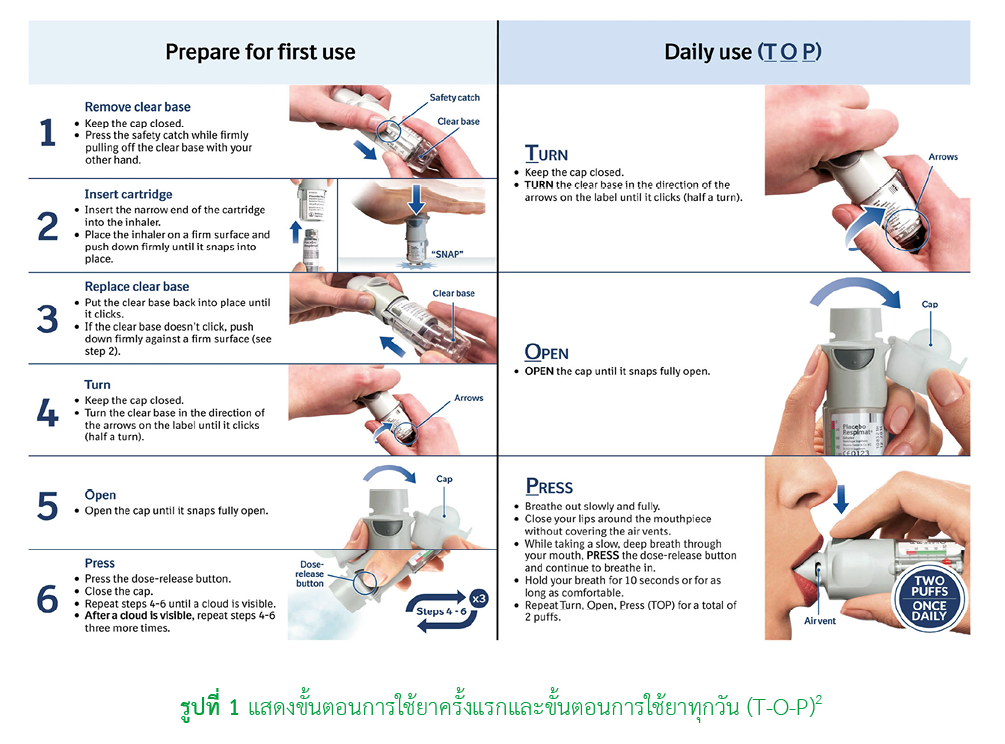
ความเป็นมา: ยาพ่นสูดรูปแบบ Soft Mist Inhalers (SMI) เป็นรูปแบบยาที่ถูกพัฒนาขึ้นมาเพื่อแก้ไขข้อจำกัดของการใช้ยารูปแบบ pressurized metered-dose inhaler (pMDI) และ dry powder inhaler (DPI) โดยมีชื่อการค้าของรูปแบบเครื่องว่า Respimat®
วัตถุประสงค์: เพื่อศึกษาปัญหาการใช้ยารูปแบบ SMI และ ศึกษาปัจจัยของผู้ป่วยที่ส่งผลต่อการใช้ยารูปแบบ Respimat®
วิธีวิจัย: การศึกษานี้เป็นการศึกษาแบบย้อนหลัง ณ คลินิกโรคหืดและโรคปอดอุดกั้นเรื้อรังโรงพยาบาลศิริราช ที่ได้พบเภสัชกรในช่วงเดือนตุลาคม ปี 2564 ถึงเดือนตุลาคม ปี 2566 และได้ใช้ยามาในระยะเวลาไม่มากกว่า 6 เดือน
ผลการวิจัย: ผู้เข้าร่วมการศึกษาทั้งหมด 69 ราย ผู้ป่วยใช้ยาได้ถูกต้องร้อยละ 60.4 ซึ่งขั้นตอนที่ทำผิดมากที่สุดคือ การสูดหายใจเข้าทางปากช้าๆลึกๆต่อเนื่องจนควันหมด โดยเภสัชกรได้เสนอแพทย์เปลี่ยนอุปกรณ์ยาพ่นสูดเป็นรูปแบบอื่นจำนวน 4 ราย (ร้อยละ 14.3) และเสนอแพทย์ให้พิจารณาสั่ง vale holding chamber (VHC) ให้กับผู้ป่วยร่วมด้วยจำนวน 6 ราย (ร้อยละ 21.4) และปัจจัยที่มีความแตกต่างกันอย่างมีนัยสำคัญทางสถิติในกลุ่มผู้ป่วยที่ใช้ยาถูกต้องกับกลุ่มผู้ป่วยที่ใช้ยาไม่ถูกต้องทุกขั้นตอนสำคัญคือ จุดที่ผู้ป่วยได้รับยาครั้งแรกที่ผู้ป่วยนอก(OPD) หรือ ผู้ป่วยใน (IPD) (p-value =0.042)
สรุปผล: ผู้ป่วยที่ไม่สามารถใช้ยาพ่นสูดรูปแบบ Respimat® ได้อย่างถูกต้อง เภสัชกรสามารถเสนอแนวทางการแก้ไขต่อแพทย์ได้ ดังนั้นผู้ป่วยที่ได้รับยารูปแบบ Respimat® เป็นครั้งแรกควรได้รับคำแนะนำการใช้ยา และมีการติดตามการใช้ยาของผู้ป่วย โดยเฉพาะผู้ป่วยที่ได้รับยาครั้งแรกที่ IPD
เอกสารอ้างอิง
Iwanaga T, Tohda Y, Nakamura S, Suga Y. The Respimat® soft mist inhaler: implications of drug delivery characteristics for patients. Clin Drug Investig. 2019;39(11):1021-30.doi: 10.1007/s40261-019-00835-z.
Wachtel H, Kattenbeck S, Dunne S, Disse B. The Respimat® development story: patient-centered innovation. Pulm Ther. 2017;3(1):19-30. doi: 10.1007/s41030-017-0040-8.
Dalby RN, Eicher J, Zierenberg B. Development of Respimat® Soft Mist™ inhaler and its clinical utility in respiratory disorders. Med Devices (Auckl). 2011;4:145-55. doi: 10.2147/MDER.S7409.
Anderson P. Use of Respimat® soft mist inhaler in COPD patients. Int J Chron Obstruct Pulmon Dis. 2006;1(3):251-9. doi: 10.2147/copd.2006.1.3.251.
Halpin DM, Kaplan AG, Russell RK. Why choose tiotropium for my patient? A comprehensive review of actions and outcomes versus other bronchodilators. Respir Med. 2017;128:28-41. doi: 10.1016/j.rmed.2017.04.008.
Liang CY, Chen YJ, Sheu SM, Tsai CF, Chen W. Misuse of inhalers among COPD patients in a community hospital in Taiwan. Int J Chron Obstruct Pulmon Dis. 2018;13:1309-16. doi: 10.2147/COPD.S158864.
Molimard M, Raherison C, Lignot S, Balestra A, Lamarque S, Chartier A, et al. Chronic obstructive pulmonary disease exacerbation and inhaler device handling: real-life assessment of 2935 patients. Eur Respir J. 2017;49(2):1601794. doi: 10.1183/13993003.01794-2016.
พิสิษฐ์ หรือสมบูรณ์. การนำส่งยาและอุปกรณ์สูดพ่นยาสำหรับโรคหืดและโรคปอดอุดกั้นเรื้อรัง [อินเทอร์เน็ต]. นนทบุรี: ศูนย์การศึกษาต่อเนื่องทางเภสัชศาสตร์ สภาเภสัชกรรม; 2562 [สืบค้นเมื่อ 30 ก.ย. 2567]. สืบค้นจาก: https://ccpe.pharmacycouncil.org/index.php?option=article_detail&subpage=article_detail&id=750
Kamin W, Frank M, Kattenbeck S, Moroni-Zentgraf P, Wachtel H, Zielen S. A handling study to assess use of the Respimat® Soft Mist™ inhaler in children under 5 years old. J Aerosol Med Pulm Drug Deliv. 2015;28(5):372-81. doi: 10.1089/jamp.2014.1159.
Ogasawara T, Sakata J, Aoshima Y, Tanaka K, Yano T, Kasamatsu N. Bronchodilator effect of tiotropium via Respimat® administered with a spacer in patients with chronic obstructive pulmonary disease (COPD). Intern Med. 2017;56(18):2401-6. doi: 10.2169/internalmedicine.8255-16.
Dekhuijzen PN, Lavorini F, Usmani OS. Patients' perspectives and preferences in the choice of inhalers: the case for Respimat® or HandiHaler®. Patient Prefer Adherence. 2016;10:1561-72. doi: 10.2147/PPA.S82857.
Jang JG, Chung JH, Shin KC, Jin HJ, Lee KH, Ahn JH. Comparative study of inhaler device handling technique and risk factors for critical inhaler errors in Korean COPD patients. Int J Chron Obstruct Pulmon Dis. 2021;16:1051-9. doi: 10.2147/COPD.S303761.
Kocks J, Bosnic-Anticevich S, van Cooten J, Correia de Sousa J, Cvetkovski B, Dekhuijzen R, et al. Identifying critical inhalation technique errors in dry powder inhaler use in patients with COPD based on the association with health status and exacerbations: findings from the multi-country cross-sectional observational PIFotal study. BMC Pulm Med. 2023;23(1):302. doi: 10.1186/s12890-023-02566-6.
Henkle BE, Freese RL, Dahlheimer M, Kane C, Hoth KF, Kunisaki KM. Cognitive function and inhaler technique following recovery from exacerbations of COPD. ERJ Open Res. 2023; 9(3):00627-2022. doi: 10.1183/23120541.00627-2022.
Dodd JW, Charlton RA, van den Broek MD, Jones PW. Cognitive dysfunction in patients hospitalized with acute exacerbation of COPD. Chest. 2013;144(1):119-27. doi: 10.1378/chest.12-2099.
ดาวน์โหลด
เผยแพร่แล้ว
รูปแบบการอ้างอิง
ฉบับ
ประเภทบทความ
สัญญาอนุญาต
ลิขสิทธิ์ (c) 2025 สมาคมเภสัชกรรมโรงพยาบาล(ประเทศไทย)

อนุญาตภายใต้เงื่อนไข Creative Commons Attribution-NonCommercial-NoDerivatives 4.0 International License.
บทความในวารสารเภสัชกรรมโรงพยาบาลเผยแพร่ภายใต้เงื่อนไขของสัญญาอนุญาตครีเอทีฟคอมมอนส์ในรูปแบบที่ต้องอ้างอิงแหล่งที่มา - ห้ามใช้เพื่อการค้า - ห้ามแก้ไขดัดแปลง เวอร์ชั่น 4.0 (CC BY-NC-ND 4.0) สามารถแจกจ่ายและนำบทความไปใช้ประโยชน์เพื่อการศึกษาได้แต่ต้องระบุการอ้างอิงถึงบทความจากเว็บไซต์วารสารเภสัชกรรมโรงพยาบาล ไม่สามารถนำบทความไปใช้เพื่อการพาณิชย์ใด ๆ เว้นแต่ได้รับอนุญาตจากบรรณาธิการวารสารเภสัชกรรมโรงพยาบาล และกรณีมีการนำบทความไปเรียบเรียงใหม่ เปลี่ยนแปลงเนื้อหา หรือเสริมเติมแต่งเนื้อหาของบทความ ท่านไม่สามารถนำบทความที่ปรับแต่งไปเผยแพร่ได้ในทุกกรณี
ข้อความที่ปรากฏในบทความในวารสารเป็นความคิดเห็นส่วนตัวของผู้แต่งแต่ละท่านไม่เกี่ยวข้องกับสมาคมเภสัชกรรมโรงพยาบาล (ประเทศไทย) และบุคลากรในสมาคมฯ แต่อย่างใด ความรับผิดชอบองค์ประกอบทั้งหมดของบทความแต่ละเรื่องเป็นของผู้แต่งแต่ละท่าน หากมีความผิดพลาดใด ๆ ผู้แต่งแต่ละท่านจะรับผิดชอบบทความของตนเอง ตลอดจนความรับผิดชอบด้านเนื้อหาและการตรวจร่างบทความเป็นของผู้แต่ง ไม่เกี่ยวข้องกับกองบรรณาธิการ


.png)

